Monuments
Lindoso Castle
Lindoso Castle, a medieval frontier fortress in Ponte da Barca, in the Gerês mountains, surrounded by the largest group of granaries in the country.
- Location
- Lindoso, Ponte da Barca, Viana do Castelo
- Built
- séc. XIII (ampliado no séc. XVII)
- Style
- Românico / gótico militar; fortificação abaluartada seiscentista
Lindoso Castle is a medieval frontier fortress located in the village of Lindoso, in the municipality of Ponte da Barca, district of Viana do Castelo. Set upon a rocky knoll commanding the valley of the Lima River and the border with Galicia, it lies today within the Peneda-Gerês National Park and is one of the most striking examples of military architecture in the Alto Minho. It has been classified as a National Monument since 1910.
History
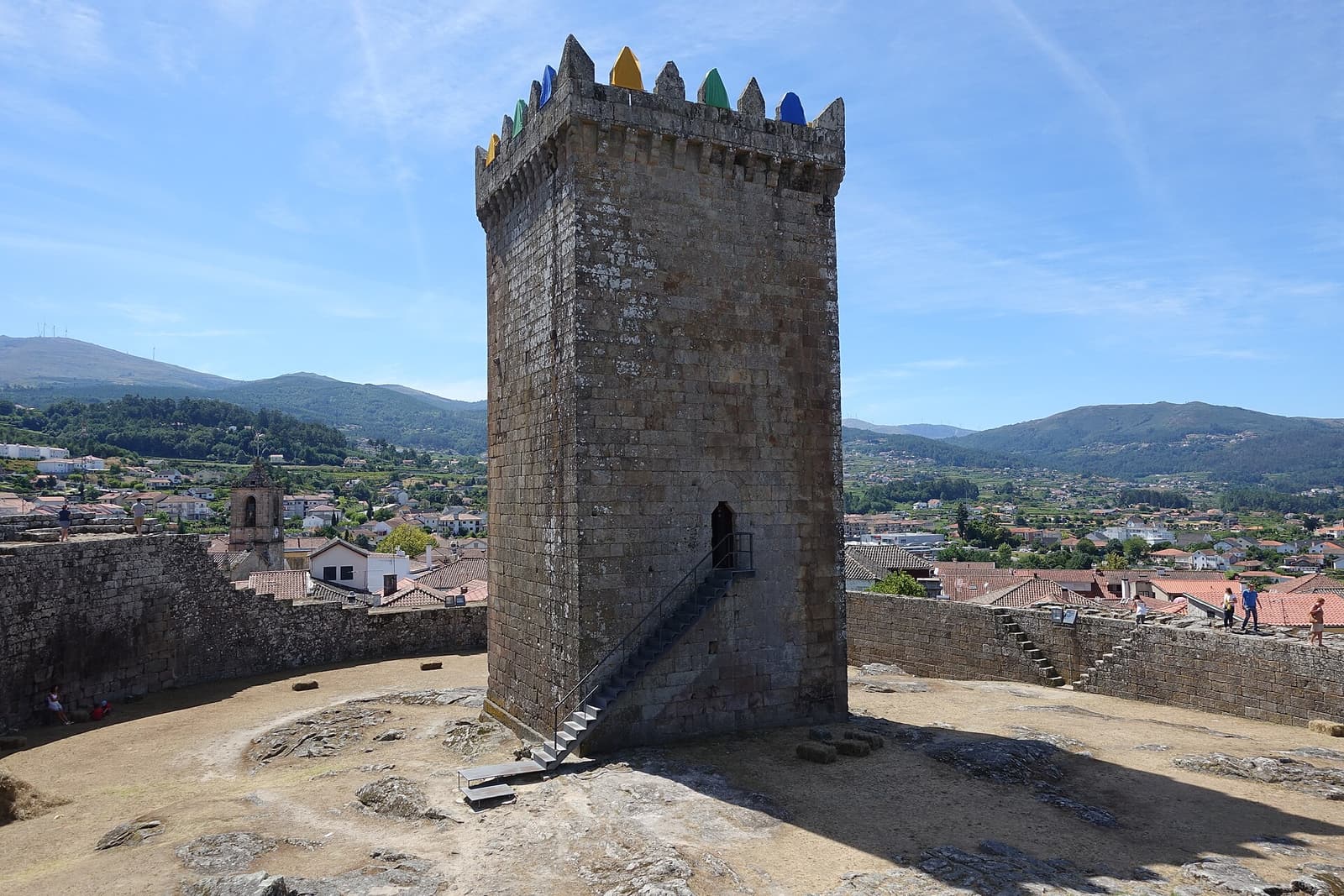
The construction of the castle dates back to the reign of King Afonso III, in the 13th century, at a time when the crown sought to consolidate the defence of the newly established northern frontier. Shortly afterwards, King Dinis ordered the fortress to be reinforced and enlarged, and the building of the keep is traditionally attributed to him. The original medieval complex consisted of a walled enclosure with a battlemented wall-walk, two gates and the aforementioned tower, following the model of the frontier crag castles to which the Castelo de Melgaço and other strongholds of the Minho valley also belong.
The strategic importance of Lindoso once again asserted itself during the Restoration War (1640–1668). In 1662, Castilian troops took the stronghold and began work to modernise its defences, inspired by the bastioned system of the Vauban tradition. The castle was recaptured by the Portuguese in 1664, remaining definitively under national control from that moment on. The 17th-century campaigns endowed the precinct with a girdle of star-shaped walls, with bastions, gun embrasures and cylindrical sentry boxes at the corners, transforming the medieval fortress into a stronghold capable of withstanding artillery fire.
The castle and the granaries
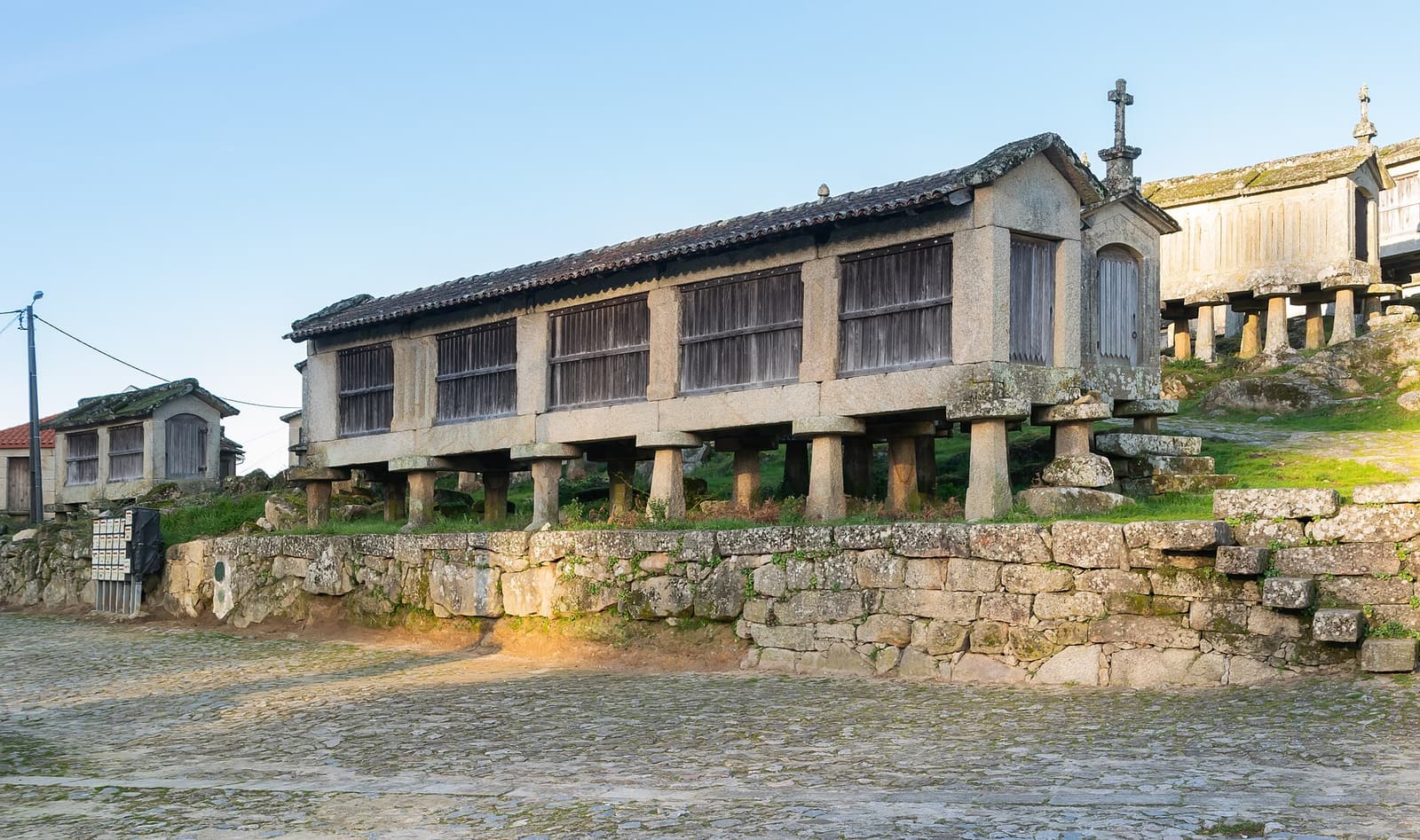
Alongside its military value, Lindoso stands out for the remarkable ethnographic ensemble that surrounds the castle. Around the communal threshing floor stands one of the largest and best-preserved groups of granite espigueiros (granaries) in the country — dozens of examples, mostly from the 18th and 19th centuries. These raised constructions of stone and wood were intended to dry and store maize, protecting it from damp and rodents. The group of granaries is likewise protected, classified as a Property of Public Interest, and constitutes a unique testimony to the agrarian economy of the Serra Amarela. To explore this typology further, see granaries and corn cribs.
The reading of the monument benefits from the dialogue between the two great building phases: the austere Romanesque-Gothic core and the modern bastioned engineering. This overlay makes Lindoso Castle a privileged document of the evolution of frontier fortifications in Portugal, fitting into the wider itinerary of the castles that dot the Minho borderland.
Visit
The historic ensemble of Lindoso — castle, granaries, threshing floor and wayside cross — is freely accessible and lies a short distance from the Madalena/Lindoso border crossing. Its landscape setting, in the heart of the Peneda-Gerês, and its proximity to centres such as Ponte de Lima make it a landmark of the heritage of northern Portugal.
Frequently asked questions
- Where is Lindoso Castle?
- It rises in the village of Lindoso, in the parish of the Serra Amarela, in the municipality of Ponte da Barca, district of Viana do Castelo, next to the border with Galicia and within the Peneda-Gerês National Park.
- When was Lindoso Castle built?
- The medieval core dates from the reign of King Afonso III, in the 13th century, and was enlarged by King Dinis. In the 17th century it received a bastioned enceinte adapted to artillery during the Restoration War.
- Why is Lindoso famous?
- Besides the castle, classified as a National Monument, Lindoso has the largest and best-preserved group of granite granaries (espigueiros) in Portugal, with dozens of units beside the communal threshing floor.
Sources
Keep exploring
Heritage nearby
More places to discover from here. Approximate straight-line distances, within 50 km.