Intangible Heritage
Festa de São João Celebrations in Porto
The Festa de São João in Porto, the greatest night of the Invicta, is celebrated from 23 to 24 June with toy hammers, sweet basil, cascatas, sardines and fireworks.
- Location
- Porto, Porto
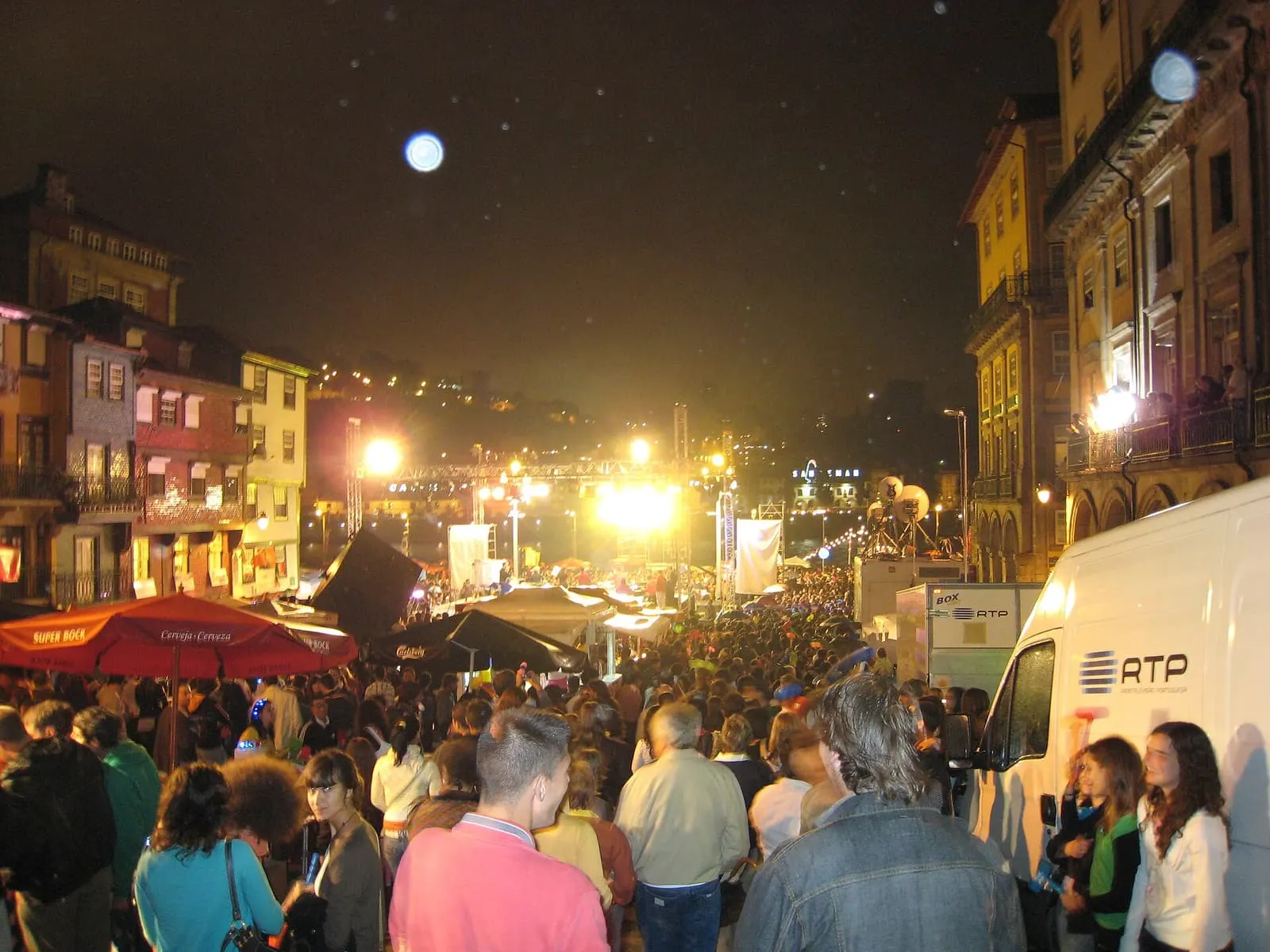
The Festa de São João in Porto is the city’s most intense popular celebration, lived out in the streets throughout the night of 23 to 24 June. Although dedicated to Saint John the Baptist, the festival is rooted in far older rituals tied to the summer solstice, to fertility and to the abundance of the harvest — a pagan heritage that the Church Christianised, fixing the date on the saint’s calendar. The earliest documentary references to the Midsummer festivities in Porto date back to the fourteenth century, appearing in the chronicle of Fernão Lopes, but it was only in the twentieth century that 24 June came to be established as the municipal holiday of the Invicta.
A night in the streets
São João is, above all, a festival of closeness and sharing. On that night, streets and alleys fill with people, the smoke of grilling sardines and the scent of sweet basil. People gently tap one another on the head, a gesture once made with a leek and which, since the mid-twentieth century, is performed mostly with colourful plastic hammers fitted with a squeaker — a prop invented locally that has become the festival’s emblem. Bonfires are leapt over in the more traditional neighbourhoods, balloons are released (now discouraged and banned because of the fires they caused) and pots of sweet basil are given as gifts, each topped with a little flag bearing popular verses.
More than a spectacle, São João is an urban liturgy: the whole city leaves home, takes over the public thoroughfare and transforms it, for one night, into an immense space of fellowship without hierarchies.
At midnight, the great fireworks display launched over the river Douro draws crowds to both banks and onto the bridges, in one of the festival’s most defining moments. The celebration then carries on into the small hours, with dances, street parties and the traditional walk to the beach at Foz or Matosinhos to watch the sunrise.
Symbols and gastronomy
The São João table is an essential part of the ritual: sardines grilled over coals, caldo verde, maize broa and grilled meat accompany the night, washed down with the region’s wine. The cascatas — small domestic tableaux, cousins of the nativity scene but particular to this season, with figurines, water and an image of the saint — are set up in windows, doorways and chapels, and are visited from door to door. Sweet basil, an aromatic plant with tiny leaves, is offered as a gift and a token of affection, often accompanied by popular quatrains.
Living heritage of the North
The Festa de São João belongs to the great family of santos populares celebrated in Portugal during the month of June, alongside the Festas de Santo António in Lisbon. It stands out, however, for its scale and for the full appropriation of public space in the historic centre of Porto, listed by UNESCO. A festival at once religious, profane and civic, São João endures as one of the most vigorous expressions of Portuguese intangible cultural heritage, passed down from generation to generation and reinvented each year without losing its communal character.
Frequently asked questions
- When is São João celebrated in Porto?
- The festival takes place on the night of 23 to 24 June, the eve and feast day of Saint John the Baptist. The 24th of June is a municipal public holiday in the city of Porto.
- Why do people hit each other on the head with hammers during São João?
- The plastic hammer with a squeaker is a prop created in the 1960s that replaced the traditional leek, once used to give a symbolic, playful tap on the head of passers-by.
- What are the São João cascatas?
- They are small domestic tableaux, akin to a nativity scene but particular to São João, set up in homes and streets with figurines, running water and an image of the saint, and visited from door to door.