Intangible Heritage
Holy Spirit Festivals of the Azores
The Festivals of the Divine Holy Spirit of the Azores: empires, coronations and bodos that structure a communal cult across all nine islands of the archipelago.
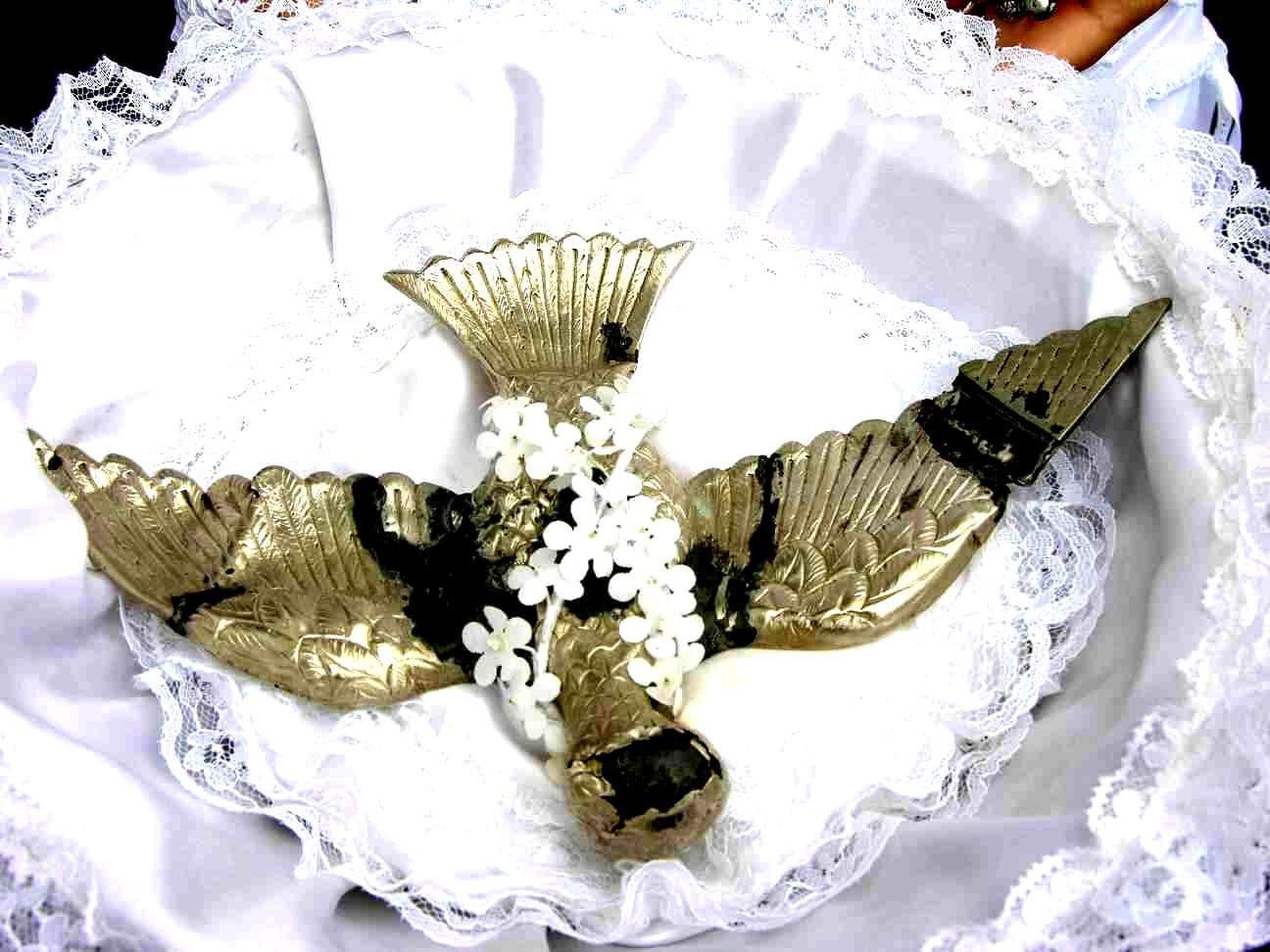
The Holy Spirit Festivals are the most widespread and identity-defining of the Azorean traditions. They are not an isolated celebration but a ritual cycle that runs through the nine islands between spring and the start of summer, weaving together devotion, communal organisation and the sharing of food. They are structured around the empire — both the small building where the crown, the banner and the sceptres of the Divine are displayed, and the group of neighbours and relatives who take on, each year, the responsibility of staging the festival.
Origin and historical course
The cult of the Holy Spirit is rooted in medieval devotion introduced into Portugal during the reign of King Dinis, associated with Queen Saint Isabel (died 1336) and steeped in the Joachimite millenarianism that proclaimed an “age of the Spirit” of peace and justice. The symbolic coronation of a pauper and the distribution of food translated, into gesture, an ideal of humility and equality.
As the settlement of the Azores advanced through the fifteenth century, the colonists brought these practices with them. On the island of Terceira, the cult is documented from 1492, with an empire built and a bodo distributed on the day of Pentecost. Spiritual oversight of the new lands fell to the Order of Christ, seated in Tomar, which helps to explain the early spread and the continuity of the cult in the archipelago. As early as the sixteenth century the Brotherhoods of the Divine Holy Spirit are attested, lay confraternities that frame the festival to this day.
The festive cycle: coronations and bodos
The preparation extends over seven weeks before Pentecost, in Sunday gatherings — the domingas — dedicated to the gifts of the Holy Spirit, during which the crown visits the homes of the faithful, who pray, sing and offer donations. The high point is the coronation: the silver crown, surmounted by an orb and the dove with outspread wings, is placed upon an “emperor” — frequently a child — symbolically inverting the social hierarchies.
The festival does not imitate power in order to exalt it; it crowns the humble in order to relativise it — a theology of equality staged at the doorstep.
Then comes the procession, with banners of red damask from which the white dove radiates, and the bodo, the distribution of bread, meat and wine to the whole community. The função gathers the participants around the Holy Spirit Soups, a shared ritual meal that seals the cycle. More than a hundred empires and bodos take to the streets between Pentecost and Trinity.
Island diversity and diaspora
The material expression varies from island to island. On Terceira dozens of empires with brightly coloured façades stand out; on São Miguel and other islands the buildings are more sober; on Pico and Faial a Baroque influence can be recognised, while on São Jorge and Graciosa ephemeral theatres and plant ornamentations appear. The cult has also become a hallmark of the urban landscape — visible, for example, in the historic centre of Angra do Heroísmo, classified by UNESCO.
Carried by emigration, the Holy Spirit is today celebrated in Brazil and in strong Azorean communities of North America — from New England to California and Canada —, where it remains one of the most vivid signs of Azorean identity. As a collective manifestation of popular religiosity, it forms part of the vast body of Portuguese intangible cultural heritage, distinguished by its unbroken continuity of nearly five centuries and by the centrality it maintains in the life of the communities.
Frequently asked questions
- When are the Holy Spirit Festivals held in the Azores?
- They are concentrated mainly between Pentecost Sunday and Trinity Sunday, extending from spring to the start of summer, with more than a hundred empires and bodos spread across the nine islands.
- What is a Holy Spirit empire?
- It is the small building, often with a brightly coloured façade, where the brotherhoods display the crown, the banner and the sceptres of the Divine. It also gives its name to the festive cycle itself organised by each community.
- What is the bodo?
- It is the communal distribution of bread, meat and wine to the entire population, a gesture of sharing and charity that lies at the heart of the cult and symbolises equality among the faithful.