Monuments
Forte de Sacavém
Discover Fort of Sacavém, a military redoubt in Loures housing Portugal’s architectural heritage archive, and check research access before planning a visit.
- Location
- Sacavém, Loures, Lisboa
- Built
- 19th century; later adaptations
- Style
- Military architecture
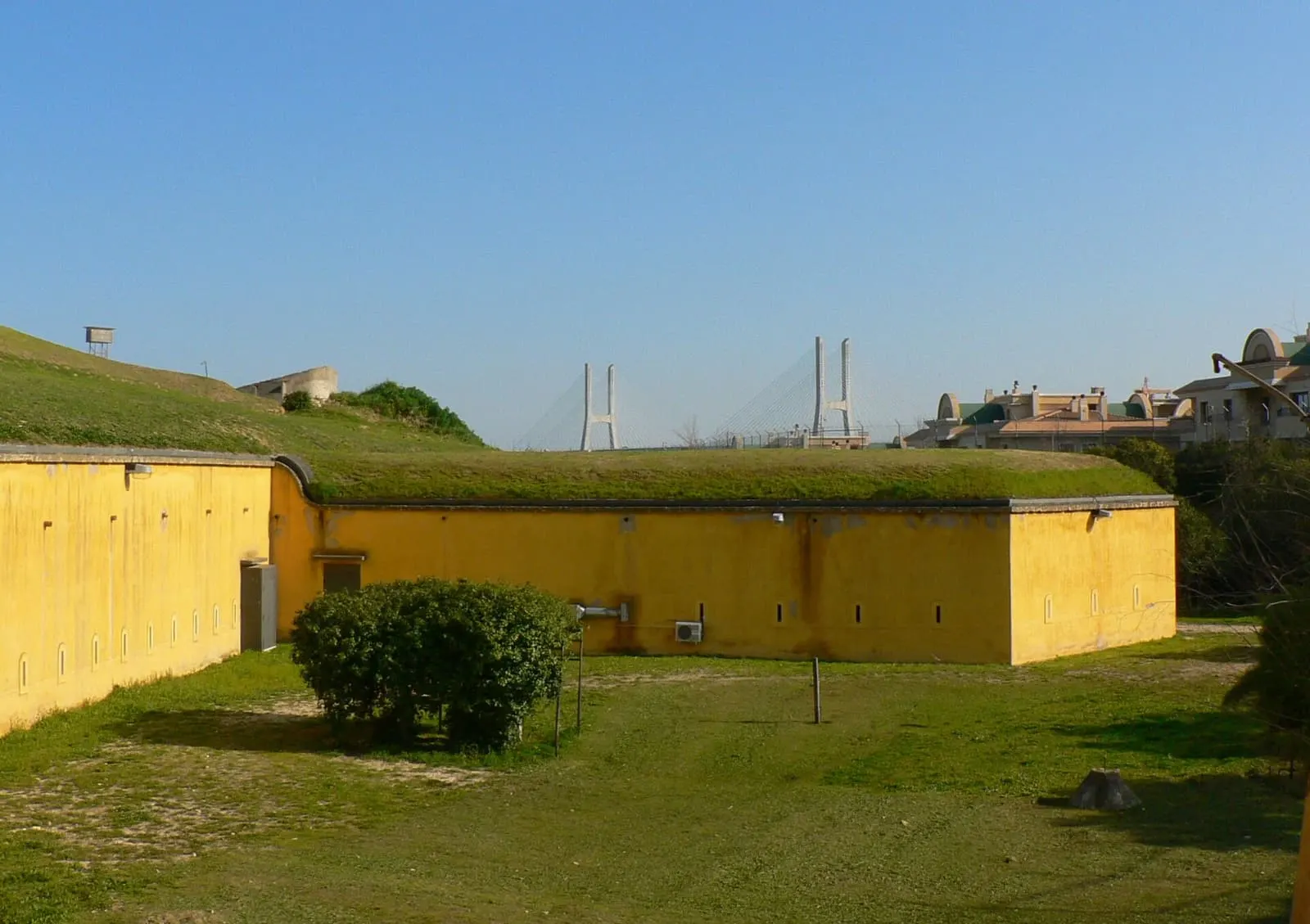
The Fort of Sacavém, also known as Reduto do Monte Cintra, is a nineteenth-century fortification in Sacavém, Loures municipality, Lisbon district. Its position beside the River Trancão helps explain its role in defending the capital. The building now has another purpose: it houses the Architectural Heritage Archive of Património Cultural, I.P..
A redoubt in Lisbon’s defences
Loures municipality describes the fort as a small, isolated military building from the nineteenth and twentieth centuries, intended to reinforce one of Lisbon’s defensive lines. It belongs to the history of the Campo Entrincheirado de Lisboa, the system of fortifications and communications around the capital. Its setting above Sacavém, near the meeting of the Trancão and Tagus, is part of understanding this military heritage.
The surrounding landscape connects the fort with the town, the rivers and transport routes. Its history differs from that of the earlier maritime fortifications at the mouth of the Tagus: it reflects the reorganisation of Lisbon’s land defences in the modern period.
The plan has five unequal sides and is surrounded by a ditch. Earthworks cover part of the structure, reducing its visibility in the landscape. Inside, the central terreplein connects the main building groups.
Becoming an archive
The official archives page explains the change of use. In 1998, Military Property No. 4 in Loures was assigned to the ministry responsible for public works and planning for use by DGEMN. Following adaptation work, the archive moved into the fort on 5 January 1999.
It preserves records created through DGEMN’s work and collections from architects and designers. These holdings support research into projects, interventions and changes to Portuguese buildings. SIPA is the information system associated with this inventory and documentary work; the fort that houses the archive has its own identity as a historic building.
Planning research access
The archive lists its address as Forte de Sacavém, Rua Reduto do Monte Cintra, 2685-141 Lisboa-Sacavém, with telephone numbers +351 219 427 780 / +351 219 427 781. Use the current contacts on the official page and identify the documents or research topic you need.
Checked on 2 October 2026: the notice published in August still reports DGEMN/SIPA documentation temporarily unavailable because of IT difficulties. It allows appointments for personal collections held at the fort, documents from IHRU and DGPC, and the library. Access to these services does not guarantee a tourist visit inside the fort: confirm access to the building and to the collections separately.
To begin research remotely, use the services linked from the official search portal, including SIPA and the archive and library catalogues.
Photograph of Fort of Sacavém, home to the Architectural Heritage Archive associated with SIPA: Juntas, 1 March 2006, Wikimedia Commons, public domain. Image resized for display.
Frequently asked questions
- What is the Fort of Sacavém?
- It is the Reduto do Monte Cintra, a nineteenth-century fortification in Sacavém that formed part of Lisbon’s defences. It now houses the Architectural Heritage Archive.
- Where is the Fort of Sacavém?
- In Sacavém, Loures municipality, Lisbon district, near the River Trancão. The archive gives its address as Rua Reduto do Monte Cintra, 2685-141 Lisboa-Sacavém.
- Are the fort and SIPA the same thing?
- The fort is the historic building. SIPA is the Information System for Architectural Heritage, associated with the inventory and documentary collections preserved in the archive.
- Can I visit or consult the archive?
- Check with Património Cultural, I.P. beforehand. On 2 October 2026, its August notice still reported DGEMN/SIPA consultation temporarily unavailable; personal collections, IHRU and DGPC documentation and the library remained consultable by appointment.
Sources
- Património Cultural, I.P. — Arquivo de Património Arquitetónico
- Património Cultural, I.P. — Consulta de documentação DGEMN/SIPA, agosto de 2026
- Município de Loures — Reduto de Monte Sintra / Forte de Sacavém
- Cultura Portugal — Forte de Sacavém
- Património Cultural, I.P. — Jornadas Europeias do Património 2025: Forte de Sacavém
- Património Cultural, I.P. — Pesquisar
- Forte de Sacavém — Wikidata Q1438934
Keep exploring
Heritage nearby
More places to discover from here. Approximate straight-line distances, within 50 km.