Themes
Traditional Portuguese Jewellery
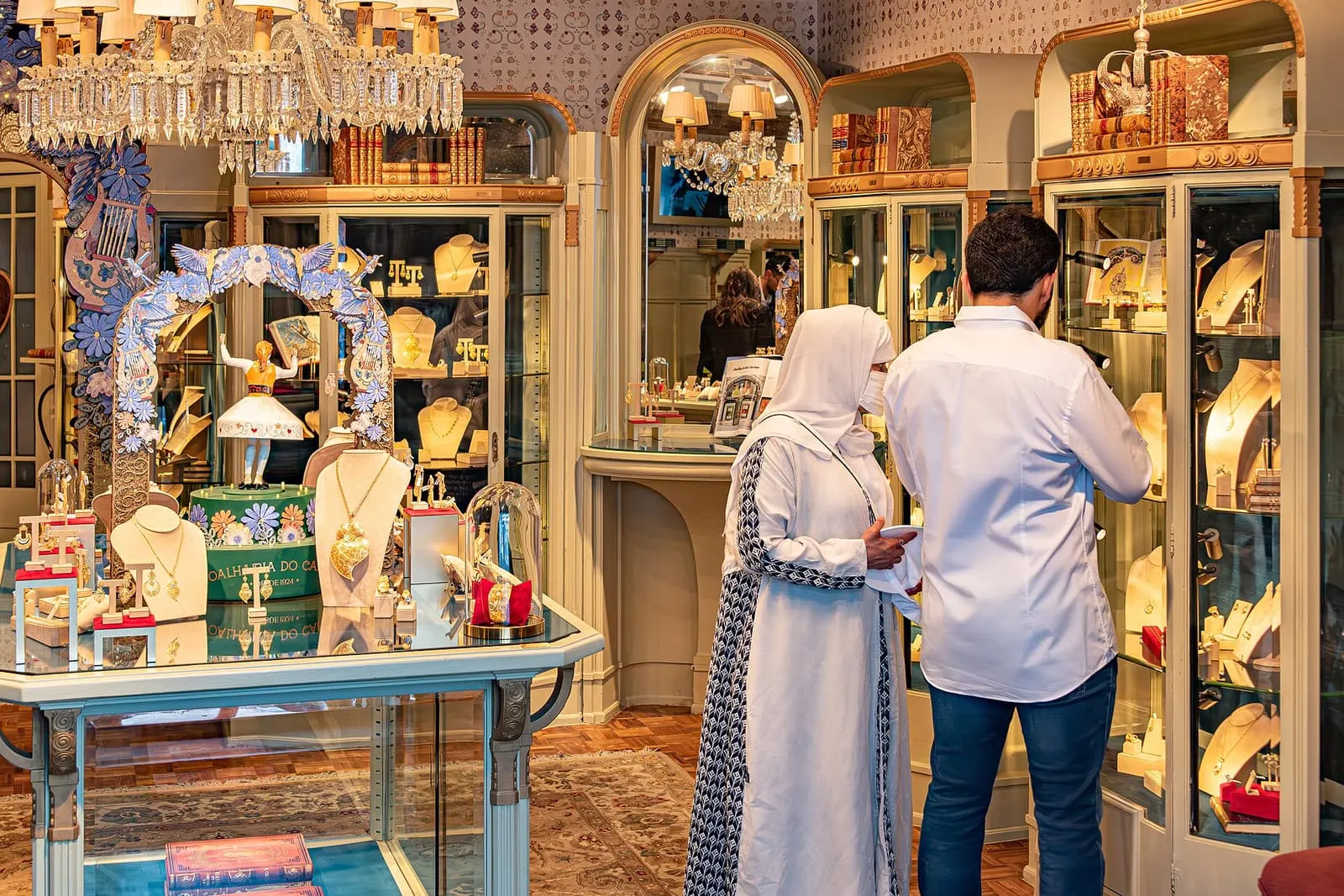
Traditional Portuguese jewellery: the heart of Viana, brincos à rainha earrings, arrecadas and beads, the folk gold of the Minho wrought in 19.2-carat filigree.
- Style
- Filigrana e ourivesaria popular
Traditional Portuguese jewellery is one of the most expressive chapters of the country’s folk goldwork. Concentrated above all in the Minho and the Douro Litoral — with Viana do Castelo as its most celebrated centre — it denotes the body of jewels worn by the women of the rural north at festivals, pilgrimages and processions. More than adornment, this “folk gold” functioned as a store of value and a sign of status: displayed on the breast over the costume, it translated a family’s savings and the standing of its wearer into precious metal.
Gold upon the breast
The classic image is that of the Viana steward on a feast day, her breast covered in gold. The ensemble followed a strict grammar: earrings or arrecadas, three chains at the neck, a trancelim — a heavily worked piece from which hung pendants such as the butterfly, the monstrance or the crucifix —, a string of beads and, among the wealthier women, the imposing gramalheira, a long chain of wrought links.
Each piece had its own name and function. The contas de Viana, gold spheres threaded into a necklace, were the first jewel a young Minho woman acquired, paid for with the savings from selling eggs, chickens or garden produce; at first solid, they later became hollow to lighten the ensemble. The arrecadas, crescent-shaped earrings recalling ancient models, and the brincos à rainha — so called because they spread around the reigns of Queens Maria I and Maria II — completed the adornment.
In Minho costume, gold is never merely ornament: it is savings, it is inheritance and it is memory. Each piece bears the mark of the amulet and the popular belief that saw it born.
The heart of Viana
Of all the pieces, none became so emblematic as the heart of Viana. Hollow and bulbous, made of fine gold sheet and crowned at the top by a “coronet” of points that stylise flames, it is then filled with delicate threads of filigree or with granulation. Appearing in the late eighteenth century, it was first associated with religious devotion — the cult of the Sacred Heart of Jesus and the Immaculate Heart of Mary — before taking on, over the course of the nineteenth century, the reading of profane love, symbol of the bond between man and woman.
For much of the eighteen- and nineteen-hundreds it was known as the “heart of the Minho”; only in the second half of the twentieth century did it become fixed as the emblem of Viana do Castelo, losing its devotional and romantic connotations to become the mark of an entire region. Today it features in the collection of the city’s own Museu do Traje and in the collective imagination as an icon of Portugal.
Filigree, the soul of the craft
Most of these jewels owe their delicacy to filigree, ornamental work made of very fine threads and small spheres of metal soldered together to compose the design. Of Greco-Roman roots, it gained autonomy in Portuguese goldwork from the seventeenth century onward, settling above all in two municipalities where the tradition endures: Póvoa de Lanhoso and Gondomar, capitals of the craft. The gold used is the national standard of 19.2 carats, an alloy of about 80% precious metal that gives the pieces their warm hue and the malleability the thread requires.
Worked by hand, demanding exceptional patience and skill, filigree translates into metal the great themes of the popular imagination: nature — flowers, fish, shells —, religion — crosses and reliquaries — and love, condensed in the heart. It is through this technique, and the pieces born of it, that traditional jewellery asserts itself as one of the most living branches of the Portuguese decorative arts, still practised today in small workshops in the north of the country.
Frequently asked questions
- What is the folk gold of the Minho?
- It is the body of traditional jewellery worn by the women of northern Portugal, above all in the region of Viana do Castelo, at festivals and processions. Wrought in 19.2-carat gold, often in filigree, it includes the heart of Viana, the brincos à rainha earrings, the arrecadas and the bead necklaces, displayed over the costume as a sign of family wealth.
- What is the heart of Viana?
- It is the most emblematic piece of Minho jewellery: a hollow, bulbous heart, crowned with a 'coronet' of stylised flames and filled with threads of filigree. It appeared in the late eighteenth century, linked to the cult of the Sacred Heart and to profane love, and in the twentieth century became the symbol of Viana do Castelo.
- Why is Portuguese gold 19.2 carats?
- It is the legal standard for gold in Portugal: an alloy of about 80% fine gold and 20% other metals, such as silver or copper. Higher than the 18 carats common on the international market, it gives the pieces a warm hue and a malleability well suited to filigree work.