World Heritage
Batalha Monastery
Monastery of Santa Maria da Vitória in Batalha: a masterpiece of Gothic and Manueline styles, UNESCO World Heritage since 1983 and pantheon of the House of Aviz.
- Location
- Batalha, Leiria
- Built
- 1386–1517
- Style
- Gótico e Manuelino
- UNESCO
- World Heritage · since 1983
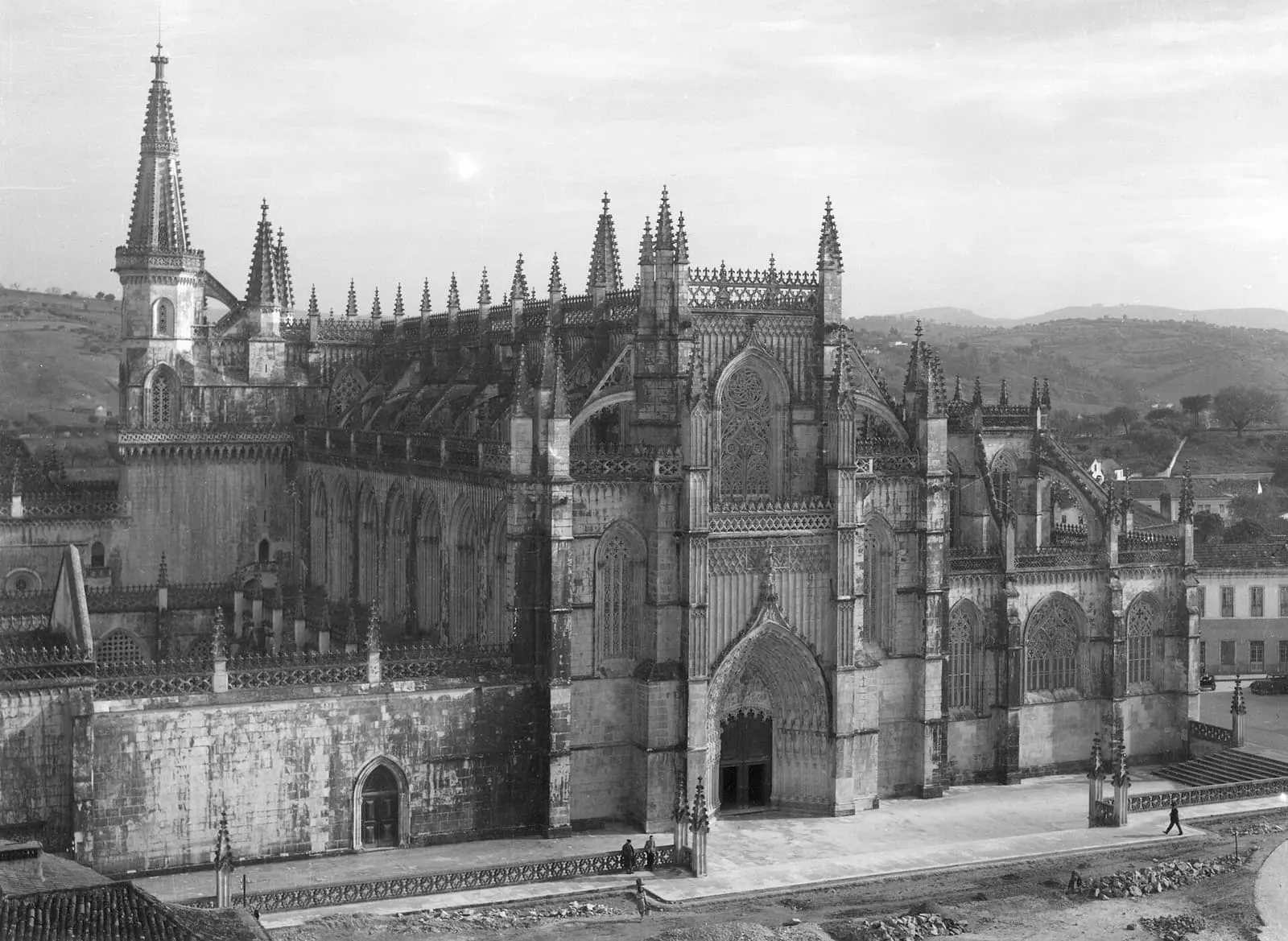
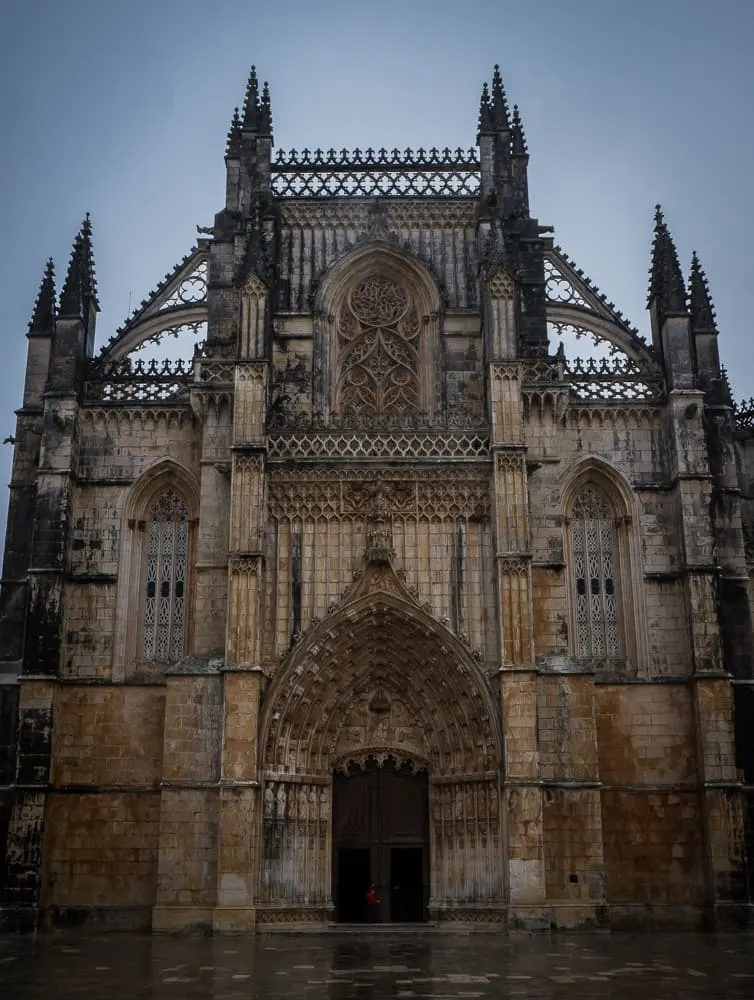
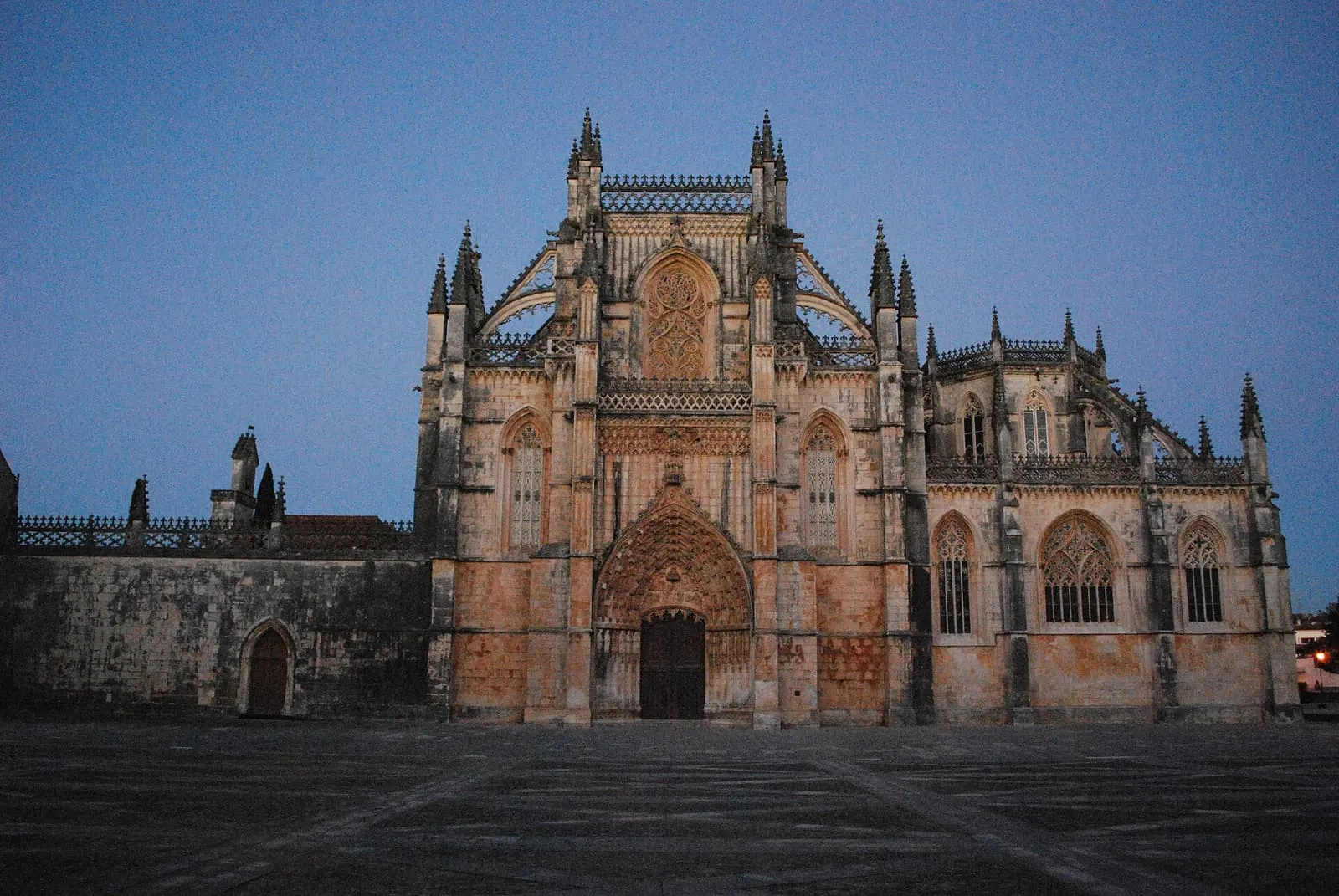
Batalha Monastery, formally the Monastery of Santa Maria da Vitória, stands in the town of Batalha, Leiria District, as one of the most extraordinary Gothic ensembles in the Iberian Peninsula. Commissioned by King João I to fulfill a vow made before the Battle of Aljubarrota in 1385, the monument became simultaneously a military memorial, a Dominican religious house, and the royal pantheon of the House of Aviz. It has been a UNESCO World Heritage Site since 1983.
A work spanning over a century
Construction began in 1386 and continued intermittently until around 1517, spanning the reigns of seven monarchs. This lengthy timeline resulted in a remarkable layering of artistic styles. The first architect, Afonso Domingues, imbued the temple with a sober, proportioned Gothic foundation. He was succeeded by master Huguet, trained in northern traditions, who introduced a flamboyant Gothic style of great verticality, responsible for the imposing western façade, the soaring nave, and the Founder’s Chapel.
The Founder’s Chapel, square in plan and crowned by an octagonal lantern, houses the tombs of King João I and his wife Queen Philippa of Lancaster, depicted holding hands—the first royal pantheon conceived as an autonomous space in Portugal. Surrounding them rest their children, including Prince Henry the Navigator, a central figure in Portugal’s maritime expansion.
The stone of Batalha encapsulates a political idea: by uniting military victory, Marian devotion, and the eternal rest of kings in a single building, João I established in architecture the legitimacy of the new dynasty.
From Gothic to Manueline
By the 16th century, under master Mateus Fernandes, the construction site embraced the decorative exuberance of the Manueline style. The prime example is the famed Unfinished Chapels, an octagonal pantheon begun by King Duarte and never completed: its monumental portal, covered in stone lacework, armillary spheres, and vegetal motifs, is a pinnacle of Portuguese ornamental sculpture. The absence of a vault, exposing the sky, transforms its incompletion into one of the monument’s most poetic images.
The Royal Cloister, Gothic in design, was enriched with Manueline columns and tracery attributed to Diogo de Boitaca, combining crosses of the Order of Christ, shells, and naturalistic elements. Meanwhile, the Chapter House astonishes with its technical daring: a star-shaped vault spanning about nineteen meters without central support, considered so risky it was reportedly built by condemned prisoners. Today, it houses the Tomb of the Unknown Soldier.
Significance and designation
Batalha is a landmark in European architectural history, an early example of International Gothic in Portugal and a laboratory where the Manueline style germinated. UNESCO inscribed the monument in 1983 (reference no. 264) under criteria i and ii, recognizing it as a masterpiece of human creative genius and a decisive influence on Iberian architecture.
Alongside Alcobaça and the Convent of Christ in Tomar, Batalha belongs to the select group of major Portuguese monasteries elevated to World Heritage status, standing as supreme testimonies to the nation’s monastic art.
Frequently asked questions
- Why was Batalha Monastery built?
- It was commissioned by King João I to fulfill a vow to the Virgin Mary, in gratitude for the Portuguese victory at the Battle of Aljubarrota on 14 August 1385 against Castile. Hence its name, Monastery of Santa Maria da Vitória (Our Lady of Victory).
- What are the Unfinished Chapels?
- An octagonal pantheon commissioned by King Duarte as his burial site, left incomplete. The grand Manueline portal, richly carved by Mateus Fernandes, and the absence of a vault give it a unique, unfinished character.
- When was it designated a World Heritage Site?
- Batalha Monastery was inscribed on the UNESCO World Heritage List in 1983 (reference no. 264), meeting criteria i and ii.
Sources
Keep exploring
Heritage nearby
More places to discover from here. Approximate straight-line distances, within 50 km.