Resources
National Museum of Resistance and Freedom — Peniche
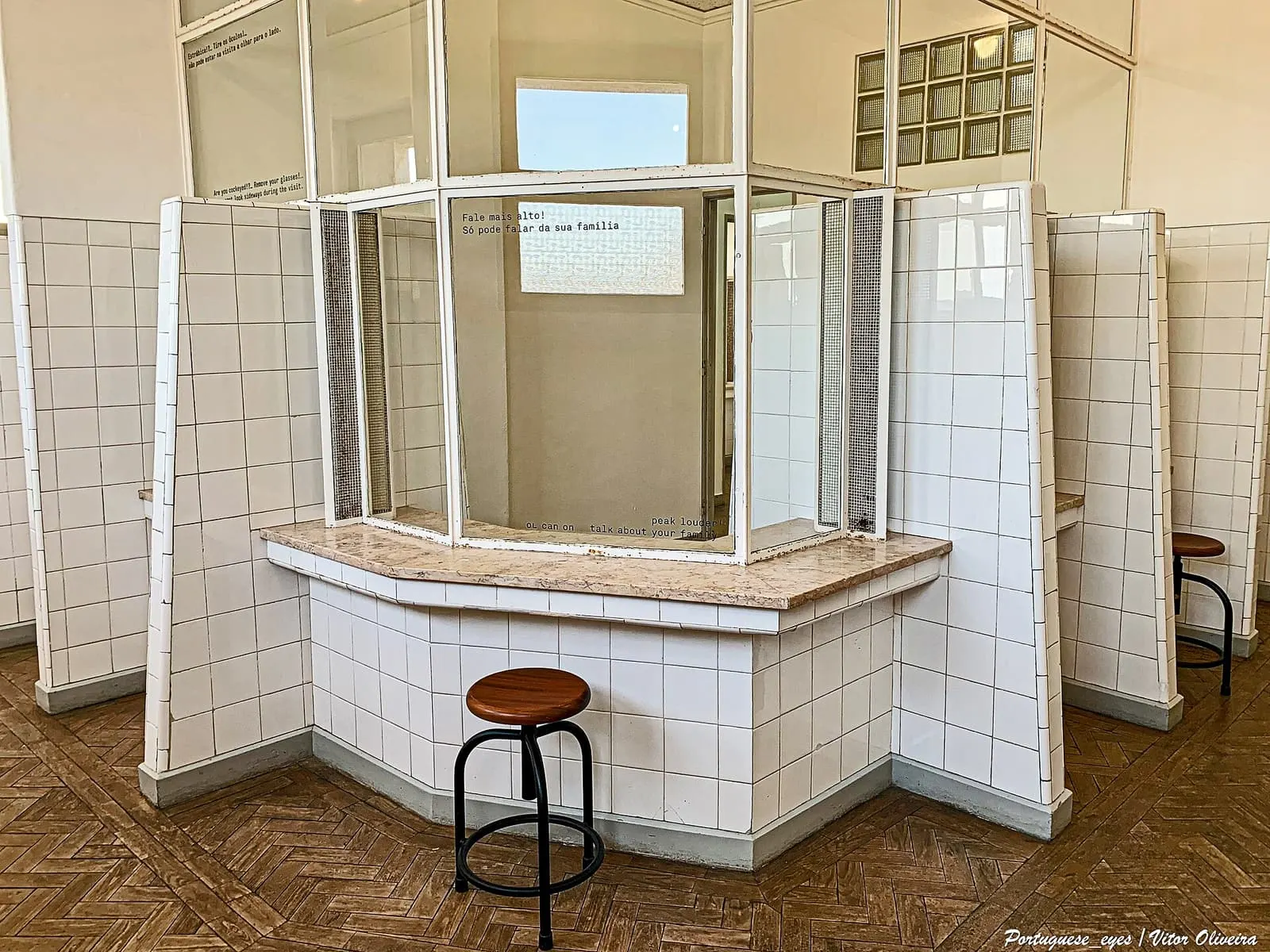
National Museum of Resistance and Freedom, housed in Peniche Fortress, a former political prison of the Estado Novo regime and a memorial to the anti-fascist…
- Location
- Peniche, Leiria
- Built
- 2024
The National Museum of Resistance and Freedom is housed in Peniche Fortress, at the southern tip of the Peniche peninsula (Leiria district, Western region). Dedicated to the memory of resistance to the Estado Novo dictatorship and the conquest of freedom, it occupies precisely the spaces that, between 1934 and 1974, functioned as one of the regime’s most feared political prisons. Inaugurated on 27 April 2024, it is overseen by the Directorate-General for Cultural Heritage and is part of the state’s national museum network.
From political prison to memorial site
For four decades, the bastioned fortress of Peniche was reserved by the political police for opponents considered most dangerous or sentenced to long terms. It was a male prison, through which thousands of political prisoners passed; the memorial erected at the entrance identifies more than 2,600 names. The fortress is also associated with the famous escape of 3 January 1960, when Álvaro Cunhal and nine other prisoners scaled the walls, an episode that transformed it into a major symbol of anti-fascist resistance.
With the Carnation Revolution on 25 April 1974, the political prisoners of Peniche were freed in the following days, ending the building’s prison cycle. The demand that the fortress become a memorial site came largely from former prisoners and local associations, with the museum often described as born from popular will.
The museological project
The creation of the museum is part of a broader process of heritagisation of the memory of dictatorship and democracy in Portugal. The intervention, designed by architect João Barros Matos, sought to make legible three overlapping temporal layers in the same place: the time of the fortress, the time of the prison, and the time of the museum. The exhibition programme relies on testimonies, documents, and objects that reconstruct the experience of political detention and the mechanisms of repression under the Estado Novo.
The project, which involved the closure of the fortress in 2022, represented an investment of around €4.3 million, co-financed by EU funds. In its first year of operation, the museum received over 146,000 visitors, a figure confirming public interest in this type of difficult memory.
Heritage significance
As a national museum, it is now one of Portugal’s leading institutions dedicated to the memory of anti-fascism, alongside other facilities devoted to the history of heritage institutions. Its location in a bastioned fortress classified as a National Monument since 1938 gives it a dual dimension: that of a military building of architectural value and that of a site of conscience, where the reading of the space is inseparable from the human experience that unfolded there. The museum thus positions itself not only as an exhibition space but as an instrument of civic education and transmission of the memory of resistance to new generations.
Frequently asked questions
- When was the National Museum of Resistance and Freedom inaugurated?
- The museum was inaugurated on 27 April 2024, a symbolic date marking 50 years since the liberation of political prisoners from Peniche Fortress, which occurred just days after the Carnation Revolution of 1974.
- Where is the museum located?
- It is housed in Peniche Fortress, at the southern tip of the peninsula, in the municipality of Peniche, Leiria district, in the Western region. It occupies the spaces of the former Estado Novo political prison.
- What is the museum's mission?
- To research, preserve, and communicate the memory of resistance to the Estado Novo dictatorship and the conquest of freedom and democracy, based on the experiences of those imprisoned for political reasons between 1934 and 1974.
Sources
Keep exploring
Heritage nearby
More places to discover from here. Approximate straight-line distances, within 50 km.
Resources for research
Find the sources. Follow the story.
Guides to researching buildings, exploring museum collections and understanding heritage protection.
SIPA
Get to know the architectural inventory, building records and documentary archive.
Read the guideMuseum collectionsMatrizNet
Explore the museum catalogue and records of works, materials, authorship and provenance.
Read the guideHeritage protectionHeritage classification
Understand cultural property categories and the levels of national, public and municipal interest.
Read the guide