Monuments
Fortress of Peniche
Fortress of Peniche: a 16th–17th-century bastioned stronghold in Peniche, a political prison under the Estado Novo and today the National Museum of Resistance…
- Location
- Peniche, Leiria
- Built
- 1557–1645
- Style
- Arquitetura militar abaluartada
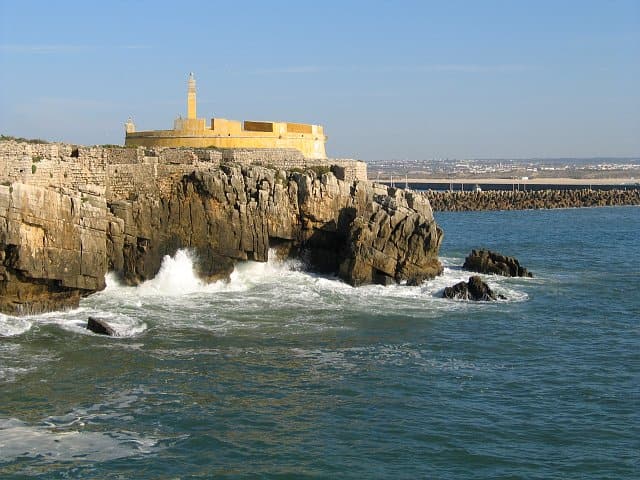
The Fortress of Peniche stands at the southern tip of the Peniche peninsula, atop the rocky escarpment that dominates the Atlantic, in the municipality of Peniche (district of Leiria). It is one of the most remarkable bastioned strongholds on the Portuguese coast, classified as a National Monument since 1938. Beyond its value as an example of modern military architecture, it is today best known for the role it played as a political prison during the Estado Novo.
A stronghold above the Atlantic
The fortification of the peninsula responded to the need to defend the western coast from the maritime raids that plagued the kingdom in the sixteenth century. Works began in 1557, during the reign of King John III, with the building of a first redoubt, but the development of the bastioned enclosure extended throughout the sixteenth and seventeenth centuries. Under the direction of Count Jerónimo de Ataíde, the complex was considered complete around 1645, by then in the context of the Restoration War, when the defence of the coast took on new urgency.
The result is a stronghold of irregular polygonal plan, adapted to the terrain, with bastions, ravelins, moats and thick walls reinforced by broad angular bastions — the vocabulary characteristic of the bastioned military architecture that spread across Europe from the Renaissance onwards. Over the following centuries, the fortress witnessed notable military episodes, from resistance to the landing of troops in the context of the Iberian Union to the French occupation during the Invasions, at the beginning of the nineteenth century.
From military defence to political prison
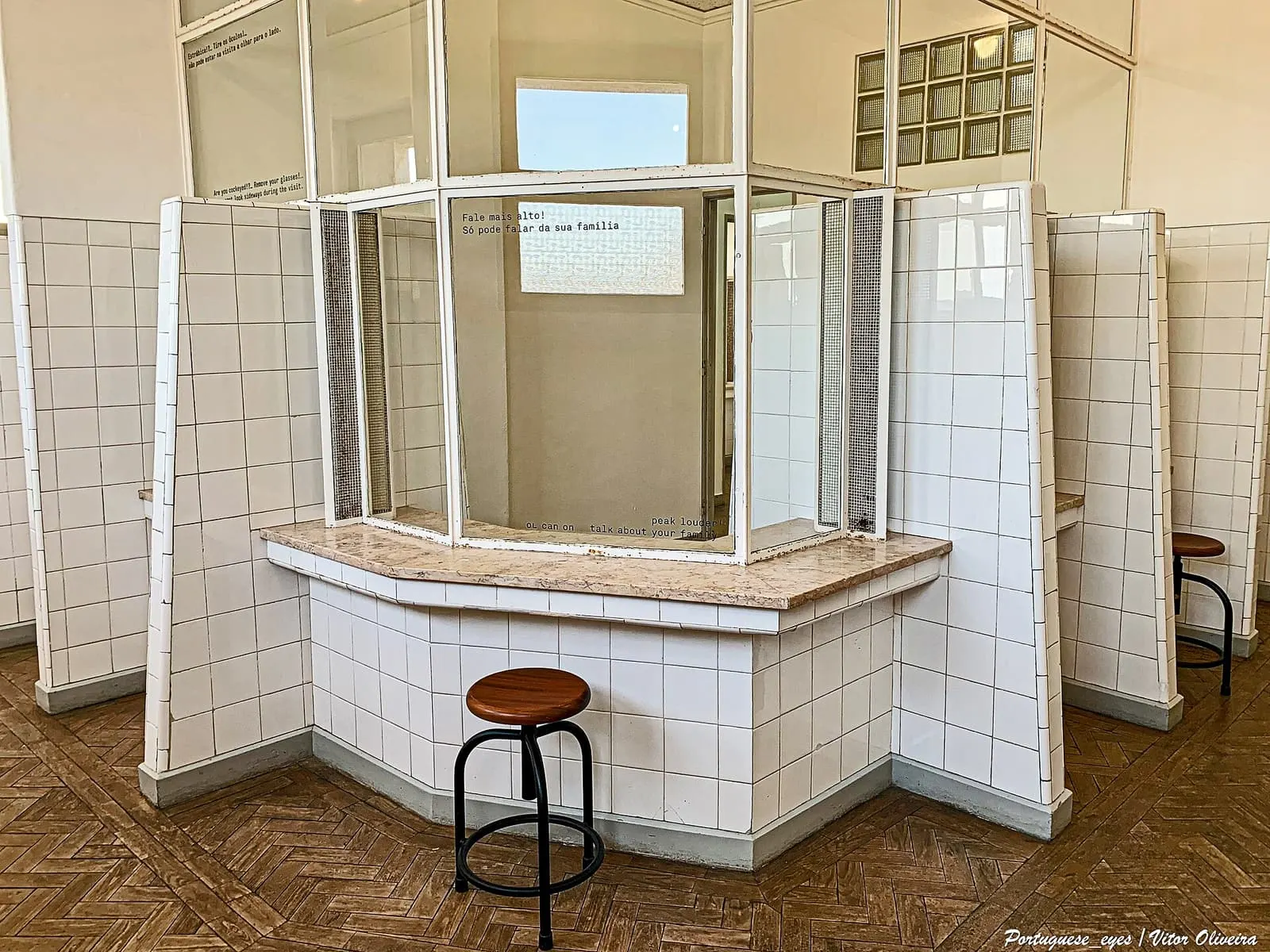
With its defensive function exhausted, the fortress was gradually reconverted to various uses throughout the nineteenth century, already serving, on occasion, as a prison. It was, however, in 1934 that the Estado Novo turned it into a high-security political prison, intended to detain opponents of the regime of António de Oliveira Salazar.
For four decades, the Fortress of Peniche became one of the most feared dungeons of the dictatorship, linked to the activity of the political police. The most celebrated episode occurred on the night of 3 January 1960, when Álvaro Cunhal and nine other prisoners staged a spectacular escape, descending the walls with the aid of ropes. The so-called “Peniche escape” became one of the great symbols of Portuguese anti-fascist resistance. With the Carnation Revolution, on 25 April 1974, the fortress was one of the movement’s targets and the political prisoners were freed.
Memory and museum
After the Revolution, the monument housed for years former settlers returning from the ex-colonies and was the subject of successive reflections on the fate to be given to a space of such dense memory. In 2024, the fortress came to house the National Museum of Resistance and Freedom, an institution devoted to preserving the memory of political repression and celebrating the winning of democratic freedoms.
Alongside other Portuguese coastal fortifications, the Fortress of Peniche thus combines two readings: that of modern military ingenuity, legible in its bastioned lines, and that of the country’s contemporary history, inscribed in the cells where repression and resistance met.
Frequently asked questions
- Who ordered the Fortress of Peniche to be built?
- The fortification works began in 1557, during the reign of King John III, and the bastioned complex was only completed around 1645, under the direction of Count Jerónimo de Ataíde.
- Why is the Fortress of Peniche famous as a prison?
- Between 1934 and 1974 it operated as a high-security political prison of the Estado Novo, where numerous anti-fascist resistance fighters were held. The celebrated escape of Álvaro Cunhal and other prisoners, on 3 January 1960, turned it into a symbol of the resistance.
- What can be visited at the fortress today?
- Since 2024 the fortress has housed the National Museum of Resistance and Freedom, dedicated to the memory of the resistance to the dictatorship and the winning of freedom. It is also possible to walk along the bastioned walls and the bastions overlooking the Atlantic.
Sources
Keep exploring
Heritage nearby
More places to discover from here. Approximate straight-line distances, within 50 km.