Typologies
Bastioned Fortresses
Bastioned fortresses in Portugal: the Italian trace, Vauban's system and the Luso-Spanish border, from Valença and Almeida to Elvas and Marvão.
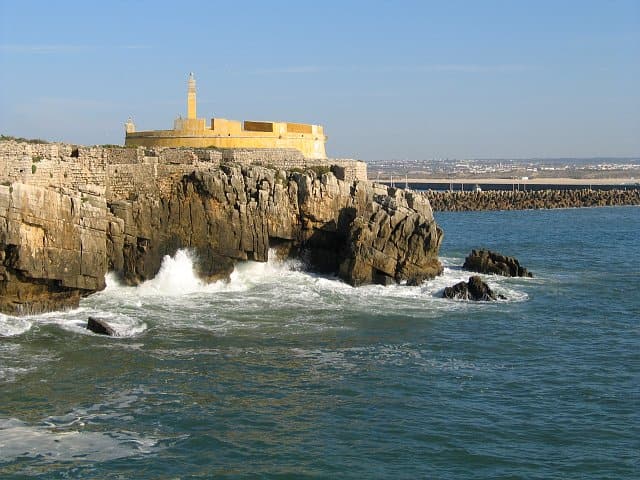
- Built
- séculos XVI–XVIII
- Style
- Fortificação abaluartada (traça italiana / sistema de Vauban)
Bastioned fortresses are one of the most distinctive typologies of Portuguese military heritage. Born of the response to gunpowder artillery, this architecture replaced the high walls and towers of medieval castles with low, thick and geometrically calculated lines, capable of absorbing the impact of cannonballs and of sweeping the surrounding ground with crossfire. The result is the unmistakable star-shaped plan that still today traces the outline of so many border towns.
From the Italian trace to Vauban’s system
The bastioned model emerged in Italy from the late fifteenth century onwards, and is therefore known as the Italian trace. Its essential element is the bastion, a pentagonal structure projecting outward from the wall that eliminates blind angles and allows reciprocal flanking between neighbouring works. The bastions are joined by straight curtain walls and reinforced by ravelins within the moat, preceded by the counterscarp, the covered way and a gently sloping glacis that protects the foot of the walls from direct fire.
Throughout the sixteenth and seventeenth centuries, the system was successively refined in the Italian, Dutch and French schools. In France, Sébastien Le Prestre de Vauban (1633–1707), Marshal and Commissary-General of Fortifications under Louis XIV, codified the principles that would make his name synonymous with the discipline itself. His influence crossed the border and shaped much of the Portuguese strongholds raised in the same period.
The bastioned logic inverted defence: it was no longer a matter of building higher walls, but of organising fire so that no point of the perimeter would be left undefended.
The Luso-Spanish border
It was with the Restoration War (1640–1668) that Portugal invested most heavily in this typology. To secure its independence from the Crown of Castile, the Portuguese Crown hired foreign engineers — among them the Dutch Jesuit Cosmander and several French masters — and filled the land border with modern fortifications, from Castro Marim to Valença do Minho, by way of Almeida, Chaves, Marvão and Elvas.
These strongholds were not isolated works, but links in a defensive system articulated along the raia, the border line separating Portugal from Spain. Each one controlled a corridor of penetration, and together they formed a continuous barrier several hundred kilometres long. The garrison border town of Elvas, with its immense belt of bastions and the satellite forts of Nossa Senhora da Graça and Santa Luzia, became the most grandiose example, designated a UNESCO World Heritage Site in 2012.
A recognised heritage
The exceptional nature of this legacy led to a joint nomination of the bastioned fortifications of the border as a World Heritage Site, in which Almeida, Marvão and Valença stand out as emblematic examples of a border system close, in conception and execution, to the Vaubanian models. The tourism promotion of this ensemble finds expression today in the Route of the Bastioned Fortresses of the Border, which runs through the main strongholds along the frontier.
More than machines of war, these fortresses redrew the territory. Many of the fortified towns of the border preserve their star-shaped perimeters intact, in which the town and the defence merge into a single form — testimony to almost three centuries of military engineering in the service of Portuguese sovereignty.
Frequently asked questions
- What is a bastioned fortress?
- It is a fortification designed to withstand artillery, organised around pentagonal bastions linked by curtain walls, which replaced the towers and vertical walls of medieval castles with low, geometric, star-shaped layouts.
- What is the largest bastioned fortress in Portugal?
- Elvas holds the largest ensemble of land-based bastioned fortifications in the world, designated a UNESCO World Heritage Site in 2012.
- What was Vauban's system?
- It was the set of fortification principles perfected by the French engineer Sébastien Le Prestre de Vauban (1633–1707), which influenced many of the strongholds along the Portuguese border built during and after the Restoration War.