Monuments
Palácio da Bolsa (Porto)
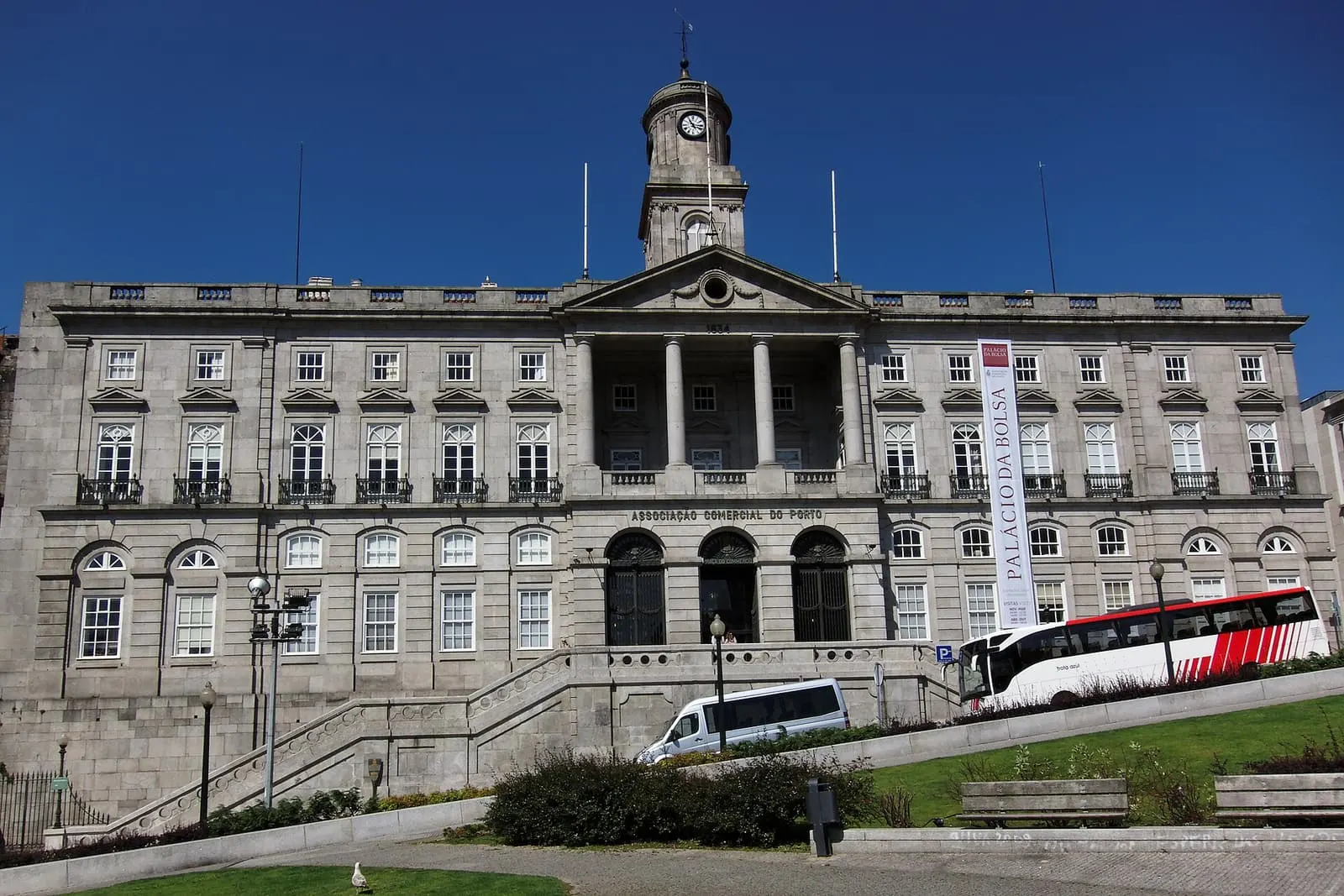
Palácio da Bolsa in Porto: 19th-century headquarters of the Commercial Association and National Monument, renowned for its dazzling Moorish-inspired Arabian Hall.
- Location
- Porto, Porto
- Built
- 1842–1910
- Style
- Neoclássico
Palácio da Bolsa stands in the heart of Porto’s historic center on Rua de Ferreira Borges, facing Praça do Infante D. Henrique. Commissioned by the Porto Commercial Association, it is one of the city’s most emblematic 19th-century monuments and has been classified as a National Monument since 1982. The building lies within the perimeter of Porto’s UNESCO-listed historic center, ranking among its most visited attractions.
Origins and Construction
The palace’s history begins in 1832 when a fire during the Siege of Porto destroyed part of the former Convent of São Francisco. Queen Maria II donated the ruins to the city’s merchants, who decided to establish their association there. The foundation stone was laid in October 1842, following a Neoclassical design by architect Joaquim da Costa Lima Júnior, a disciple of the school that renewed Porto’s architecture with English Palladian influences.
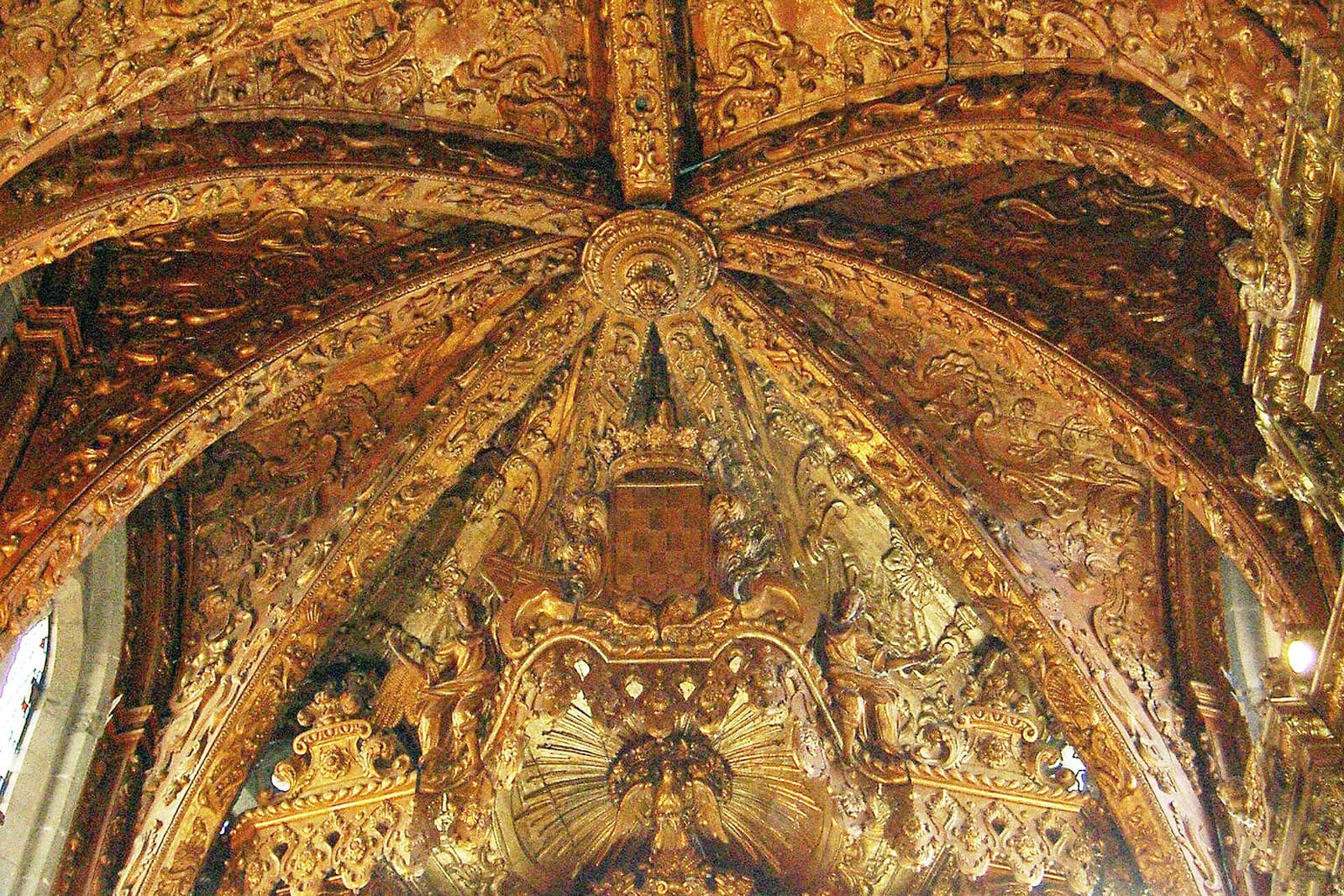
Construction spanned nearly seven decades under successive architects – including Gustavo Adolfo Gonçalves de Sousa, Tomás Soller, and José Marques da Silva – until substantial completion in the early 20th century. This prolonged timeline explains the harmonious coexistence of diverse decorative styles inside, from the exterior’s Neoclassical sobriety to the ceremonial rooms’ exuberance. The palace directly adjoins the Church of São Francisco, heir to the same medieval monastic complex.
The Nations’ Courtyard and Arabian Hall
Upon entering, visitors encounter the Nations’ Courtyard, an octagonal space covered by a glazed metal dome decorated with coats of arms of countries maintaining 19th-century trade relations with Porto – a manifesto of the city’s mercantile vocation.
The tour’s highlight, however, is the Arabian Hall. Designed in Neo-Moorish style and inspired by Granada’s palaces, it was executed between 1862-1880 by Gonçalves de Sousa. Its walls and ceiling are covered in intricate gold-leaf stuccowork with geometric motifs and Arabic calligraphy. Inaugurated in 1880, it continues hosting state receptions and official ceremonies.
The Arabian Hall’s grandeur was no mere aesthetic whim: Porto’s bourgeoisie, enriched by wine trade and Atlantic commerce, made the palace a calling card designed to impress foreign merchants and dignitaries.
Significance and Visits
More than a former trading floor, Palácio da Bolsa embodies the liberal, entrepreneurial spirit that shaped 19th-century Porto. Its rooms – the Commercial Tribunal, Golden Room, Noble Hall, and library – form a ensemble blending European decorative arts with assertions of local economic power.
Today it remains the Porto Commercial Association’s headquarters while serving as a museum space and venue for cultural and protocol events. It stands near other Porto heritage landmarks like Porto Cathedral, forming an essential itinerary through Northern Portugal’s monumental heritage.
Frequently asked questions
- Where is Palácio da Bolsa located?
- It is situated on Rua de Ferreira Borges, near Praça do Infante D. Henrique and the Church of São Francisco, in Porto's historic center – a UNESCO World Heritage site.
- What is the Arabian Hall?
- The palace's most celebrated room, decorated between 1862-1880 in Neo-Moorish style with gold-leaf stuccowork and Arabic inscriptions. It was inaugurated in 1880.
- Who commissioned Palácio da Bolsa?
- The Porto Commercial Association, which remains its owner and headquarters. The foundation stone was laid in 1842.
Sources
Keep exploring
Heritage nearby
More places to discover from here. Approximate straight-line distances, within 50 km.