Archaeology
The Palaeolithic in Portugal
The Palaeolithic in Portugal: from the first hunter-gatherers to lithic industries and rock art, spanning hundreds of thousands of years.
The Palaeolithic encompasses the longest and oldest chapter of prehistory, defined by the production of flaked stone tools by nomadic hunter-gatherer communities. In the territory that now corresponds to Portugal, this period spans several hundred thousand years, from the appearance of the first human groups until the end of the last glaciation around twelve thousand years ago. It is a time without writing, known mainly through chipped stones, faunal remains, and rare occurrences of human bones and art.
The first inhabitants
The oldest evidence of human presence comes from lithic industries associated with the Lower Tagus river terraces, where successive phases of an evolved Acheulean industry have been documented and dated to several hundred thousand years ago. The karst region around the Almonda river springs in Torres Novas municipality has proven one of the richest in Europe: the Aroeira Cave yielded a human skull around 400,000 years old, one of the oldest fossils in the Iberian Peninsula and a key piece for understanding the early peopling of the western peninsula.
These Lower Palaeolithic groups produced bifaces and other robust stone tools using local raw materials like quartzite and flint. Their mobility followed seasonal resources along valleys and the coastal strip, then retreated due to sea level fluctuations.
Neanderthals and modern humans
During the Middle Palaeolithic, around 300 to 30 thousand years ago, the territory was inhabited by Neanderthals, makers of Mousterian industries characterised by Levallois technique. The Furninha Cave on the Peniche peninsula counts among the westernmost known Neanderthal sites, and numerous caves in Estremadura preserve traces of this long occupation.
The transition to the Upper Palaeolithic brought the arrival of anatomically modern humans and the disappearance of Neanderthals. The most famous find from this period is the Lagar Velho shelter in Lapedo Valley near Leiria, excavated in 1998 by João Zilhão, Cidália Duarte and Erik Trinkaus. Here was uncovered the so-called Lapedo Child, a child’s grave with red ochre dating back around 28,000 years.
The Lapedo Child, with its mix of Neanderthal and modern human traits, fuelled a decisive debate about hybridisation between the two populations — now confirmed by genetics.
Art, technology and legacy
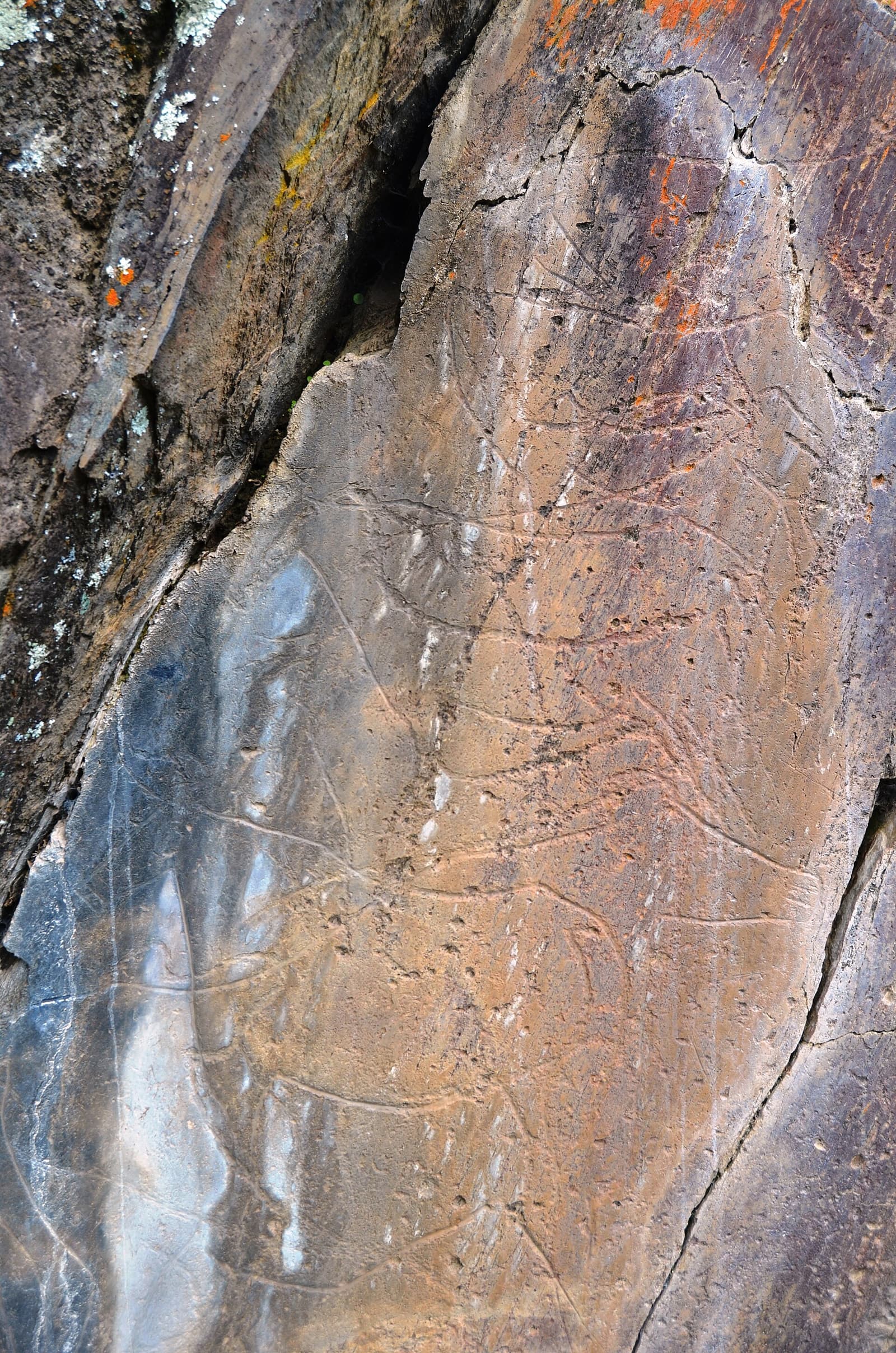
The Upper Palaeolithic was also the time of the first artistic expressions in Portuguese territory. The 1994 discovery of the open-air engravings in the Côa Valley revealed the largest known open-air sanctuary of Palaeolithic rock art, with thousands of figures of horses, aurochs and other animals incised on schist. Parietal art is represented in the Escoural Cave in Alentejo, while new clusters of engravings have been identified in the Tagus Valley.
Lithic industries became more specialised — blades, burins and points crafted with extraordinary finesse — accompanying an increasingly diversified hunting and gathering economy. This long journey forms the deepest foundation of Portuguese archaeology and prepares the transition to the Neolithic, when agriculture and sedentism would radically transform community lifestyles. For a broader view of figurative expressions from this period, see also prehistoric art in Portugal.
Frequently asked questions
- When did human occupation begin in what is now Portuguese territory?
- The oldest traces date back to the Lower Palaeolithic, with lithic industries associated with the Lower Tagus river terraces dating back several hundred thousand years. The Aroeira skull, from the Aroeira cave (Almonda), is around 400,000 years old.
- Who was the Lapedo Child?
- This is the skeleton of a child of about four years old, discovered in 1998 at the Lagar Velho shelter near Leiria, dating back approximately 28,000 years. It was buried with red ochre and displays a mosaic of traits from both modern humans and Neanderthals.
- Where can Palaeolithic rock art be found in Portugal?
- The most important ensemble is in the Côa Valley, with thousands of open-air engravings. There are also clusters in the Tagus Valley and parietal art in the Escoural Cave in Alentejo.