Places
Ponta Delgada
Ponta Delgada, the Azorean capital on São Miguel Island: City Gates, Baroque churches, São Brás Fortress, and the Convent of Hope of Santo Cristo.
- Location
- Ponta Delgada, Açores
- Built
- Séc. XV–XVIII
- Style
- Manuelino, Barroco
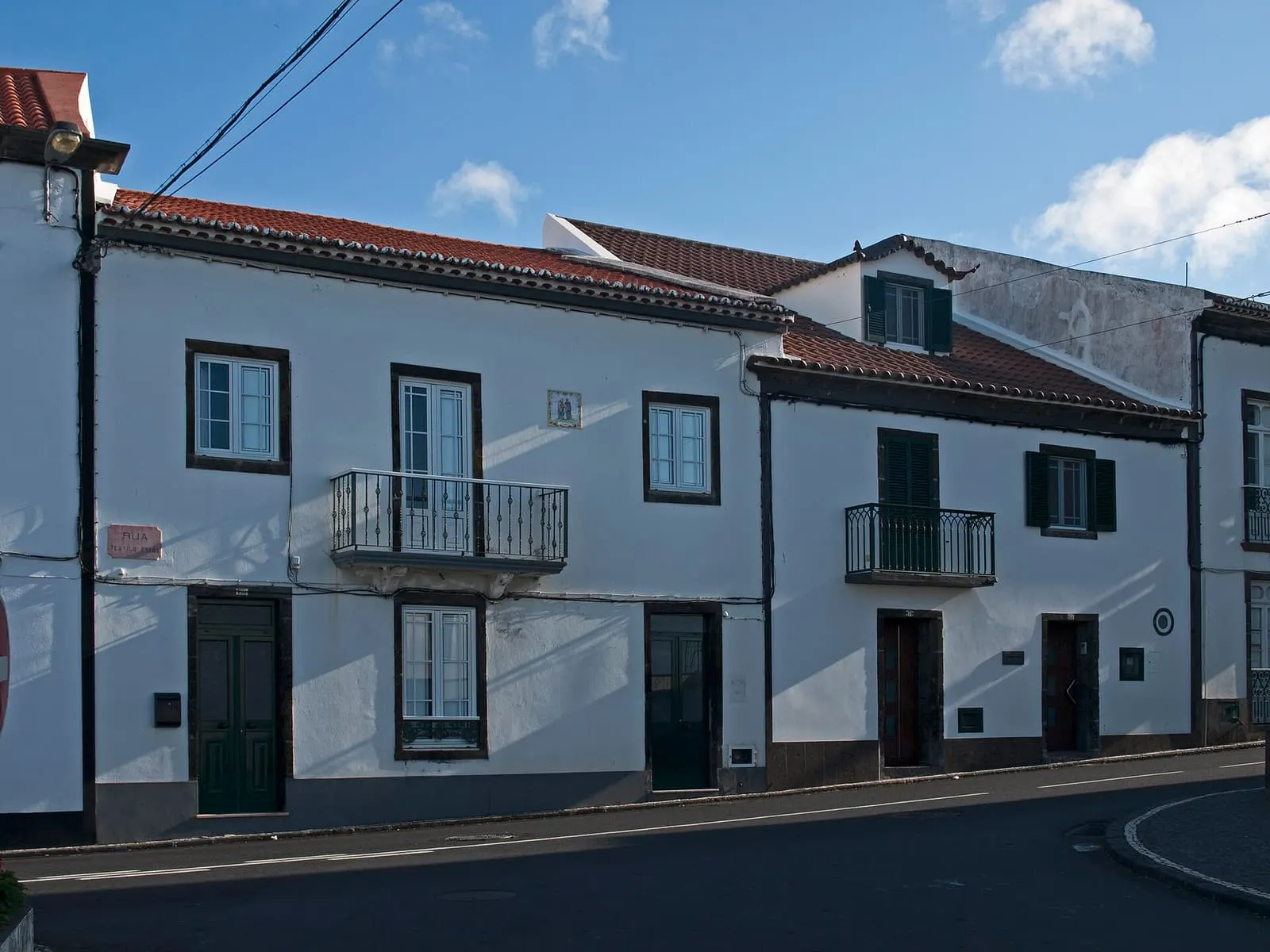
Those arriving in Ponta Delgada by sea first see the white line of houses stretching along São Miguel’s southern coast, punctuated by the dark volcanic stone and the bell towers of churches. The city did not emerge from a sheltered bay, like Angra do Heroísmo, but from a fishing village on a narrow spit of land—the “ponta delgada” (thin point) that gave it its name. It was through agriculture and trade, rather than its port geography, that it became the largest urban center in the Azores.
From Settlement to Capital
Ponta Delgada was elevated to town status in 1499 and, on April 2, 1546, received its city charter from King João III, becoming the archipelago’s second city after Angra. Its rise was fueled by wheat, woad—a textile dye highly sought in Europe—and later, oranges, exported on a large scale to England throughout the 19th century. This commercial prosperity filled the city with manor houses, convents, and landscaped estates, making it one of the wealthiest and most populous towns in Portugal during the 1800s.
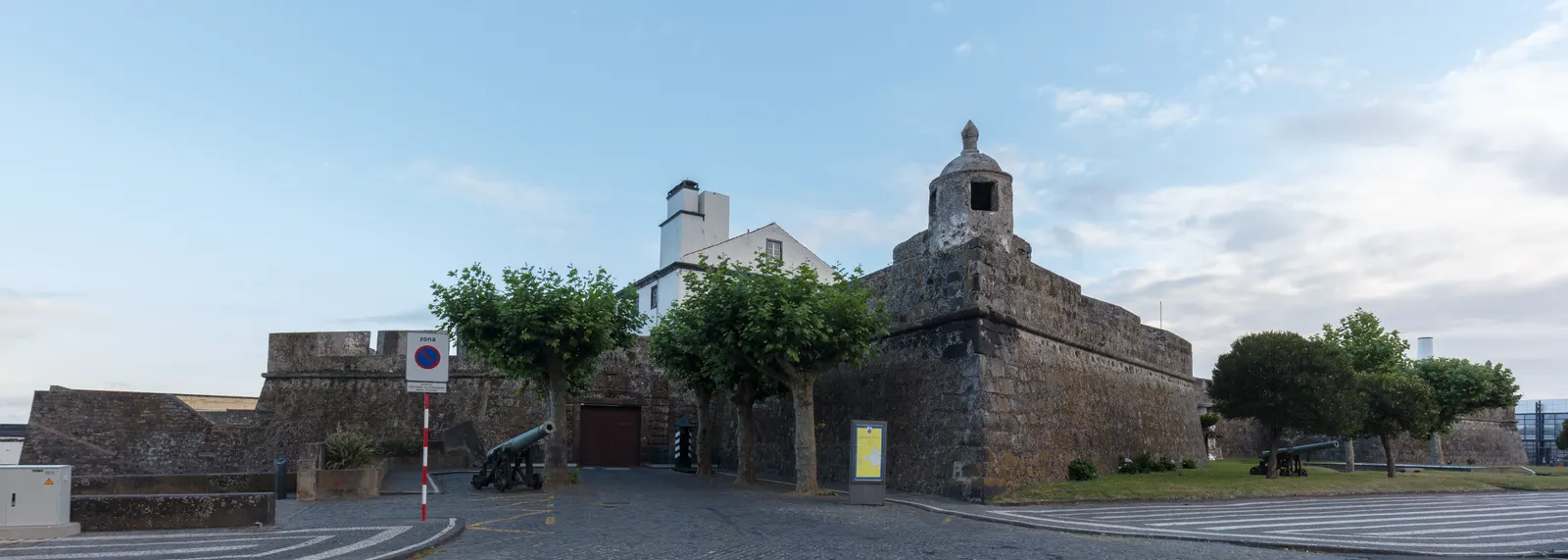
Atlantic trade also brought threats from the sea. São Brás Fort developed through sixteenth-century building campaigns to defend Ponta Delgada against seaborne attacks. Sources differ over the exact starting date and design authorship; later interventions continued to change the fortress. It now houses the Azores Military Museum, whose history and collections should be distinguished from the building’s history.
Ponta Delgada grew with its back to defense and its face to the land: its monumental wealth is, above all, the portrait of an island mercantile elite that prospered by exporting the fruits of a volcanic island.
Dark Stone, Gilded Woodwork
The historic center preserves a remarkable collection of religious architecture, where basalt masonry contrasts with whitewashed facades—the same chromatic duality that defines all traditional Azorean architecture. The Mother Church of São Sebastião, built between 1531 and 1547 in fulfillment of a vow to end an epidemic, features two exquisitely carved portals among the finest island examples of the Manueline style; its interior, remodeled in later periods, combines gilded woodwork, azulejos, and silverwork from various origins.
Nearby stands the Convent of Nossa Senhora da Esperança, inaugurated in 1541, which houses the image of Senhor Santo Cristo dos Milagres. From here departs, around the fifth Sunday after Easter, the procession of the Festivities of Senhor Santo Cristo, one of the largest religious celebrations in the Azores—distinct yet close in timing and communal spirit to the Festivals of the Holy Spirit that take place across the archipelago.
The Symbol of a City
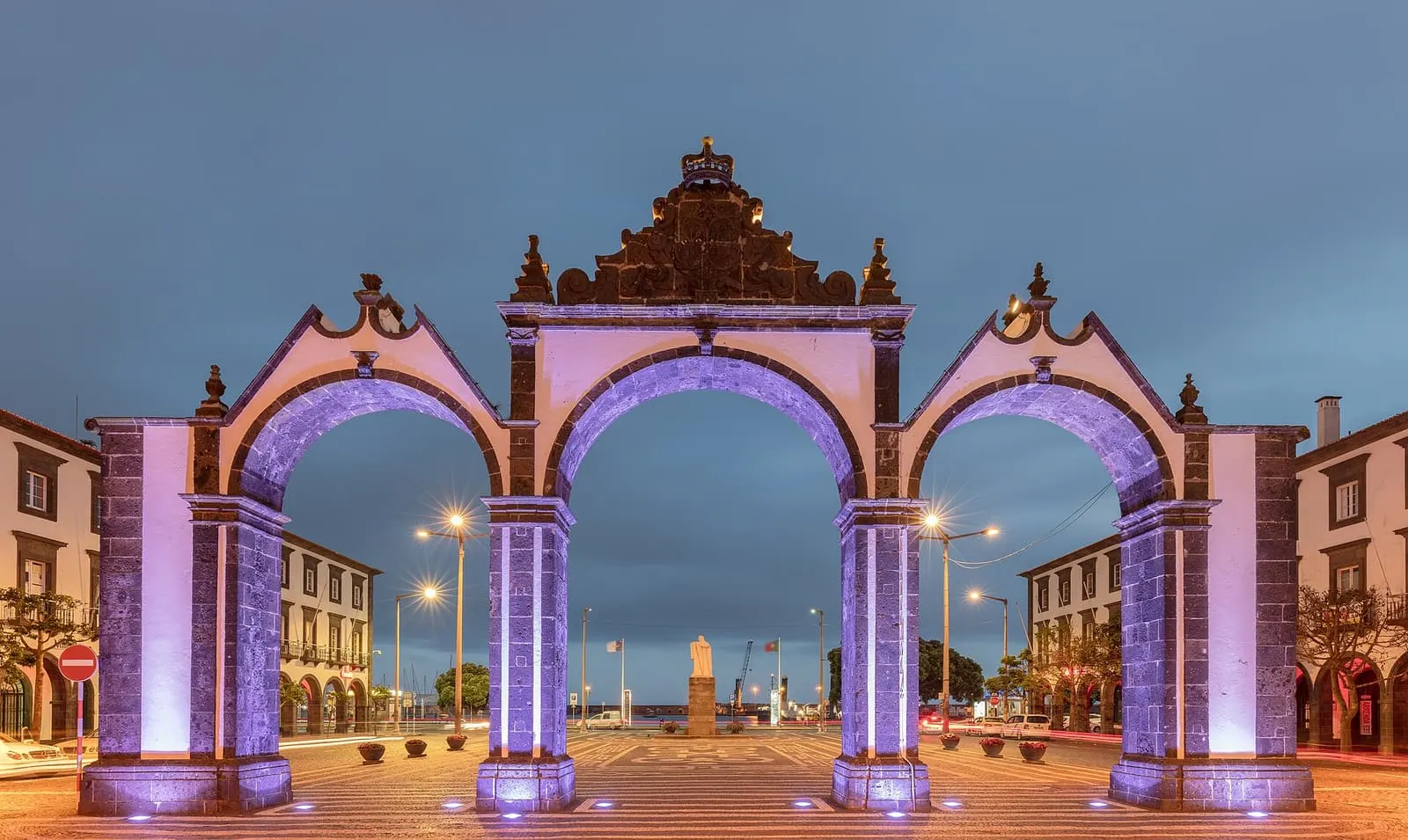
No monument encapsulates Ponta Delgada better than the City Gates. Erected in 1783 near the old dock, this three-arched basalt portal marked the ceremonial entrance for those disembarking. In 1952, with the redevelopment of the waterfront, it was dismantled and rebuilt in Gonçalo Velho Cabral Square, facing the city hall, where it remains as the city’s emblem and graphic symbol.
Alongside its built heritage, Ponta Delgada established itself as the political capital of the Autonomous Region of the Azores after 1976—though sharing regional functions with Angra do Heroísmo, home to the court and diocese, and Horta, where the Legislative Assembly is based. This balance among the islands is, in itself, part of the Azorean identity: no single city holds all power, and Ponta Delgada stands primarily as the gateway, marketplace, and largest urban center of an archipelago scattered across the Atlantic.
Frequently asked questions
- On which island is Ponta Delgada located?
- Ponta Delgada is situated on the southern coast of São Miguel Island, the largest in the Azores archipelago. It is the largest city in the autonomous region and its administrative capital.
- What are the City Gates?
- They are a three-arched stone portal made of basalt, erected in 1783 near the old dock and relocated in 1952 to Gonçalo Velho Cabral Square. They have become the emblem and graphic symbol of Ponta Delgada.
- When are the Festivities of Senhor Santo Cristo dos Milagres held?
- They take place around the fifth Sunday after Easter, starting from the Convent of Hope. They are one of the largest and oldest religious celebrations in the Azores.
Sources
Keep exploring
Heritage nearby
More places to discover from here. Approximate straight-line distances, within 50 km.