Typologies
Medieval Bridges
Portugal's medieval stone bridges: pointed arches, cutwaters, and humpback profiles that spanned rivers between the 12th and 15th centuries.
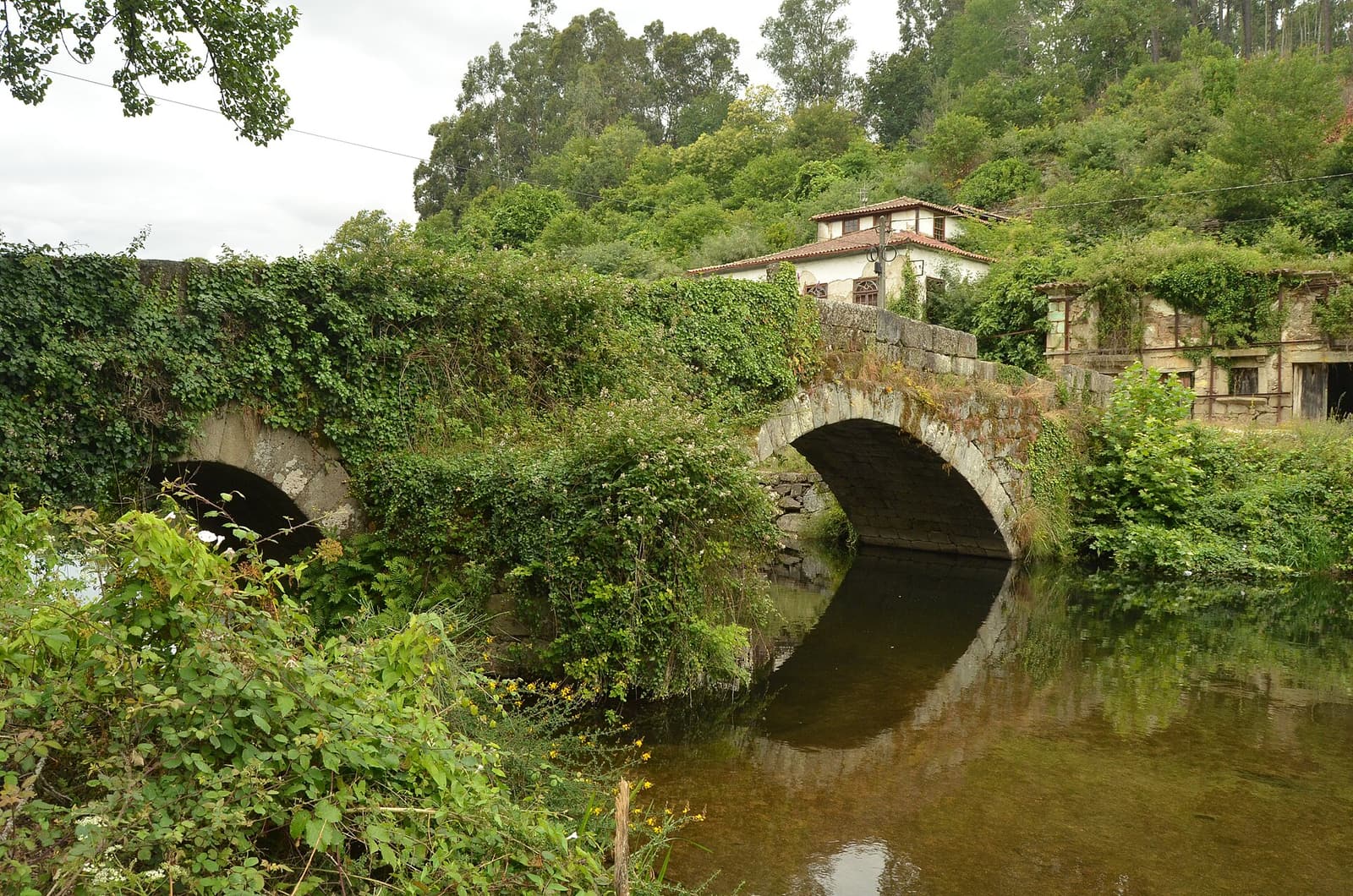
Medieval bridges represent one of the most expressive typologies of Portugal’s built heritage. Constructed primarily between the 12th and 15th centuries using granite masonry and ashlar, they ensured river crossings at a time when the movement of people, goods, and armies relied entirely on few reliable passages. Many were built where Roman crossings once stood, repurposing ancient foundations and road alignments, making the boundary between ancient substrate and medieval construction often indistinct.
Identifying a medieval bridge
Unlike the horizontal profile and semicircular arches characteristic of Roman bridges, medieval bridges—particularly from the Gothic period onward—frequently adopt pointed arches and a humpback (or “donkey back”) deck that rises steeply to a wider, taller central span before descending to the opposite bank. This design isn’t merely aesthetic: it concentrates the largest opening where water flow is strongest, reducing structural resistance during floods.
Piers are reinforced with prismatic cutwaters, resembling ship prows, which break currents and protect against flood debris. They often feature relief openings that lighten the deck’s mass and allow overflow passage. Ashlar stones frequently bear stonemasons’ marks—precious records of medieval workshops.
In well-designed Gothic bridges, form followed water: the central span wasn’t ornament but builders’ response to flood behavior.
Function and power
Beyond infrastructure, medieval bridges were territorial control instruments. They formed part of defensive systems—like Ponte de Lima’s fortified medieval section with towers connecting to town walls—and served as toll collection points. The most eloquent example is Ucanha’s fortified bridge in Tarouca, whose 1465 tower (commissioned by Salzedas Monastery’s abbot) marked entry to monastic lands and collected passage fees. Building, repairing, or taxing bridges thus asserted clear jurisdiction—royal, seigneurial, or monastic.
This legal dimension explains why many towns derive names from their crossings, from Ponte de Lima itself to Ponte da Barca (where a river ferry preceded its mid-15th century stone bridge).
Notable examples
Among the most remarkable specimens are Ponte de Lima’s bridge (combining Roman origins with fifteen medieval arches over the Lima River) and Barcelos’ Gothic medieval bridge, built in the 14th century’s first half by Count D. Pedro to connect Barcelos to Barcelinhos and serve its famous fairs. Many such structures belong to ancient medieval road networks, where pilgrims and hikers still traverse six-century-old arches. The monumental crossing at Ponte de Lima—Portugal’s oldest town—remains its most recognizable symbol.
From the 19th century onward, iron and concrete rendered this ashlar engineering obsolete, giving way to metal bridges that transformed Portugal’s river landscapes. Surviving medieval bridges—many classified as national monuments since 1910—endure as eloquent testimonies to construction knowledge and territorial organization in medieval Portugal, integral to studying built heritage typologies.
Frequently asked questions
- What distinguishes a medieval bridge from a Roman bridge?
- Medieval bridges typically feature pointed or broken arches and a humpback profile with a taller central span, whereas Roman bridges favor semicircular arches and a more horizontal profile. Many medieval bridges, however, were rebuilt upon Roman foundations.
- What was the purpose of towers on some medieval bridges?
- Towers served defensive purposes, asserted seigneurial authority, and functioned as toll collection points. The Ucanha Bridge in Tarouca preserves a tower marking the entrance to the monastic domain of Salzedas Monastery, where passage fees were collected.
- Which are Portugal's most notable medieval bridges?
- Standout examples include the Ponte de Lima bridge over the Lima River, the medieval bridge of Barcelos, Ponte da Barca, and the fortified Ucanha Bridge—all classified as national heritage sites.