Places
Portalegre
Portalegre, district capital in Alto Alentejo: Cathedral, Baroque palaces, the São Mamede mountain range, and the renowned Portalegre tapestries.
- Location
- Portalegre, Portalegre
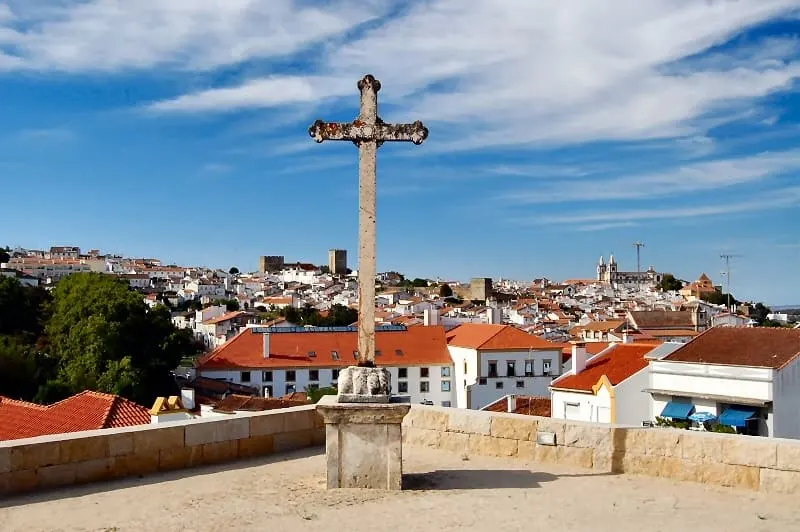
Nestled on the slopes of the São Mamede mountain range, in the far northeast of Alentejo and a short distance from the Spanish border, Portalegre is a city of unmistakable character: steep streets, stone façades, 18th-century palaces, and an urban skyline dominated by the cathedral towers. A district capital since the 19th century, it forms part of the Alto Alentejo sub-region, distinguished from the cereal-growing plains that define the region by its mountainous landscape, more humid and wooded, which has shaped its economy and character over the centuries.
From medieval origins to a Renaissance city
The history of Portalegre as an organised settlement was consolidated during the reign of King Afonso III, who granted it a charter in 1259, incorporating it into the defensive line of the border. King Dinis fortified the town and ordered the construction of the castle, remnants of which survive in the upper part of the city. The decisive event, however, came in the 16th century: in 1549, the Diocese of Portalegre was established, and on 23 May 1550, King John III elevated the town to city status.
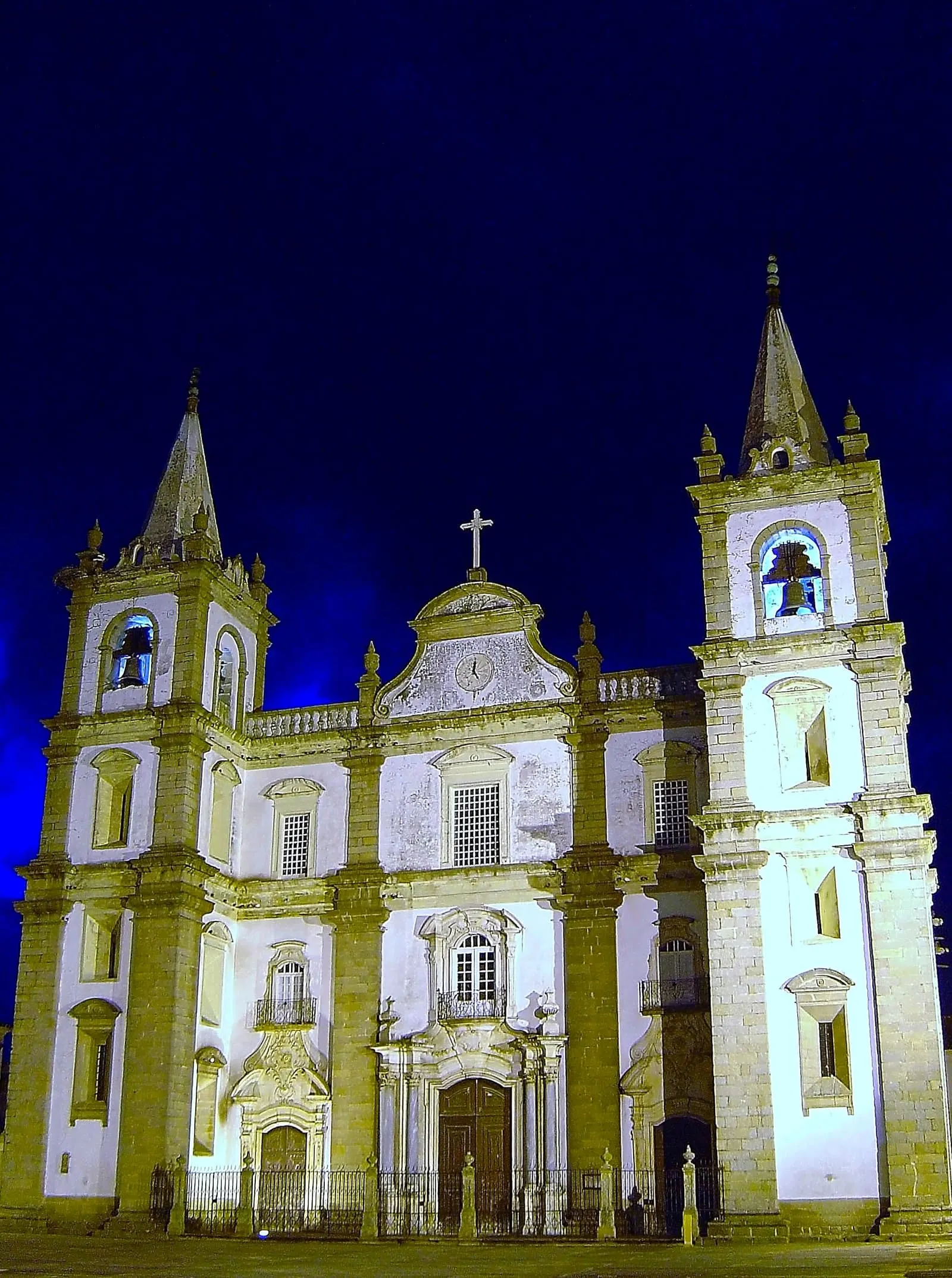
This promotion to an episcopal seat explains much of its monumental heritage. The new status attracted clergy, nobility, and religious orders, driving the construction of churches, convents, and manor houses. The Portalegre Cathedral, built in the second half of the 16th century, epitomises this era: a Renaissance floor plan, a façade with twin towers, and an interior filled with Mannerist and Baroque altarpieces, among the most notable in the country.
Baroque palaces and urban fabric
Few Alentejo cities preserve such a cohesive ensemble of 17th- and 18th-century civil architecture as Portalegre.
Prosperity linked to textile production and border trade translated, during the Baroque period, into a dense network of urban palaces. The Yellow Palace, with its remarkable wrought-iron grilles, the Avillez Palace, and the Barahona Palace bear witness to the tastes of the noble families who settled here. Balconied windows, granite portals, and coats of arms punctuate the historic centre, lending it a discreet yet constant monumentality.
To this heritage is added the city’s literary memory: the poet José Régio (1901-1969) taught in Portalegre for decades and left behind the famous Toada de Portalegre. The house where he lived is now a museum housing his collection of folk and religious art, one of the most unique cultural spaces in Alentejo.
The tapestry that put the city on the map
If the past gave Portalegre its stone silhouette, it was in the 20th century that the brand projecting it internationally was born. In 1946, Guy Fino and Manuel Celestino Peixeiro established a tapestry manufactory in the city, using an original stitching technique—the so-called Portalegre stitch—capable of faithfully reproducing painters’ works. Artists such as Almada Negreiros, Vieira da Silva, and Lurçat saw their compositions translated into wool, and the tapestries came to adorn palaces, embassies, and museums in various countries.
The Portalegre tapestry thus became one of the most recognisable products of Portuguese applied art, extending in a modern language the textile vocation of a city that for centuries had lived on wool and linen.
A borderland territory
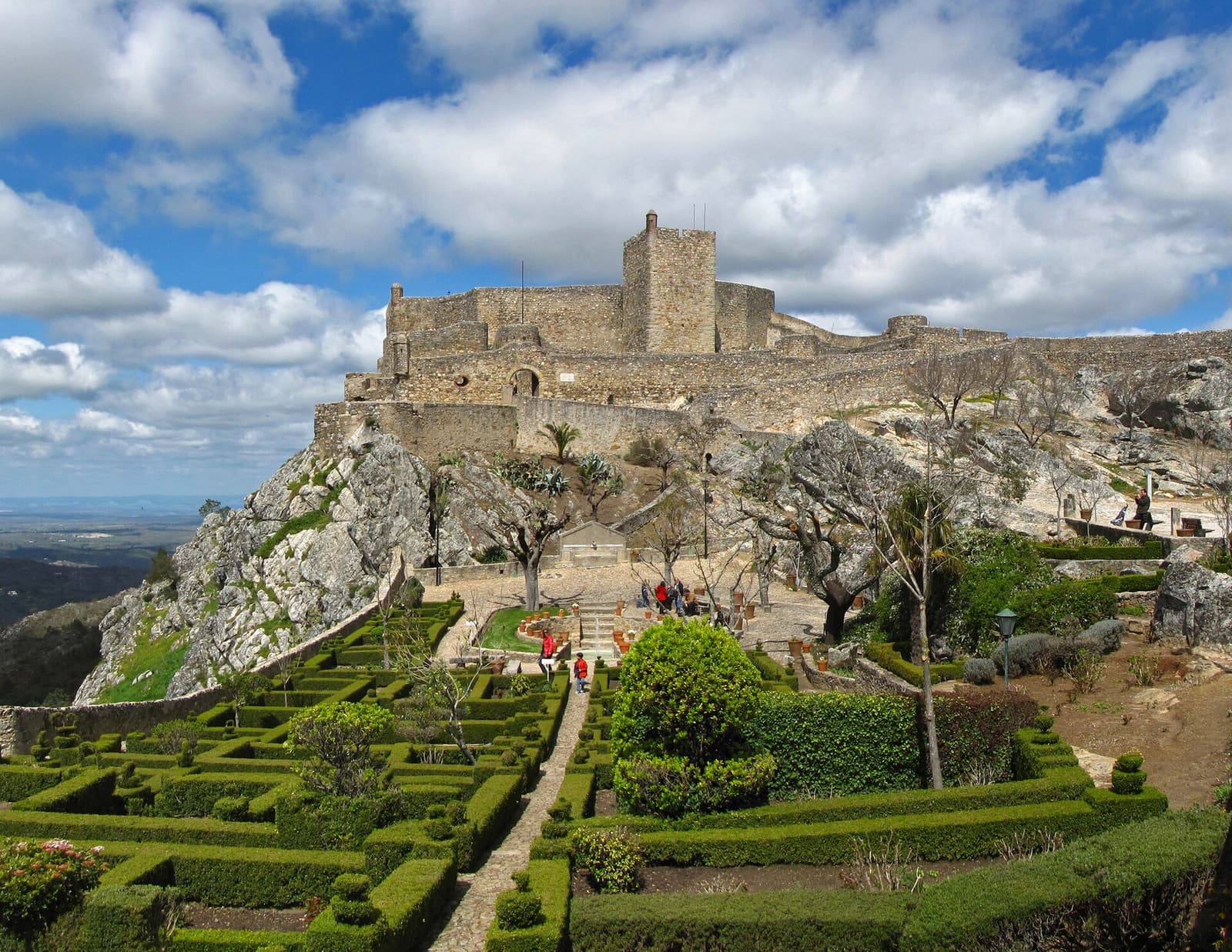
Portalegre is also the gateway to one of the richest landscape and heritage ensembles in inland Alentejo. A few kilometres away stand the walled towns of Marvão, a fortified perch atop a granite hill, and Castelo de Vide, famous for its medieval Jewish quarter and fountains. Together, they form an itinerary where military architecture, border history, and the São Mamede mountain range combine to define the identity of Alto Alentejo.
Frequently asked questions
- In which district and region is Portalegre located?
- Portalegre is the capital of its namesake district and is situated in Alto Alentejo, near the São Mamede mountain range, close to the border with Spain.
- When was Portalegre elevated to city status?
- Portalegre was elevated to city status on 23 May 1550 by King John III, the year after the creation of the Portalegre diocese in 1549.
- What is Portalegre tapestry?
- It is a needlepoint tapestry technique, developed from 1946 onwards, that reproduces painters' works in wool and made the city an international centre for this art form.
Sources
Keep exploring
Heritage nearby
More places to discover from here. Approximate straight-line distances, within 50 km.