Places
Algarve: Heritage and History from the Garb al-Andalus to the 21st Century
The Algarve is the southernmost region of mainland Portugal, corresponding to the district of Faro and its sixteen municipalities. Its name preserves the memory of five centuries of Islamic presence: it derives from the Arabic al-Gharb, “the west”, because it was the westernmost edge of the Muslim world. This layering of cultures — Phoenician, Roman, Visigothic, Islamic and Christian — made the territory one of the densest archives of heritage in the country, where red sandstone castles stand alongside Baroque churches and coastal fortresses.
From al-Andalus to the Christian conquest
Before it was the Algarve, the region was Ossonoba, Lacobriga and Balsa — the Roman names of cities that prospered on the trade in garum and salt. With the arrival of the Muslims in the early eighth century, the south became the Garb al-Andalus, and cities such as Silves (Xelb), Faro, Tavira and Loulé flourished as cultured and prosperous urban centres. Silves even became the capital of an independent taifa in the eleventh century, and its red sandstone castle remains the most imposing testimony of that period, with its Almohad cistern and almost intact walled perimeter.
The Christian conquest was slow and hard-fought, advancing from west to east over the course of the thirteenth century. It was completed only in 1249, during the reign of King Afonso III, who took Faro and made the “Kingdom of the Algarve” the last mainland territory incorporated into the crown — a fact that still echoes in the historic title of the Portuguese monarchs, “King of Portugal and of the Algarves”.
More than a backdrop of beaches, the Algarve is a civilisational frontier: the line where the Islamic Mediterranean and the Christian Atlantic met and overlapped in stone.
Historic towns and coastal fortifications
The geography of the Algarve shaped its heritage. The coastal strip, exposed to corsairs and fleets, became dotted with bastioned fortifications and garrison forts — from Sagres to Castro Marim, beside the mouth of the Guadiana. Tavira preserves its bridge over the Gilão and a townscape studded with four-sided rooftops; Lagos was a decisive port in the age of the Discoveries, the point of departure for the voyages launched by Prince Henry. Faro, the capital since the 1755 earthquake, encloses its cathedral and old quarter within walls of medieval origin, above the remains of ancient Ossonoba — an example of the Roman archaeology that surfaces throughout the south.
The earthquake of 1 November 1755, of a magnitude close to 9, devastated much of the Algarve’s settlements and marked a turning point in their urban history. The eighteenth-century reconstruction gave the region much of its present character, from the late Baroque of its churches to the orthogonal grid of Vila Real de Santo António, laid out according to principles akin to those of the Pombaline city.
Exploring the Algarve’s heritage
Geology and heritage
The Algarvensis Geopark, designated by UNESCO in 2026, connects geology and culture across the territories of Loulé, Silves and Albufeira. Use the guide to choose routes and plan your visit.
7 entries to explore
No matches in this collection. Try another word or clear your search.
In this section — 7
Lugares
7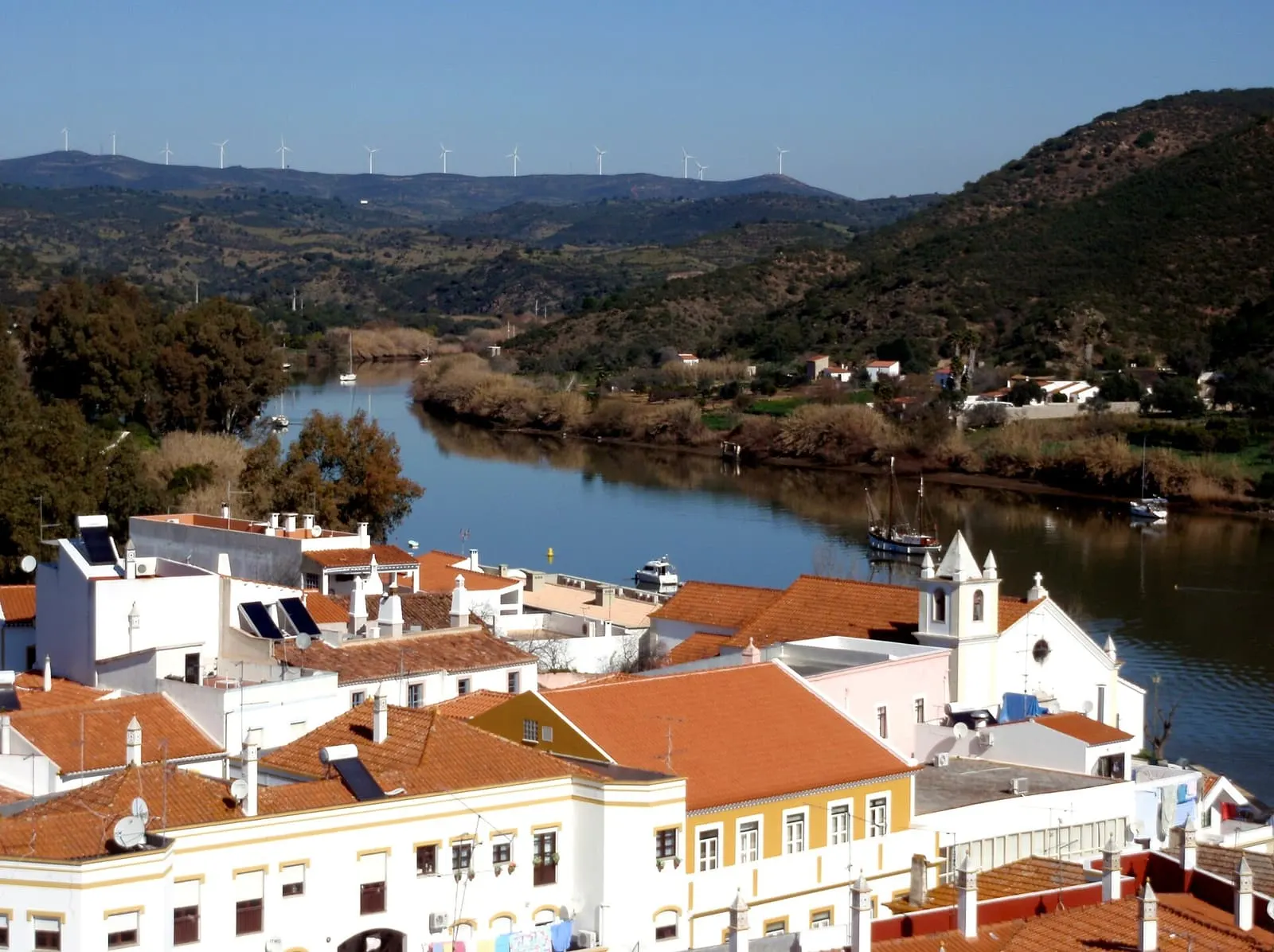 AlcoutimAlcoutim, a border town in the Algarve on the Guadiana River, with a medieval castle facing Sanlúcar and the Old Castle of Santa Bárbara, in the district of Faro.
 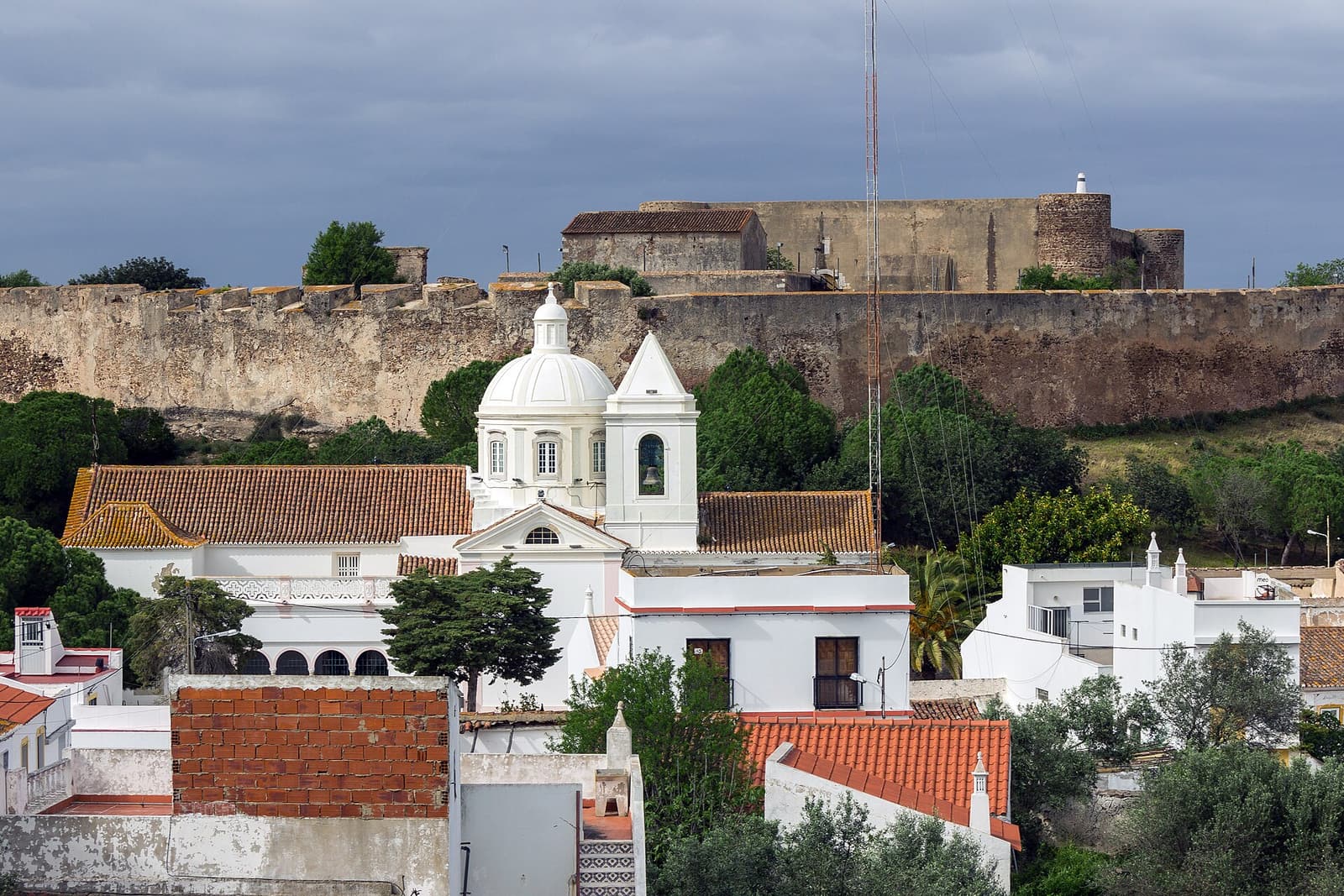 Castro MarimCastro Marim, an Algarve town at the mouth of the Guadiana: medieval castle, Fort of São Sebastião, seat of the Order of Christ, and the saltmarsh nature reserve.
 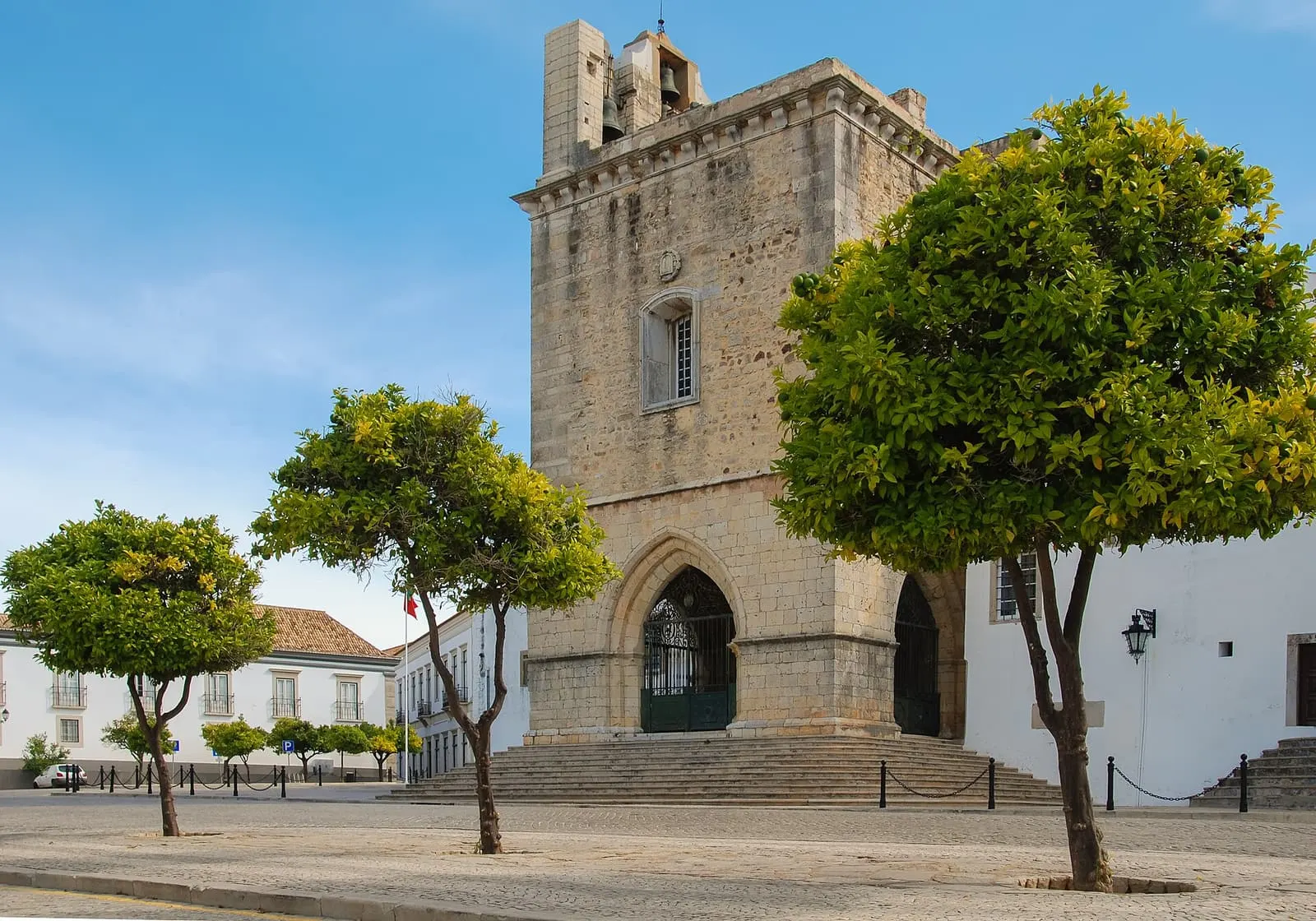 FaroFaro, capital of the Algarve: the walled Vila-a-Dentro, the cathedral, the Chapel of Bones and a historic core with Roman roots in ancient Ossonoba.
 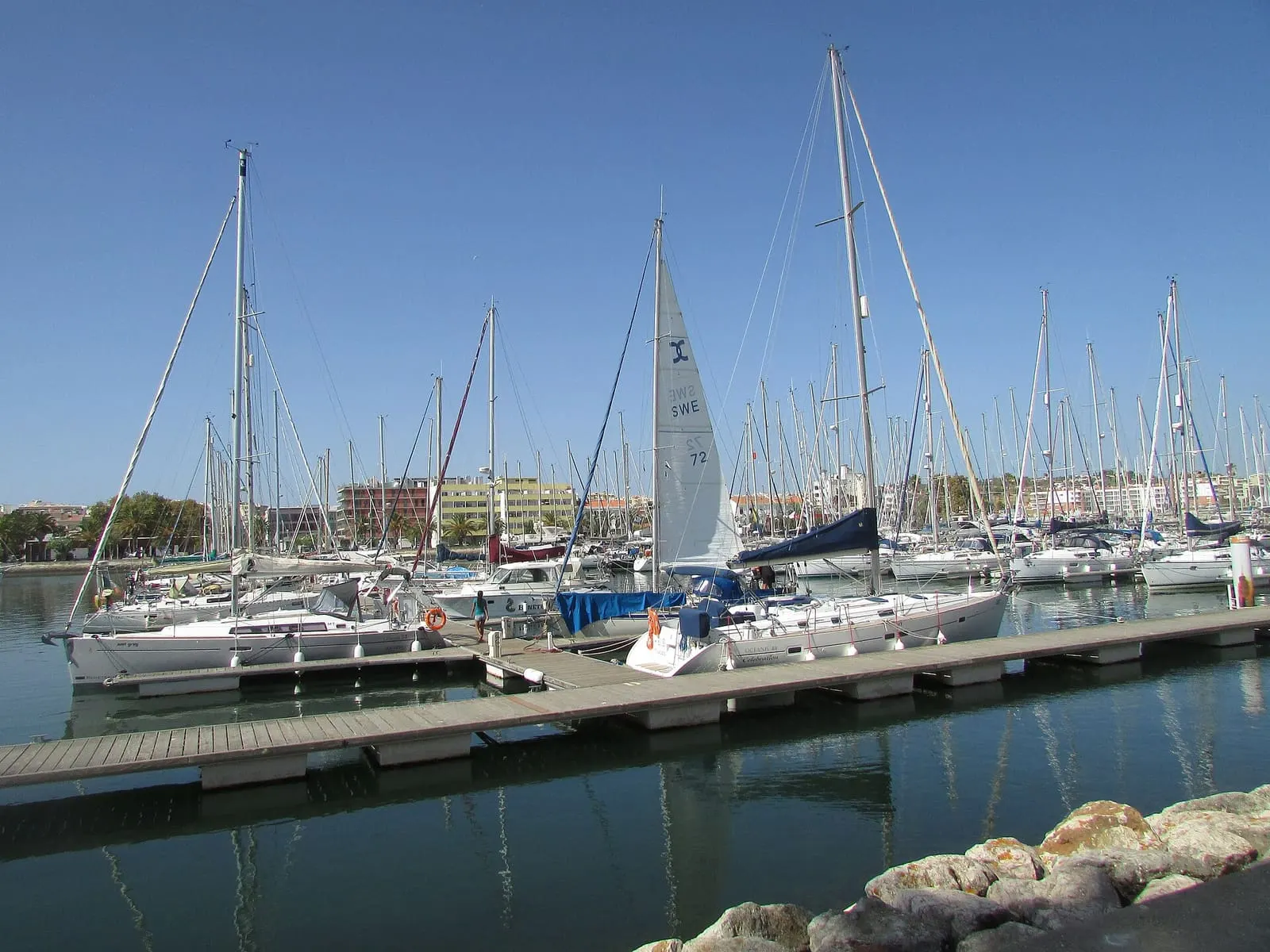 LagosLagos, the Algarve city of the Discoveries: its walls, the Church of Santo António, the Forte da Ponta da Bandeira and the former Slave Market.
 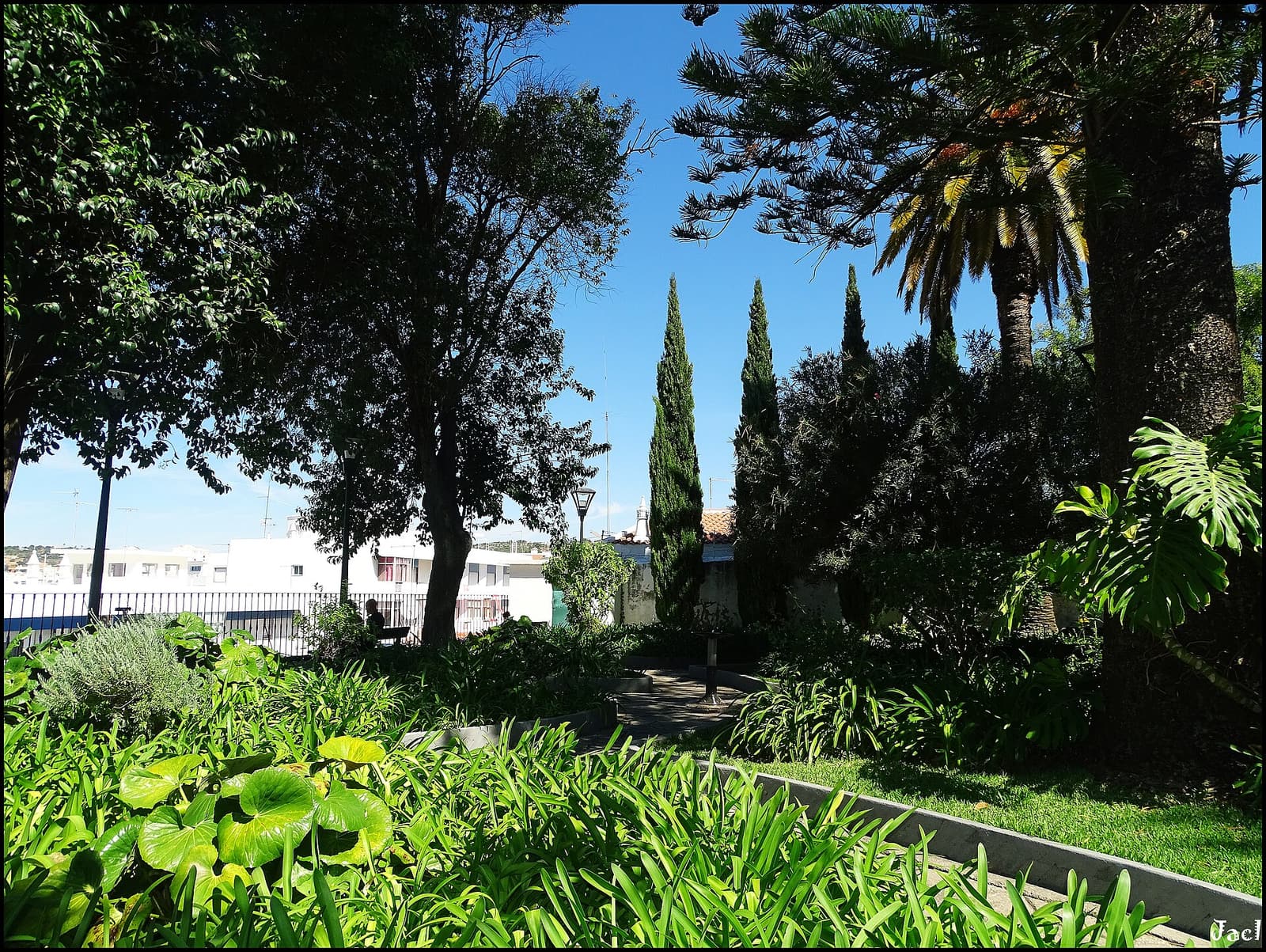 LouléLoulé, an Algarve town in the district of Faro: a castle of Islamic origin, a medieval core, a Moorish-inspired municipal market and the Mother Church of São… Silves: Ancient Islamic Capital of the AlgarveSilves, former Islamic capital of Garb al-Andalus in the Algarve: its red sandstone castle, medieval cathedral and the Arab heritage of the city of Xelb.
 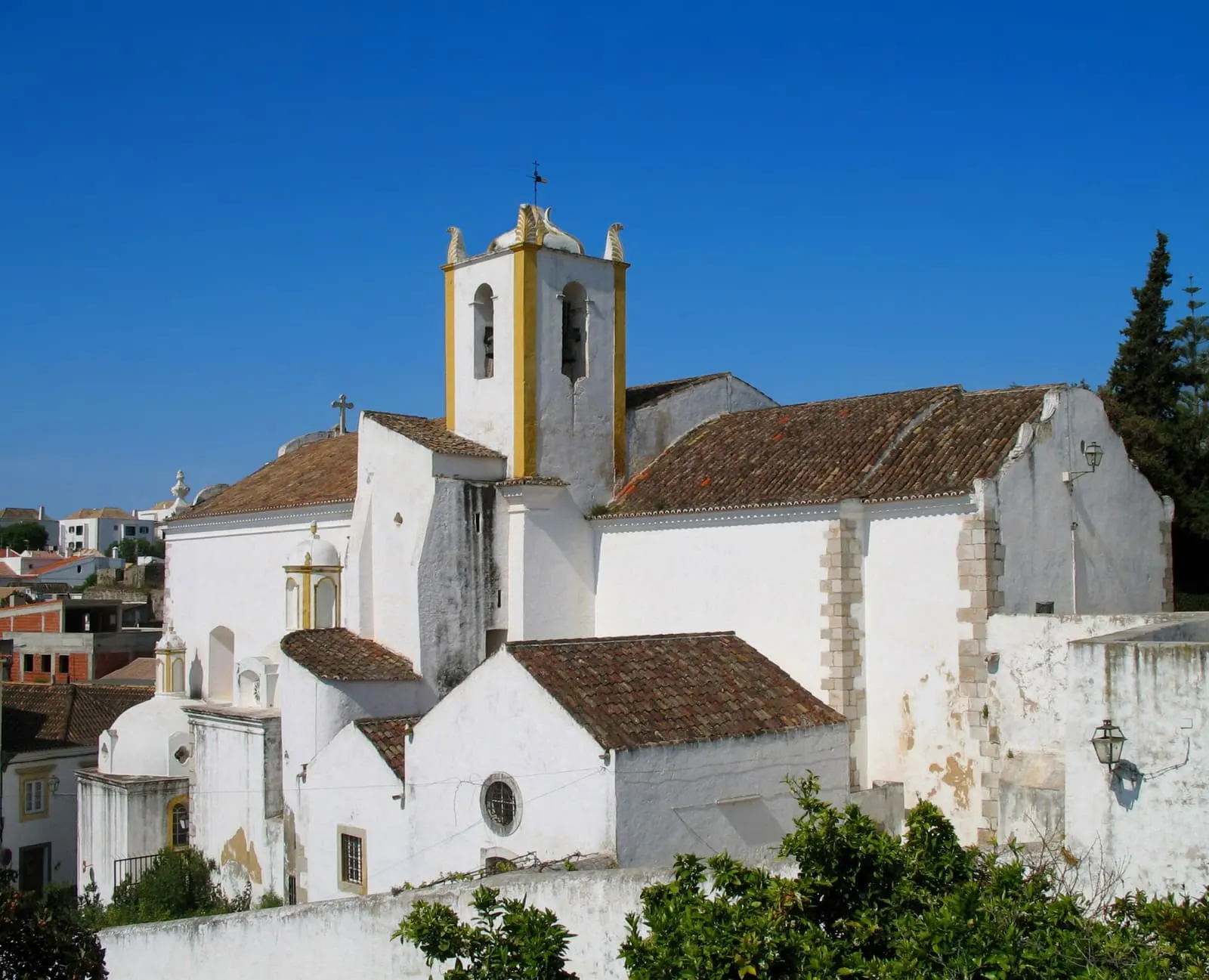 TaviraTavira, in the eastern Algarve: castle, bridge over the Gilão River, dozens of churches and salt pans preserving Roman, Islamic and medieval heritage.
 Frequently asked questions
- What is the origin of the name Algarve?
- The place name derives from the Arabic al-Gharb (الغرب), meaning 'the west', as it was the westernmost region of al-Andalus under Muslim rule.
- When was the Algarve incorporated into the kingdom of Portugal?
- The Algarve was the last part of the mainland territory to be conquered from the Moors, completed during the reign of King Afonso III in 1249 with the capture of Faro.
- What is the capital of the Algarve?
- Faro has been the capital of the region since the 1755 earthquake; until then the status belonged to Lagos, further to the west.