Places
Castelo de Vide
Castelo de Vide, a town in the Alto Alentejo in the district of Portalegre, with a medieval castle, Jewish quarter and synagogue, known as the Sintra of the…
- Location
- Castelo de Vide, Portalegre
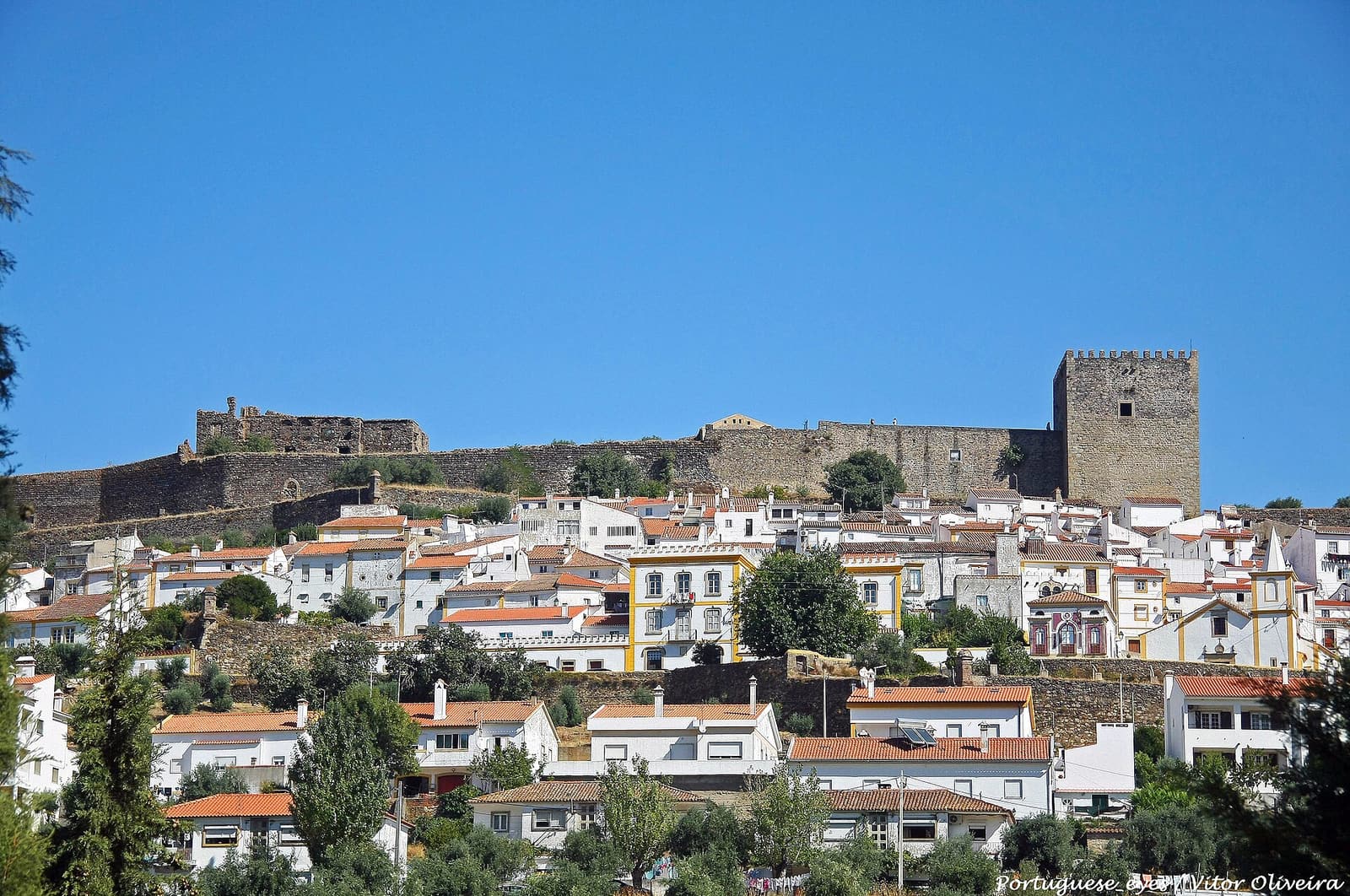
Nestled against the Serra de São Mamede, near the border with Spain, Castelo de Vide is one of the most singular towns of the Alto Alentejo. Belonging to the district of Portalegre, it stands apart from the plain-dwelling settlements that surround it by its mountain setting, by its abundance of water and vegetation, and by a cluster of white houses that descends in terraces from the castle. It was this mild and romantic character that earned it the epithet of the “Sintra of the Alentejo”.
Origin and formation of the town
The settlement gained municipal organisation in 1276, when it received a charter from King Afonso III. Shortly afterwards, in 1279, the infante Afonso Sanches — to whom his father had entrusted the lordships of Arronches, Marvão, Portalegre and Castelo de Vide — ordered the place to be walled. Construction of the castle continued under King Dinis and was only completed in the reign of King Afonso IV, in the fourteenth century, in a context of strengthening the so-called “raia”, the kingdom’s frontier line.
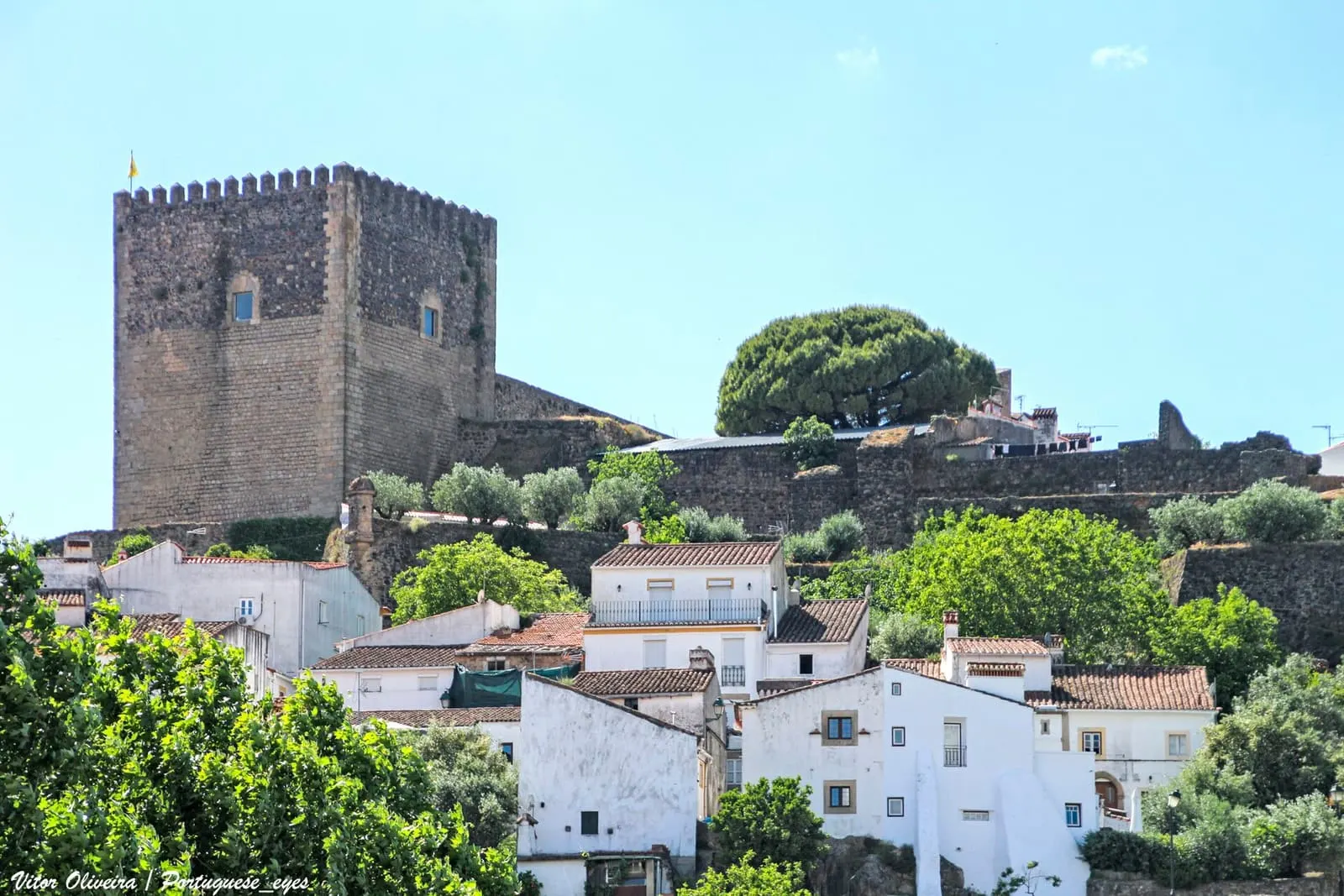
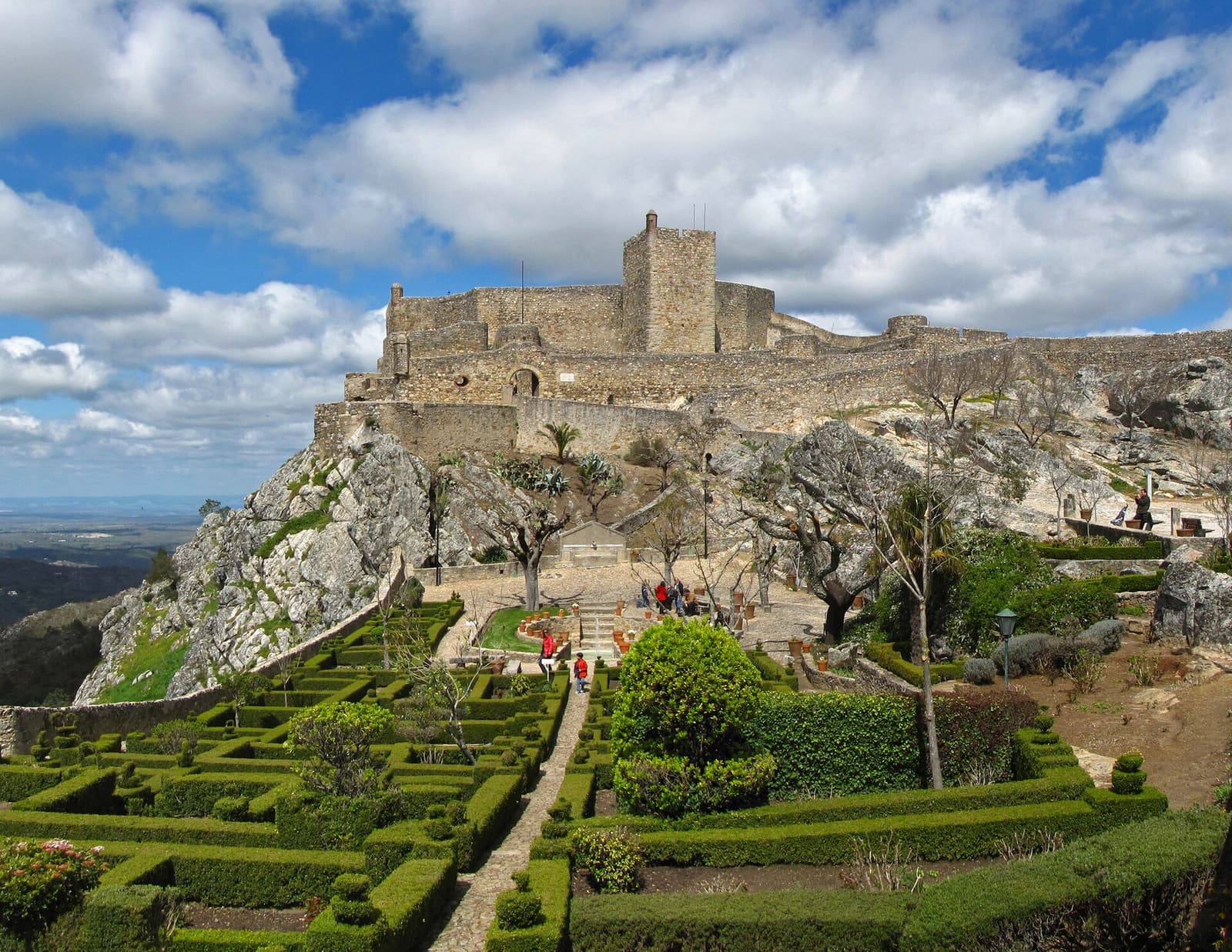
The fortress, classified as a National Monument, has a quadrangular plan adapted to the terrain, with stretches of wall reinforced by towers and a keep set against the southern side. From the top of the fortified redoubt the view opens onto the houses and the surrounding fields, revealing how the town grew along the road that led to the castle gate. This frontier position brings Castelo de Vide close to the group of Alentejo strongholds that can be explored from the neighbouring castle of Marvão, in the same mountain municipality.
The Jewish quarter and the Sephardic heritage
What gives Castelo de Vide its own place in Portuguese heritage is, above all, its medieval Jewish quarter, held to be the best-preserved in the country. Tucked into the hillside between the castle and the lower part of the town, it preserves the narrow web of streets, stairways and Gothic doorways that structured the life of the Jewish community from the Middle Ages onward.
At the heart of this core stands the old synagogue, a building of fourteenth-century origin that constitutes, alongside the synagogue of Tomar, one of the only two surviving medieval Jewish temples in Portugal. Restored in the second half of the twentieth century, it now houses a small museum dedicated to the history of the local community, part of the Network of Jewish Quarters of Portugal.
The Jewish quarter of Castelo de Vide reminds us that, before the edict of expulsion of 1496, the Alentejo sheltered some of the most active Jewish communities in the kingdom — a presence that expulsion and the Inquisition erased from the records, but not from the stones.
The community gained new vigour in 1492, with the arrival of Jews expelled from Castile and Aragon by the Catholic Monarchs. The subsequent forced conversion and inquisitorial persecution dispersed it, but the urban fabric remained, making the town one of the most eloquent testimonies of the heritage of the Portuguese Jewish quarters.
Monumental heritage
Beyond the castle and the Jewish quarter, the town gathers a remarkable set of monuments from various periods. The Fonte da Vila, a Renaissance fountain of the sixteenth century covered by marble columns, is one of the most photographed spots in the historic centre. To it are added the Church of Santa Maria da Devesa, the eighteenth-century pillory and the Sanctuary of Nossa Senhora da Penha, raised on a hilltop overlooking the settlement.
A hub of the Alto Alentejo and part of the territory served by Portalegre as district capital, Castelo de Vide combines, within a small space, frontier fortification, medieval urbanism and Sephardic memory, in a rare balance between mountain landscape and heritages layered over many centuries.
Frequently asked questions
- Where is Castelo de Vide?
- Castelo de Vide is a town in the Alto Alentejo, in the district of Portalegre, nestled against the Serra de São Mamede, near the border with Spain.
- Why is it called the Sintra of the Alentejo?
- The epithet is owed to the town's romantic character, the abundance of vegetation, gardens and fountains, and the mild climate afforded by the proximity of the Serra de São Mamede.
- What makes the Jewish quarter of Castelo de Vide special?
- It is regarded as the best-preserved medieval Jewish quarter in Portugal and preserves one of the two surviving medieval synagogues in the country, alongside that of Tomar.
Sources
Keep exploring
Heritage nearby
More places to discover from here. Approximate straight-line distances, within 50 km.