Monuments
Portalegre Cathedral
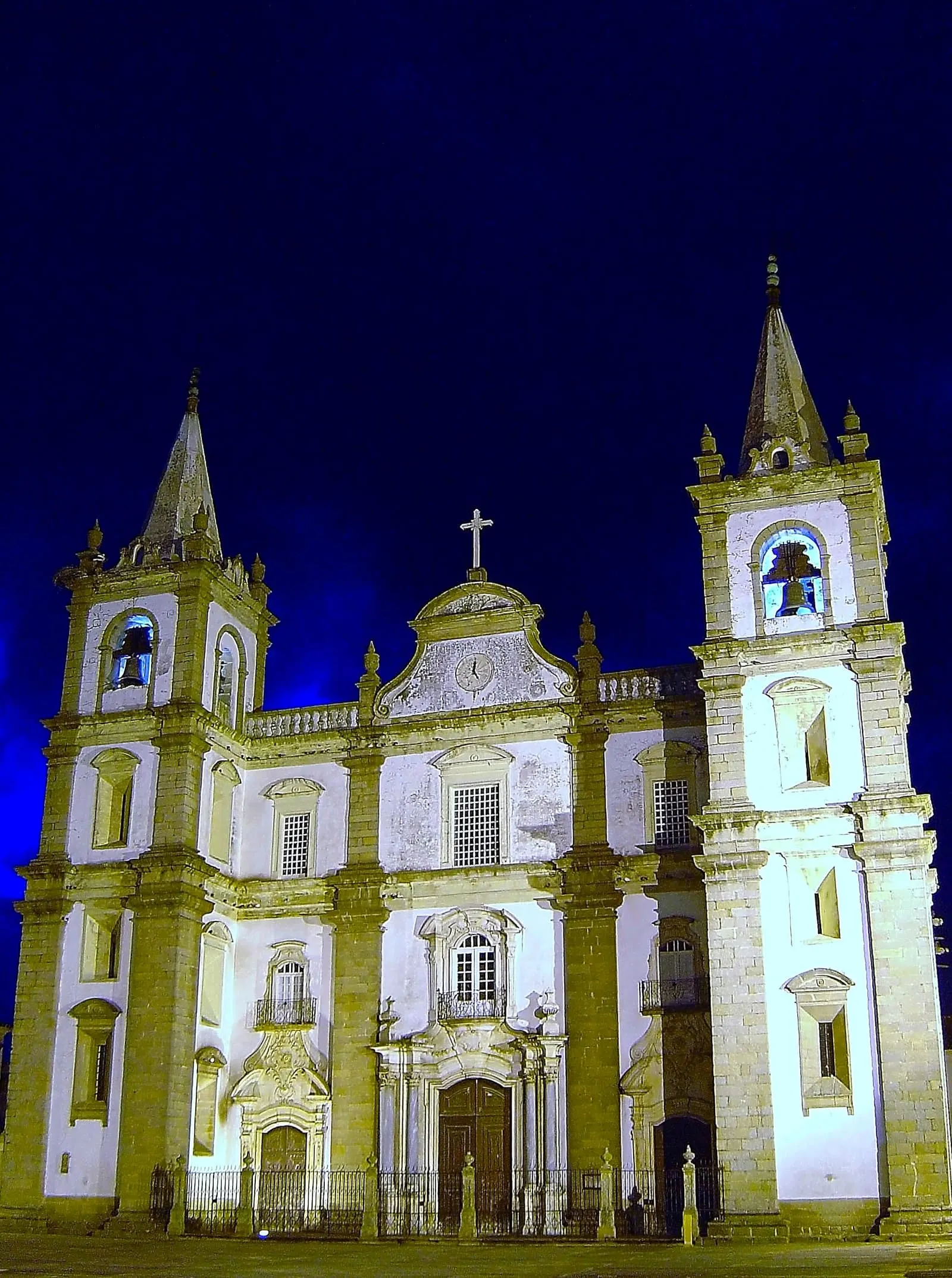
Portalegre Cathedral, a Mannerist cathedral in Alto Alentejo built from 1556 for the new diocese, houses Portugal's largest collection of Mannerist paintings.
- Location
- Portalegre, Portalegre
- Built
- 1556–1575
- Style
- Maneirismo
Portalegre Cathedral, dedicated to Our Lady of the Assumption, stands at the city’s highest point, dominating Alto Alentejo’s rooftops with its twin-towered facade. It represents the architectural expression of administrative and ecclesiastical promotion: the 16th-century creation of its own diocese, which granted Portalegre cathedral-city status and necessitated a worthy temple.
The diocese’s creation and construction begins
The Diocese of Portalegre was established in 1549 by papal bull from Paul III at João III’s request, reorganizing Portugal’s religious geography by carving territory from neighboring dioceses. To house the new see, the crown expropriated hilltop properties from 1553 onward, with construction commencing on 14 May 1556 under its first bishop, Spaniard D. Julião de Alva.
Design responsibility fell to Afonso Álvares, royal works master and leading figure in mid-16th century Portuguese religious architecture. Progress was rapid for the era: the vault’s keystone was laid by 1575, with completion and consecration achieved that same century under Carmelite bishop D. Frei Amador Arrais, who commissioned much decorative work.
A Mannerist three-nave temple
The cathedral features a Latin cross plan with three naves of equal height (a hall-church design), separated by sturdy cruciform pillars supporting interconnected side chapels. This unified, light-filled spatial solution, illuminated by dozens of windows, typifies Iberian Mannerist religious architecture and contrasts with medieval churches’ verticality. The tripartite chancel and 16th-century body were later joined by an 18th-century arcaded cloister overlooking the square.
Portalegre Cathedral preserves Portugal’s largest collection of Mannerist paintings - nearly 100 panels that transform the building from monument into a veritable gallery of contemporary painting.
The interior also retains 16th-century azulejo panels, marble pulpits and screens (using the region’s abundant stone), and retables commissioned by D. Frei Amador Arrais that harmoniously integrate painting and gilded woodwork.
Baroque renovations and classification
Between 1737-1798, the cathedral underwent major facade renovations. The bell towers were heightened (each gaining four rounded archways for bells) and portals rebuilt with monolithic marble columns, creating the Baroque silhouette recognizable today. The resulting facade is thus a palimpsest blending 16th-century Mannerist structure with 18th-century ornamentation.
Designated a National Monument in 1910, the cathedral remains the city’s religious heart and heritage anchor. It can be explored alongside Portalegre’s urban fabric and famed Portalegre Tapestry, while its place among Portugal’s cathedrals becomes clearer alongside Alentejo counterparts like Évora Cathedral and Elvas Cathedral.
Frequently asked questions
- When was Portalegre Cathedral built?
- Construction began on 14 May 1556 following the diocese's creation in 1549, with the final vault stone laid in 1575. The facade and towers were rebuilt in the 18th century in Baroque style.
- Why is Portalegre Cathedral famous?
- As the cathedral of Portalegre diocese, it contains Portugal's largest collection of Mannerist paintings (nearly 100 panels), alongside 16th-century azulejo tiles and an 18th-century cloister.
- Is Portalegre Cathedral a National Monument?
- Yes. It has been classified as a National Monument since 1910.
Sources
Keep exploring
Heritage nearby
More places to discover from here. Approximate straight-line distances, within 50 km.