Places
Marvão
Marvão, a walled town on the summit of the Serra de São Mamede, in the district of Portalegre: medieval castle, Alentejo houses and views over the borderland.
- Location
- Marvão, Portalegre
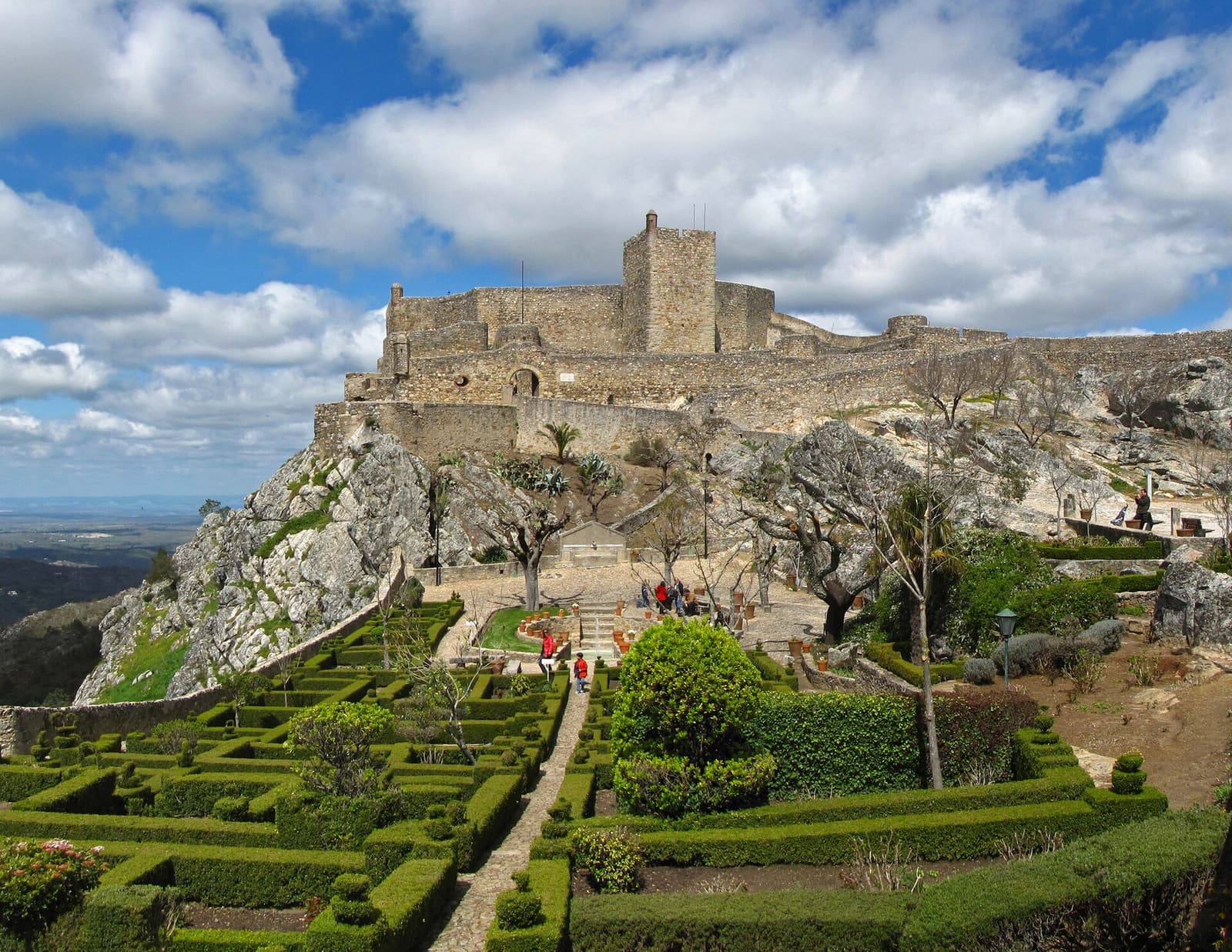
Few places in Portugal convey the expression “eagle’s nest” as eloquently as Marvão. Perched at around 860 metres in altitude, on the crest of a steep peak of the Serra de São Mamede, the town rises above cliffs that drop sheer on every side, dominating the Alentejo horizon and the neighbouring Spanish Extremadura. The naturally defensible site dictated Marvão’s history: for centuries it was a sentinel of the frontier, a refuge and a watchtower in one of the most contested areas of the Iberian borderland.
From Ibn Marwan to the frontier of Portugal
The origin of the name dates back to the end of the 9th century, when the Muladí chieftain Ibn Marwan fortified himself here, creating a stronghold autonomous from the power of Córdoba. From his Arabic name came the place name. The settlement was conquered by the Christians in the course of the Reconquista and, in 1226, King Sancho II granted it a charter, beginning the construction and expansion of the defences that would make Marvão one of the most robust strongholds of the Alentejo. Later, King Dinis would reinforce the ensemble, integrating it into the network of castles that protected the kingdom’s eastern frontier against Castile.
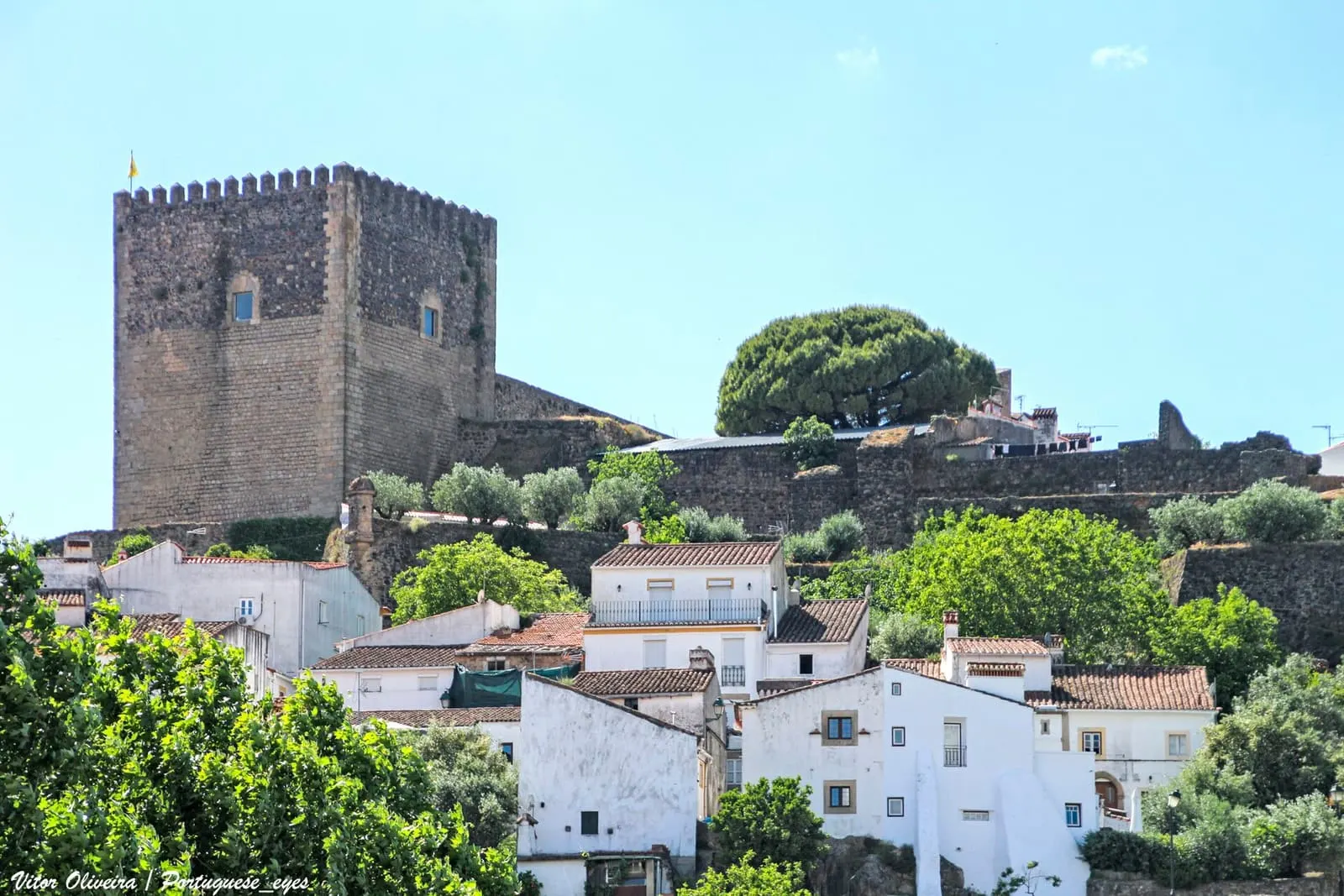
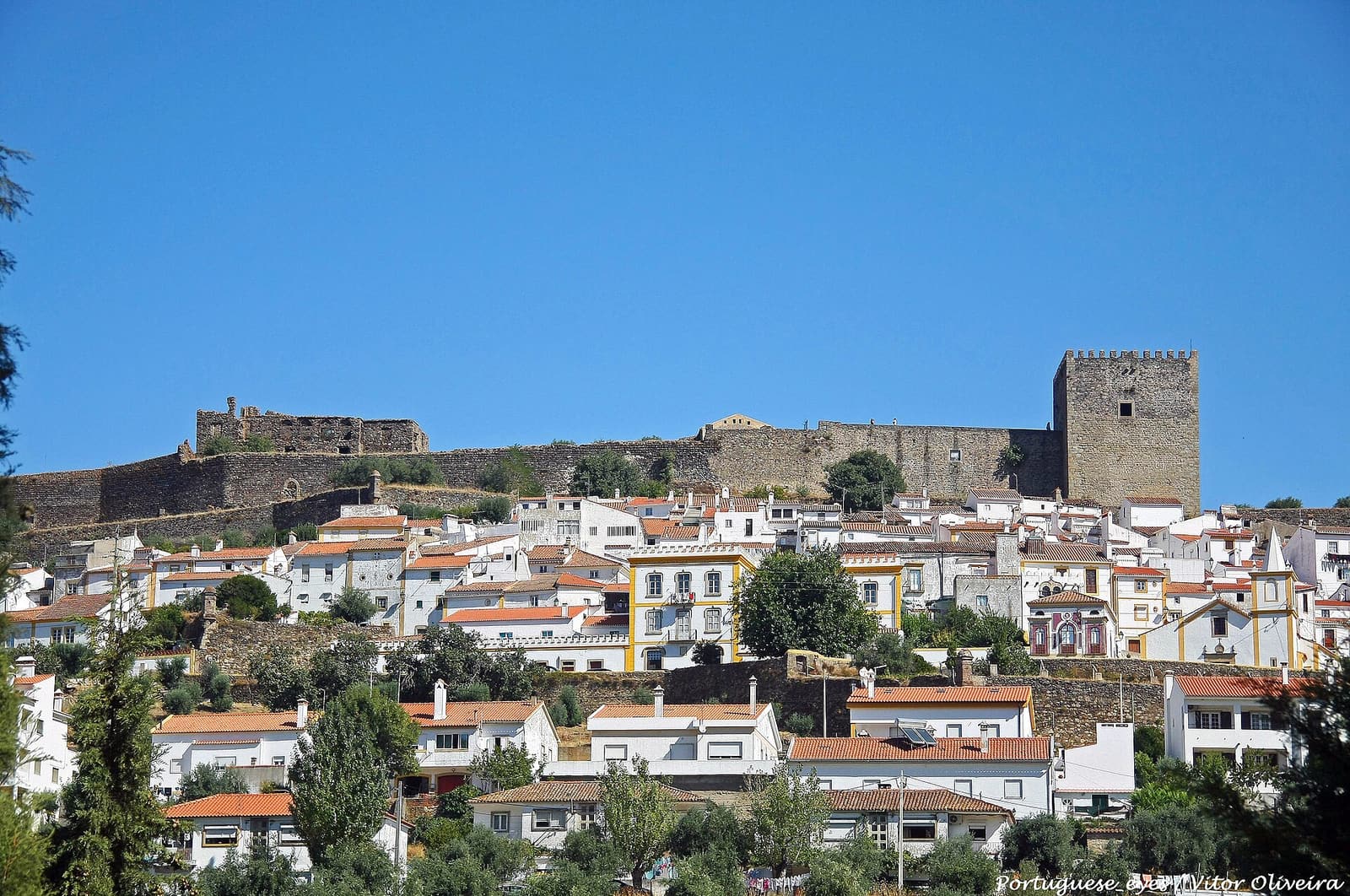
The military heart of the town is the Castle of Marvão, set on the highest and westernmost point of the peak. Its curtain walls extend until they enclose all the houses, so that the settlement and the fortress form a single defensive organism — there is not, strictly speaking, a town and a separate castle, but a continuous citadel.
The houses within the walls
Once through the town gate, Marvão reveals a medieval layout of narrow, winding streets, lined with houses whitewashed in white, Gothic and Manueline windows, wrought-iron balconies and crosses of the Order of Malta carved into the façades, a memory of the Hospitallers who held sway here. The scale is deliberately human: the town within the walls retains only a few hundred inhabitants, lending it a silent atmosphere suspended in time.
Marvão is perhaps the finest Portuguese example of a fortress-town where military and domestic architecture merge completely: the houses themselves lean against the wall and form part of its elevation.
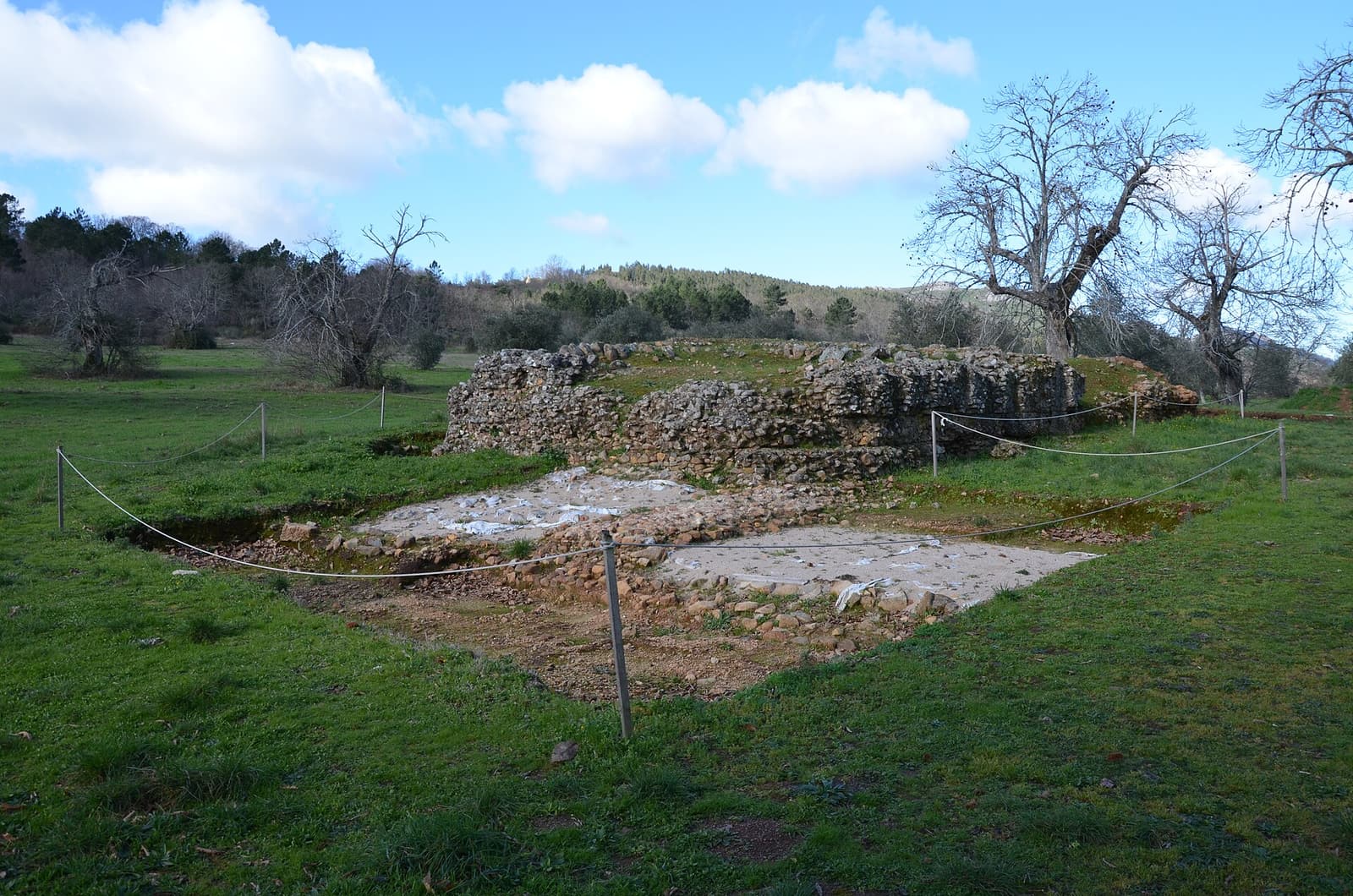
Among the monuments stands out the church that houses the municipal museum, with its collections of archaeology and sacred art, and the Convent of Nossa Senhora da Estrela, situated beyond the gates. A few kilometres away, in the parish of São Salvador da Aramenha, lies the Roman city of Ammaia, prosperous between the 1st century BC and the collapse of the Empire, proof that human occupation of this region long predates the Muslim foundation of the castle.
Landscape, festivals and territory
The Serra de São Mamede, whose summit Marvão crowns, forms an enclave of atypical relief and climate in the Alentejo, with vegetation and fauna that earned it the status of a natural park. This singularity explains the presence of the chestnut groves that supply the renowned Chestnut Fair, held in early November and one of the town’s oldest events. In July, the secluded atmosphere of the medieval streets hosts an international festival of classical music, which uses churches and squares as open-air concert halls.
Marvão belongs to a triangle of border settlements of exceptional heritage value. A few kilometres away is Castelo de Vide, with its Jewish quarter and fountains; and further south lies Portalegre, the district capital. This whole territory is part of the Alentejo, a region where the town holds a place of distinction among the settlements that have best preserved their walled historic core.
Frequently asked questions
- Where is Marvão?
- Marvão lies in the district of Portalegre, in the Alentejo, perched at around 860 metres in altitude atop a peak of the Serra de São Mamede, close to the border with Spain.
- What is the origin of the name Marvão?
- The place name derives from Ibn Marwan, a Muladí chieftain who at the end of the 9th century took refuge and fortified himself on this peak, giving rise to the settlement's Arabic name.
- Is Marvão worth visiting?
- Yes. The town preserves an almost intact walled ensemble, with a castle, white houses and narrow streets, and offers one of the widest panoramas over the Alentejo borderland and the Spanish Extremadura.
Sources
Keep exploring
Heritage nearby
More places to discover from here. Approximate straight-line distances, within 50 km.