World Heritage
Sanctuary of Bom Jesus do Monte in Braga
Baroque pilgrimage sanctuary in Tenões, Braga, featuring the famous monumental stairway: UNESCO World Heritage since 2019 and the foremost example of European…
- Location
- Braga, Braga
- Built
- 1722–1834
- Style
- Barroco e Neoclássico
- UNESCO
- World Heritage · since 2019
The Sanctuary of Bom Jesus do Monte rises on the slopes of Mount Espinho, in the parish of Tenões, a few kilometers from the center of Braga. More than an isolated temple, it is a vast sacred-landscape complex that guides the pilgrim along a steep Via Dolorosa to the basilica crowning the hill. Built and expanded over more than six centuries, it is now the Portuguese exemplar of European Sacri Monti and has been inscribed on the World Heritage List since 2019.
A sacred mount in stone and water
Devotion at the site dates back to the 14th century, when hermitages dedicated to the Passion of Christ existed. But the sanctuary as we know it today emerged from the vision of Archbishop D. Rodrigo de Moura Teles, who in 1722 launched the program for the grand Baroque stairway, the Stations of the Cross chapels, and the entrance portal. The work continued under successive archbishops, transforming the slope into a carefully designed devotional spectacle.
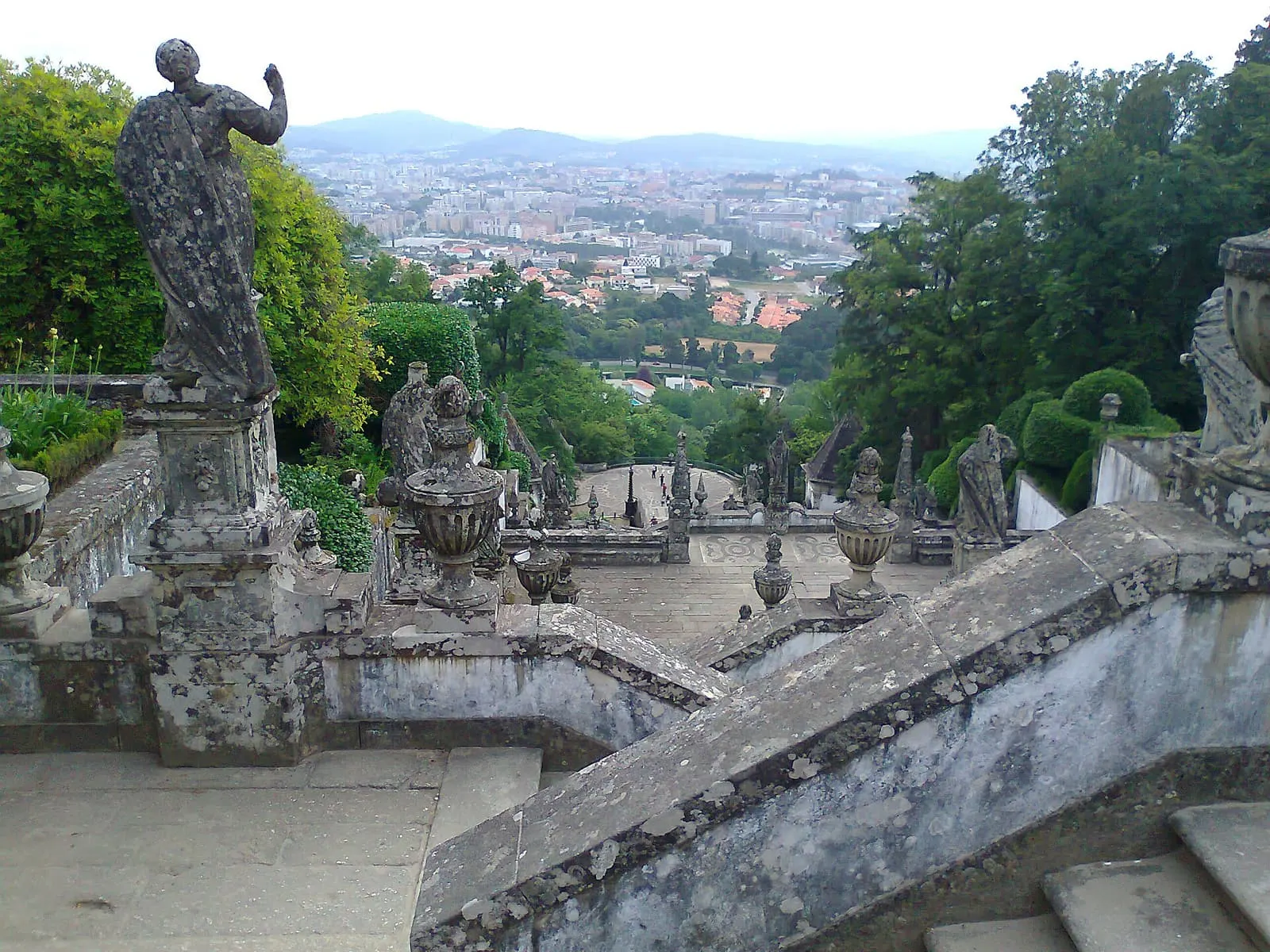
The most famous element is the monumental stairway, a zigzag of whitewashed granite flights unfolding in two sections of profound symbolic significance. The Stairway of the Five Senses features allegorical fountains — Sight, Smell, Hearing, Touch, and Taste — punctuated by statues of biblical figures. This is followed by the Stairway of the Three Virtues, dedicated to Faith, Hope, and Charity. In total, the ascent spans nearly six hundred steps, a crescendo that spiritually prepares those who reach the churchyard.
The genius of Bom Jesus lies not only in its buildings but in the choreography of the ascent: each landing, fountain, and statue transforms the physical effort of climbing into a staged meditation on the Passion.
From the neoclassical basilica to the funicular
At the summit, the current basilica replaced an earlier chapel. In 1784, faced with growing numbers of pilgrims, Archbishop D. Gaspar de Bragança commissioned architect Carlos Amarante to design a new temple, already neoclassical in style, completed in the early 19th century and consecrated in 1834. The contrast between the Baroque exuberance of the stairway and the classical sobriety of the church encapsulates the long construction chronology of the complex. The church was elevated to the dignity of a minor basilica in 2015 — a distinction explored further on the dedicated page for the Basilica of Bom Jesus do Monte.
In 1882, the Bom Jesus Elevator was inaugurated, a funicular powered by the ingenious principle of water counterbalance, the first of its kind on the Iberian Peninsula and still in operation today. Around the basilica, terraces, fountains — such as the Pelican Fountain — formal gardens, and 19th-century hotels developed, completing a setting where religiosity intersects with romantic leisure.
Universal value and context
UNESCO recognized Bom Jesus as an extraordinary example of a sacred mount, endowed with unparalleled monumentality in service of a complete narrative of Christ’s Passion. The sanctuary embodies profound traits of Counter-Reformation Catholicism: theatricality, communal spirit, and the idea of life as a pilgrimage. The inscription was part of the same 2019 wave that distinguished the Royal Building of Mafra, reinforcing international recognition of Portuguese Baroque.
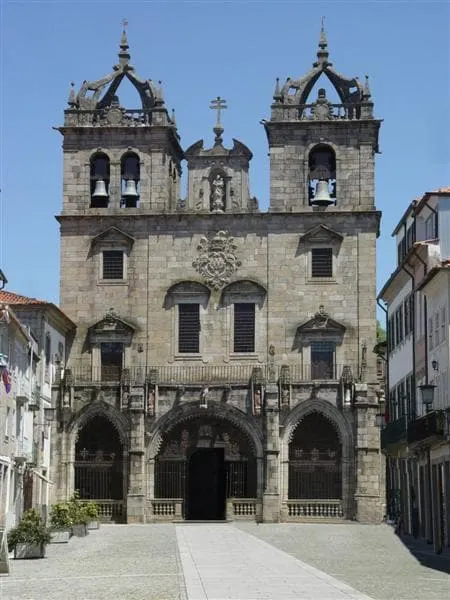
Visiting Bom Jesus also means visiting Braga, one of the oldest Christian cities on the Peninsula, whose Cathedral and archdiocesan tradition historically frame this sanctuary. The complex is part of the broader religious heritage that defines the cultural landscape of Minho.
Frequently asked questions
- When was Bom Jesus do Monte classified as a World Heritage Site?
- It was inscribed on the UNESCO World Heritage List on 7 July 2019, during the 43rd session of the World Heritage Committee in Baku, with reference number 1590 under criterion iv.
- How many steps does the Bom Jesus stairway have?
- The monumental stairway, arranged in successive Baroque flights, totals around 580 steps, with the famous Stairway of the Five Senses standing out, featuring its allegorical fountains.
- What is the Bom Jesus Elevator?
- It is a water counterbalance funicular, inaugurated in 1882, the first on the Iberian Peninsula. It overcomes the slope's gradient and remains operational, transporting pilgrims and visitors.
Sources
Keep exploring
Heritage nearby
More places to discover from here. Approximate straight-line distances, within 50 km.