World Heritage
Royal Palace of Mafra
Royal Palace of Mafra, a Baroque palace-monastery complex with basilica, library and hunting grounds, UNESCO World Heritage since 2019, located in Mafra…
- Location
- Mafra, Lisboa
- Built
- 1717–1755
- Style
- Barroco joanino
- UNESCO
- World Heritage · since 2019
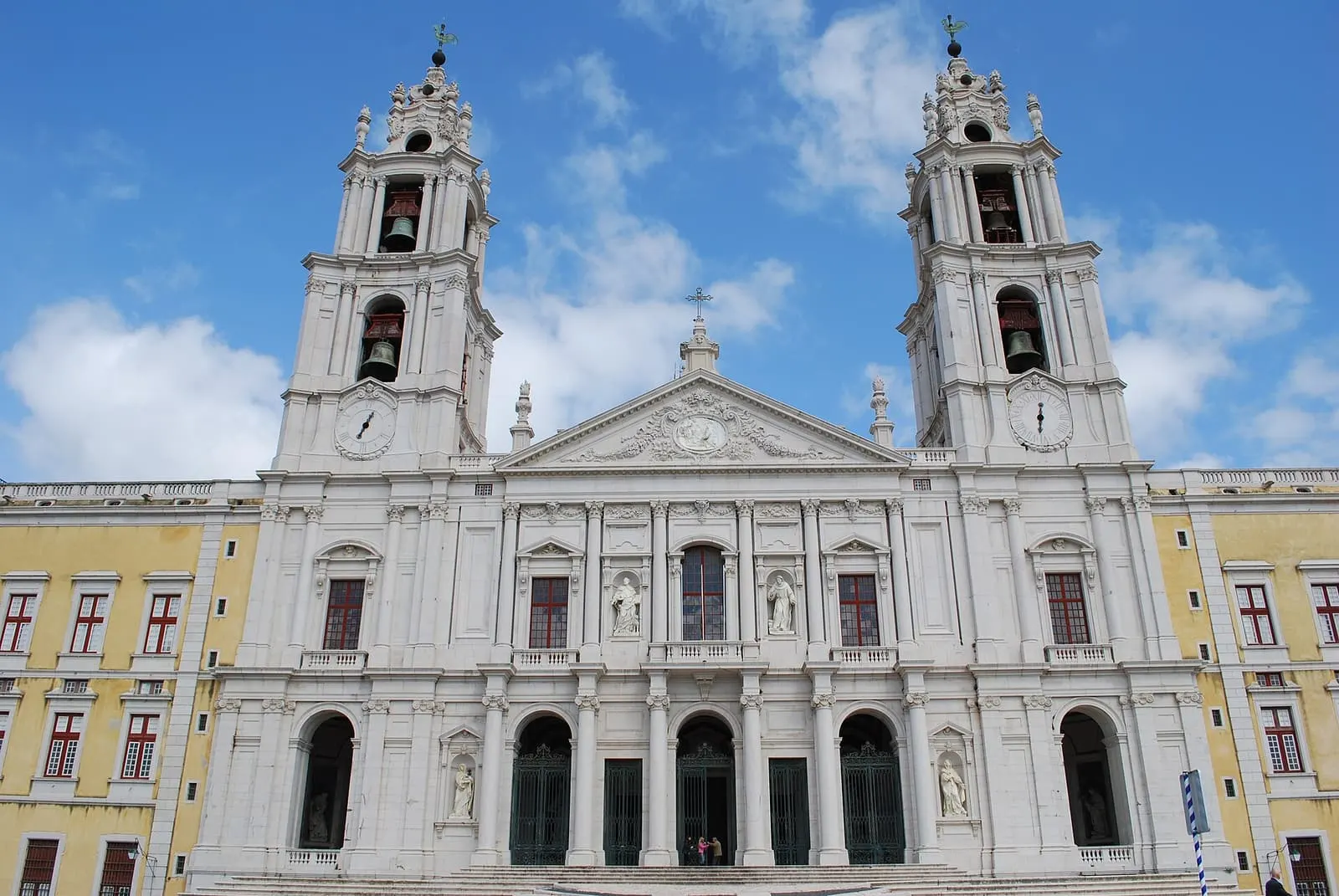
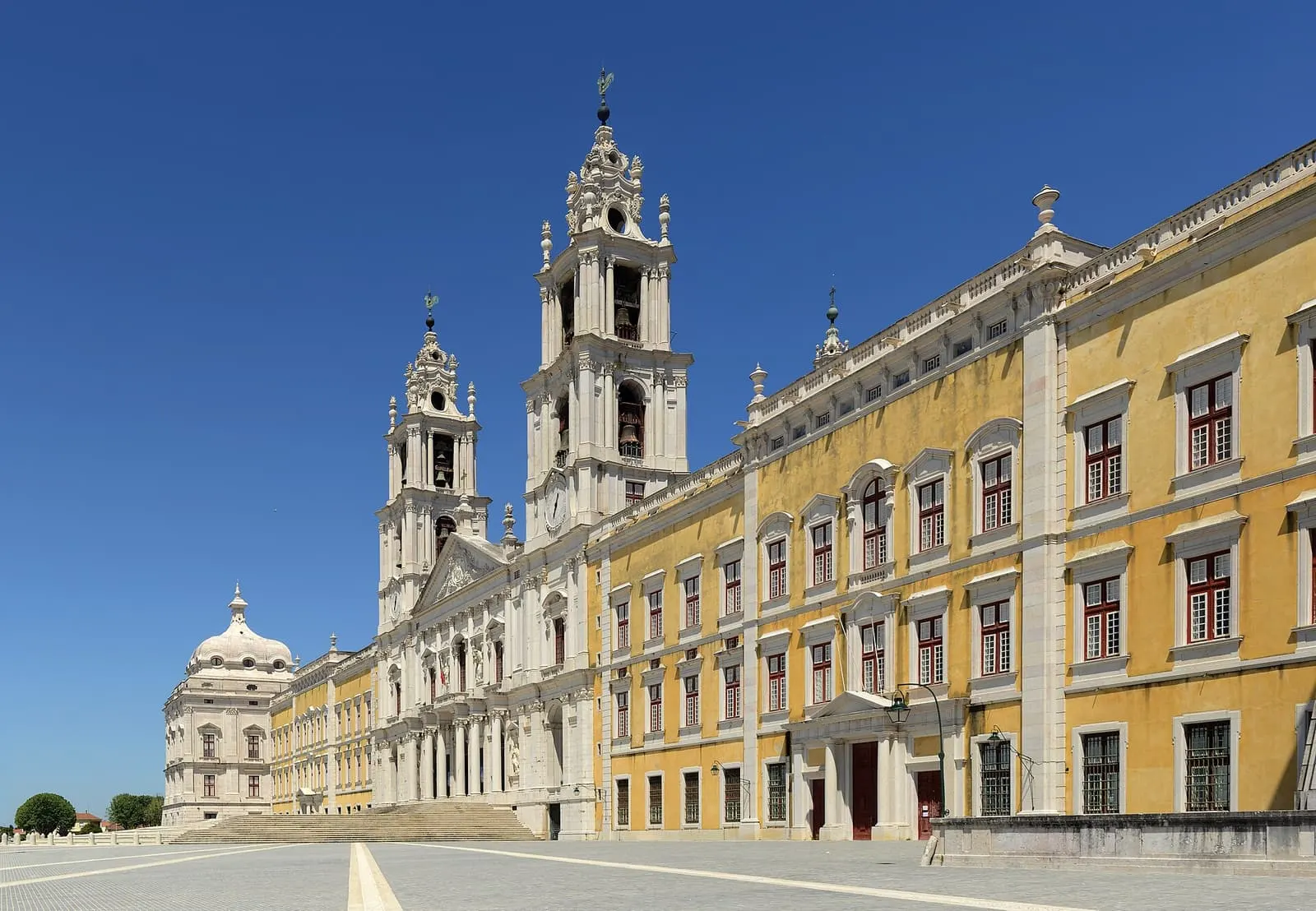
The Royal Palace of Mafra, in the town of Mafra (Lisbon district), is Portugal’s most monumental Baroque complex and one of the greatest works from the reign of João V. Conceived simultaneously as a royal palace, basilica and Franciscan monastery, surrounded by the Jardim do Cerco garden and vast Tapada hunting grounds, it embodies in stone both the wealth from Brazilian gold and the cultural ambitions of the Portuguese monarchy in the 18th century. It has been inscribed on UNESCO’s World Heritage List since 2019, with reference number 1573, under criterion (iv).
Origins and Construction
Construction began in 1717 following a vow made by João V for the birth of heirs. The project was entrusted to German-born architect João Frederico Ludovice (Johann Friedrich Ludwig), trained in the Roman and Central European Baroque tradition. What began as a modest monastery for thirteen friars transformed, as wealth from Brazil flowed in, into a grandiose undertaking: a palace-monastery with about 1,200 rooms, over 4,700 doors and windows, and dozens of courtyards.
The project mobilized tens of thousands of workers and became a symbol of João’s absolutism. The consecration of the basilica in 1730 marked the campaign’s peak, though work continued until around 1755. This episode of splendor and sacrifice was immortalized in José Saramago’s novel Memorial do Convento.
Mafra combines in a single building three functions that elsewhere are distributed among separate monuments - the palace, church and cloister - making it nearly unique in late Baroque European architecture.
The Basilica, Library and Carillons
The basilica at the center of the main facade stands out for its dome and two bell towers. It houses a remarkable collection of Italian Carrara marble statuary and six historic organs designed to play together, a rare feature worldwide. The towers contain two 18th-century carillons with nearly 92 bells total, considered the largest such sets produced in the 1700s.
The noble floor contains the library, a cross-shaped space about 88 meters long holding approximately 30,000 volumes from the 15th to 18th centuries. Famous is the colony of bats that has inhabited it for generations, feeding on insects and helping preserve the collection. Through its monumentality and monastic vocation, the Royal Palace of Mafra dialogues with other great monasteries and the tradition of Portuguese royal palaces.
The Tapada and Jardim do Cerco
To the west and north, the complex extends to the Jardim do Cerco, a walled garden with geometric design, and the Tapada Nacional de Mafra, a former royal hunting reserve of about 1,200 hectares enclosed by a several-kilometer wall. Their inclusion in UNESCO’s designation emphasizes reading the site as an integral landscape where architecture, garden and hunting forest formed a whole intended for courtly recreation, study and religious life.
The monument can be visited through two complementary aspects: the National Palace of Mafra, with its royal apartments and halls, and the Mafra Monastery, with its infirmary, pharmacy and Franciscan cells, which reveal the monastic daily life that coexisted with palatial magnificence.
Frequently asked questions
- When was the Royal Palace of Mafra designated as a World Heritage Site?
- The Royal Palace of Mafra was inscribed on UNESCO's World Heritage List in 2019, with reference number 1573, under criterion (iv).
- What does the Royal Palace of Mafra encompass?
- The complex includes the palace, basilica, Franciscan monastery, Jardim do Cerco garden and Tapada de Mafra hunting grounds, formerly the Royal Household's game reserve.
- Who commissioned the construction of the Mafra palace-monastery?
- It was commissioned by King João V starting in 1717 to fulfill a vow, designed by architect João Frederico Ludovice.
Sources
Keep exploring
Heritage nearby
More places to discover from here. Approximate straight-line distances, within 50 km.