Monuments
Sanctuary of Bom Jesus do Monte (Braga)
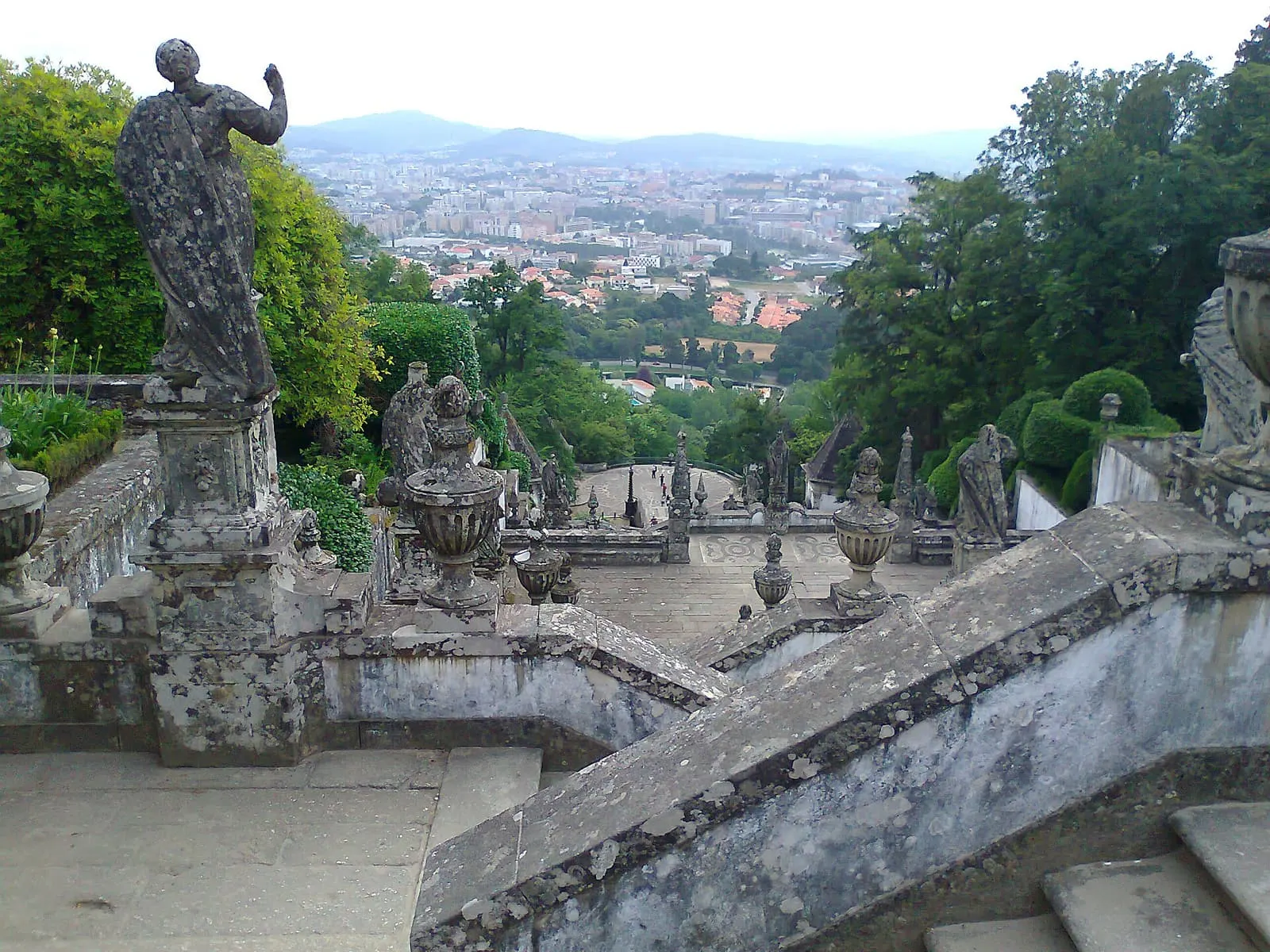
The Sanctuary of Bom Jesus do Monte, in Braga: a Baroque sanctuary with the stairway of the Five Senses, a UNESCO World Heritage Site since 2019.
- Location
- Braga, Braga
- Built
- 1722–1811
- Style
- Barroco e Neoclássico
High on Monte Espinho, to the east of Braga, in the parish of Tenões, stands the Sanctuary of Bom Jesus do Monte, one of the most celebrated devotional complexes in Europe and the foremost example of the Baroque sacro monte on Portuguese soil. Made up of a church, stairways, chapels, fountains, statuary and a surrounding park, the sanctuary was inscribed on the UNESCO World Heritage List in 2019, distinguished as the masterpiece of an artistic programme that fuses architecture, landscape and spiritual journey.
A staged sacred mount
Devotion at the site dates back to the fourteenth century, with successive hermitages built from 1373 onwards. But it is in the eighteenth century, under the impetus of Archbishop D. Rodrigo de Moura Teles, that the complex we admire today was born. From 1722 the great stairway was designed, conceived as a staging of the Passion of Christ: the pilgrim climbs in zigzag along successive flights, encountering along the way chapels with scenes of the Stations of the Cross.
The scenographic heart is the Stairway of the Five Senses, where allegorical fountains represent Sight, Hearing, Smell, Taste and Touch, followed by the Stairway of the Three Virtues — Faith, Hope and Charity. In all, some 581 steps in granite and white limewash overcome more than 100 metres of height difference, in a geometric play of landings, balustrades and statuary that constitutes one of the summits of European Baroque.
The ascent is not merely physical: it is a staged catechesis, in which each flight purifies the senses before the faithful reach the temple at the top.
From Baroque church to Neoclassical basilica
The present church replaced earlier temples and was built between 1784 and 1811 to a design by the architect Carlos Amarante, marking the transition from Baroque to Neoclassicism in Portugal. With a Latin-cross plan and a sober façade flanked by towers, it deliberately contrasts with the exuberance of the stairway that precedes it. Inside, the transept houses a remarkable sculptural ensemble of Calvary.
In 1882 the Bom Jesus funicular was inaugurated, the first on the Iberian Peninsula and still today the oldest in the world to operate by water counterbalance, linking the city to the upper platform without visitors having to climb the stairway.
Meaning and protection
UNESCO recognised the sanctuary under criterion (iv), valuing it as an exceptional testimony to a fully realised European sacro monte, where architecture organises the landscape in the service of a devotional experience. The classified area covers about 26 hectares, with a buffer zone of 232 hectares that protects the wooded setting and the pathways.
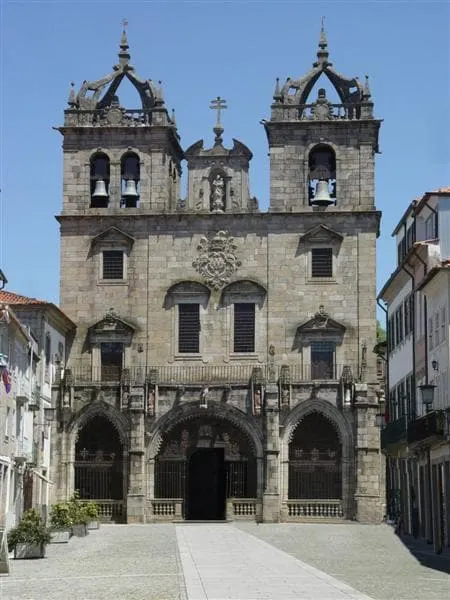
Classified as a National Monument, Bom Jesus do Monte forms part of the itinerary of the most important religious heritage of the North and converses, a few kilometres away, with the Cathedral of Braga, the oldest Portuguese cathedral. Together they form a major itinerary of the history of sacred art and pilgrimage in the country. Those wishing to delve deeper into the classification process can consult the World Heritage file for the sanctuary.
Frequently asked questions
- How many steps does the Bom Jesus do Monte stairway have?
- The monumental stairway has around 581 steps, spread across the flights of the Five Senses and the Three Virtues, overcoming a difference in height of more than 100 metres.
- Is Bom Jesus do Monte a World Heritage Site?
- Yes. The sanctuary was inscribed on the UNESCO World Heritage List on 7 July 2019, with reference number 1590, under criterion (iv).
- How can you reach the sanctuary without climbing the stairway?
- There is a funicular inaugurated in 1882, the oldest water-counterbalance funicular in the world, which connects the foot of the hill to the sanctuary's platform.
Sources
Keep exploring
Heritage nearby
More places to discover from here. Approximate straight-line distances, within 50 km.