Places
Viseu
Guide to Viseu, district capital in the Centro region: its cathedral, the medieval core of Rua Direita, the Grão Vasco painting school, and the Cava de Viriato.
- Location
- Viseu, Viseu
- Built
- Foral de 1123
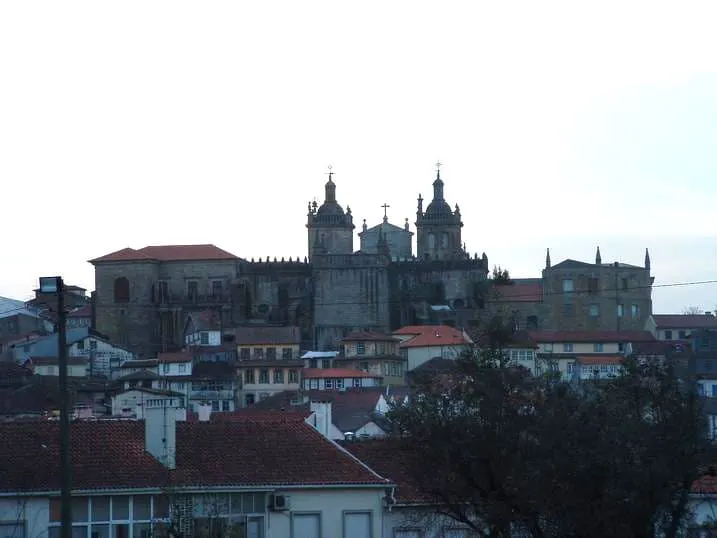
Capital of its namesake district and the main city of the Dão-Lafões sub-region, Viseu rises on a hill in Beira Alta, within Portugal’s Centro region. Its urban history is documented at least since Roman times—a well-known votive altar references the Vissaieigenses—and was consolidated with the charter granted by Count D. Henrique in 1123. From its role as a comital residence to its elevation as a duchy seat in 1415, the city established itself as a crossroads and a religious and administrative center of inland Beira.
The Historic Core and Rua Direita
The ancient heart of Viseu revolves around the cathedral square and extends along Rua Direita, a commercial artery that, despite its name, winds in curves down the hill. Along it stand narrow-fronted houses, adorned with coats of arms and clad in granite, remnants of merchants and minor nobility from the 16th to 18th centuries. The ensemble, partly walled in the Middle Ages, still preserves gates and sections of the ramparts, forming one of the most coherent historic centers in inland Portugal.
At the top of this grid lies the Sé de Viseu, a cathedral whose construction spanned from Romanesque to Mannerist styles, featuring a Renaissance cloister and Manueline ribbed vaults. Facing it, the white Baroque façade and granite of the Igreja da Misericórdia complete one of the most photographed urban scenes in Beira.
The Grão Vasco School
Viseu lent its name to one of the greatest episodes in Portuguese art: the painting school led in the early 16th century by Vasco Fernandes, known as Grão Vasco. Collaborating with Gaspar Vaz and other masters, he produced altarpieces of intense expression and rich color that revitalized Portuguese Renaissance painting, blending Flemish influences with a distinct sensibility.
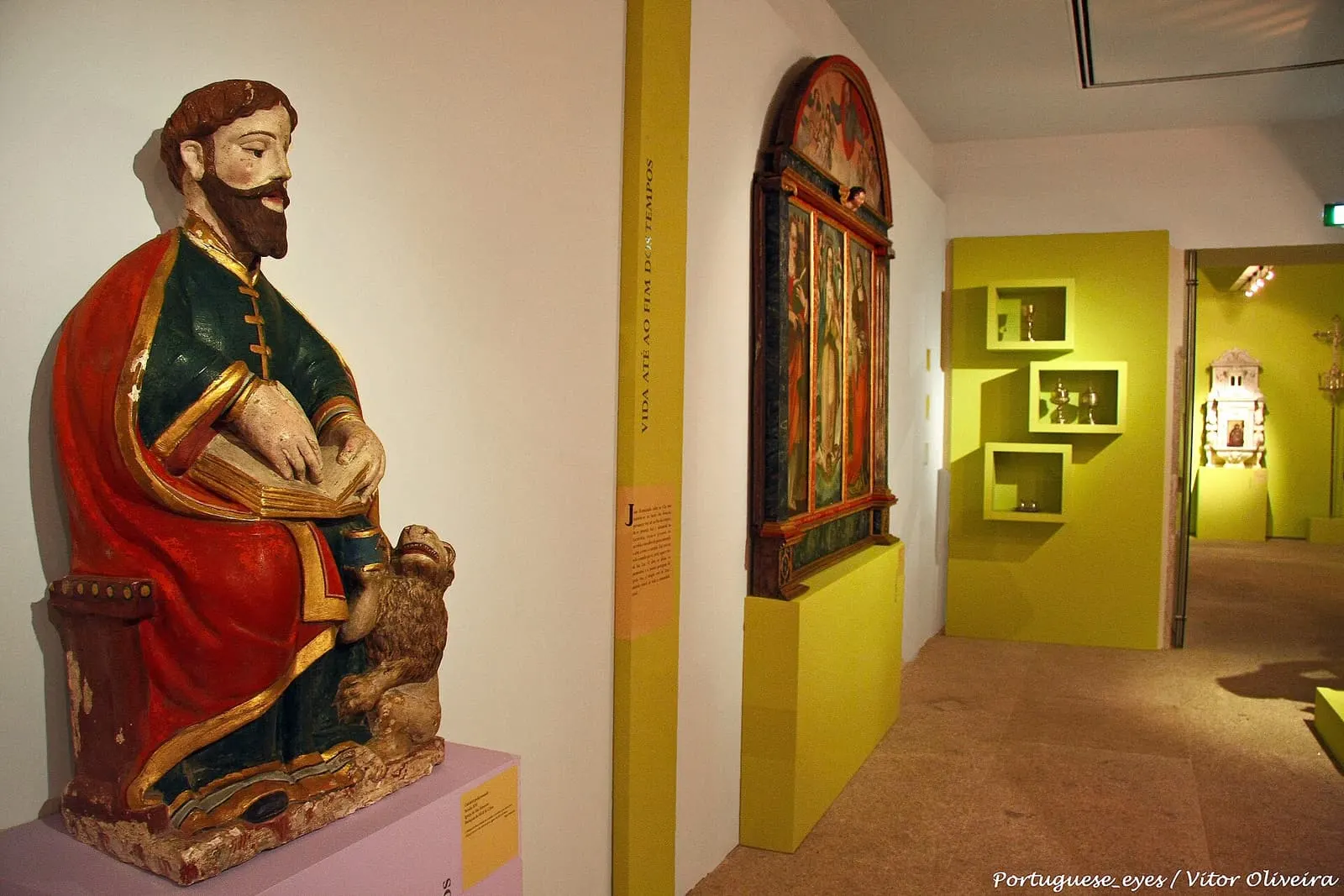
The collection is now housed in the Grão Vasco National Museum, located in the former Paço dos Três Escalões near the cathedral. Here, panels like Saint Peter and the altarpieces from the cathedral’s main chapel are preserved, essential references for studying 16th-century Portuguese art.
Viseu’s strength lies not in a single monument but in the continuity between the cathedral, the museum, and the streets connecting them—a city that treats art as urban fabric.
Territory, Wine, and Identity
The outskirts hold the enigmatic Cava de Viriato, a vast octagonal fortification whose dating and purpose continue to divide scholars, with theories ranging from Lusitanian, Roman, or Islamic origins. Its legendary association with the Lusitanian leader Viriatus fuels an identity the city cherishes.
To the north and south stretch the vineyards that shape the Dão Wine Route, one of the country’s oldest protected designations of origin, known for its age-worthy reds primarily made from the Touriga Nacional grape. Embedded in the network of historic inland cities, Viseu dialogues with other centers in the Centro region, extending into Beira Alta a heritage tapestry that weaves faith, painting, and landscape.
Frequently asked questions
- In which region and district is Viseu located?
- Viseu is situated in the Centro region of Portugal, serving as the capital of its namesake district and the main urban center of the Dão-Lafões sub-region.
- Who was Grão Vasco?
- Grão Vasco was the nickname of Vasco Fernandes, a painter who led the Viseu school in the early 16th century and whose works are housed in the Grão Vasco National Museum.
- What is the Cava de Viriato?
- It is a polygonal fortification on the outskirts of Viseu, classified as a monument and traditionally linked to the Lusitanian leader Viriatus, though its origins remain debated.
Sources
Keep exploring
Heritage nearby
More places to discover from here. Approximate straight-line distances, within 50 km.