Places
Alcobaça
Alcobaça, a town in the district of Leiria that grew up around the Monastery of Santa Maria, a masterpiece of Cistercian Gothic listed by UNESCO.
- Location
- Alcobaça, Leiria
Tucked into the valley where the Alcoa and Baça rivers meet, the town of Alcobaça was born and grew in the shadow of one of the greatest monuments of European Romanesque-Gothic architecture. It belongs to the district of Leiria and the Oeste subregion, halfway between the Atlantic coast at Nazaré and the agricultural interior that extends towards Porto de Mós and Rio Maior. Although often associated with the Centro region, it is a thousand-year-old town whose identity has, for nearly nine centuries, been inseparable from the presence of the Cistercian Order.
From its origins to the donation by Afonso Henriques
Human settlement of the region dates back to Roman times, as attested by the remains of the Parreitas archaeological site, in the parish of Bárrio. It was, however, the donation of vast territories made by King Afonso Henriques to the monks of Cîteaux, following the capture of Santarém in 1147, that sealed the fate of the place. Around the abbey founded in the mid-twelfth century there grew the settlement that would go on to receive a charter and to develop to the rhythm of monastic work — agriculture, milling, orchards and the celebrated fruit growing that still characterises the municipality today.
Few Portuguese towns owe their existence so completely to a single institution: in Alcobaça, the monastery is not merely a monument within the town, it was the very reason for the town.
Cistercian rule shaped the rural landscape for six hundred years, organising the so-called coutos of Alcobaça into one of the most extensive ecclesiastical seigneuries of the realm. That agricultural heritage survives in fruit growing and in a tradition of conventual sweet-making that made the local liqueurs and fruit preserves famous.
The monastery at the heart of the town
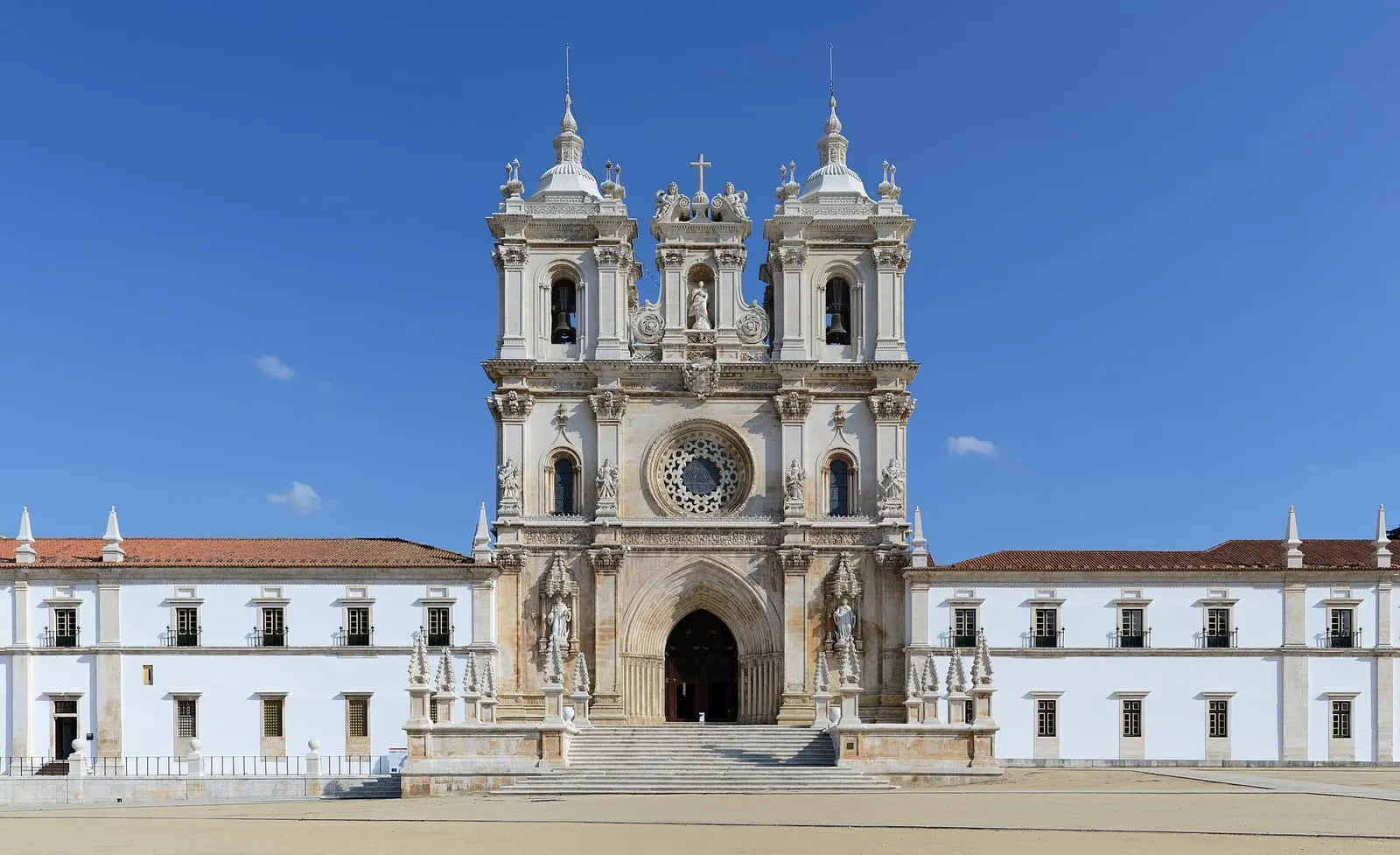
The urban centre is laid out before the Baroque façade of the Monastery of Santa Maria de Alcobaça, listed as a UNESCO World Heritage Site in 1989. Inside, the nave of the church — austere, vertical and luminous — is one of the purest achievements of Cistercian aesthetics in all of Europe, and houses the tombs of King Pedro I and Inês de Castro, masterpieces of funerary Gothic sculpture that perpetuate one of the most celebrated episodes in Portuguese history.
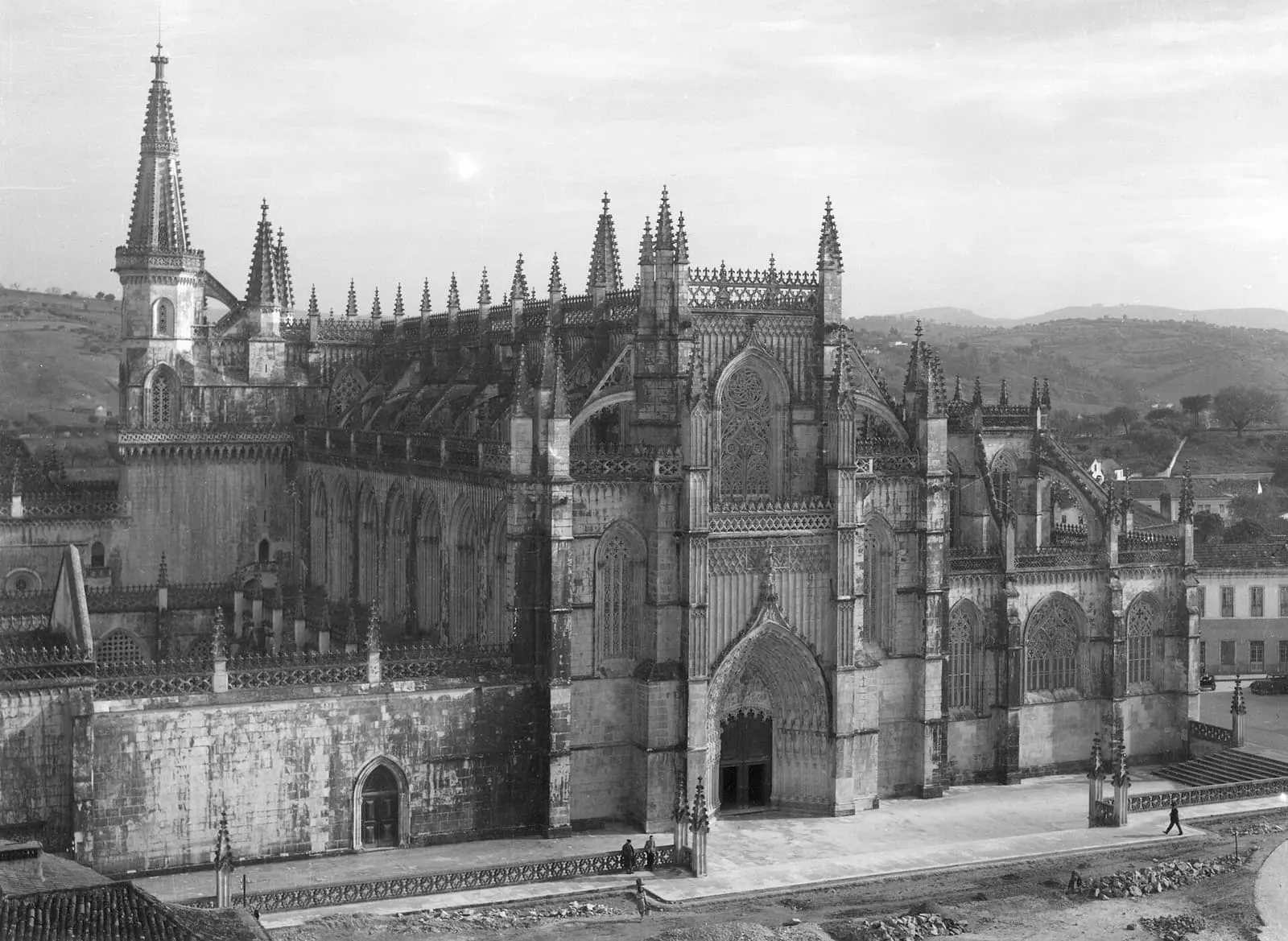
Alcobaça’s relationship with Cîteaux places it on a broader heritage itinerary that runs through the order’s foundations along the Cistercian routes in Portugal and converses with the region’s other great monastic house, the neighbouring Monastery of Batalha, raised in the following century. About half an hour apart, both complexes form part of a monumental triangle that makes this part of the country one of the territories richest in medieval architecture.
A town of traditions
Beyond its monastic legacy, Alcobaça preserves crafts of its own. The production of chita de Alcobaça, a printed fabric with floral patterns that for generations clothed the homes and tables of the Oeste, is one of the most vital expressions of local material culture. This combination of great religious architecture and popular craftsmanship aptly sums up the town’s dual nature.
Raised to city status on 30 August 1995, Alcobaça retains a human scale that allows its historic centre to be explored on foot, from the banks of the two rivers to the forecourt of the monastery. Visitors find less a tourist metropolis than a provincial town where national history has turned to stone: the place where the land that gave birth to Portugal learned to pray, to cultivate and to remember its dead. Part of the heritage ensemble of the Centro region, it remains, above all, the town of its monastery.
Frequently asked questions
- Where is Alcobaça?
- Alcobaça is a town in the district of Leiria, in the Oeste subregion, about 110 km north of Lisbon, between Caldas da Rainha, Nazaré and Leiria.
- Why is Alcobaça famous?
- It owes its fame to the Monastery of Santa Maria, founded by King Afonso Henriques, a masterpiece of Cistercian Gothic and a UNESCO World Heritage Site since 1989.
- Where does the name Alcobaça come from?
- The place name, of Arabic origin, is associated with the two rivers that meet in the town, the Alcoa and the Baça, according to local tradition.
Sources
Keep exploring
Heritage nearby
More places to discover from here. Approximate straight-line distances, within 50 km.