Intangible Heritage
Traditional Portuguese Azulejo
The art and know-how of the traditional Portuguese azulejo, from the making of tin-glazed earthenware to its laying on walls, a hallmark of national identity.
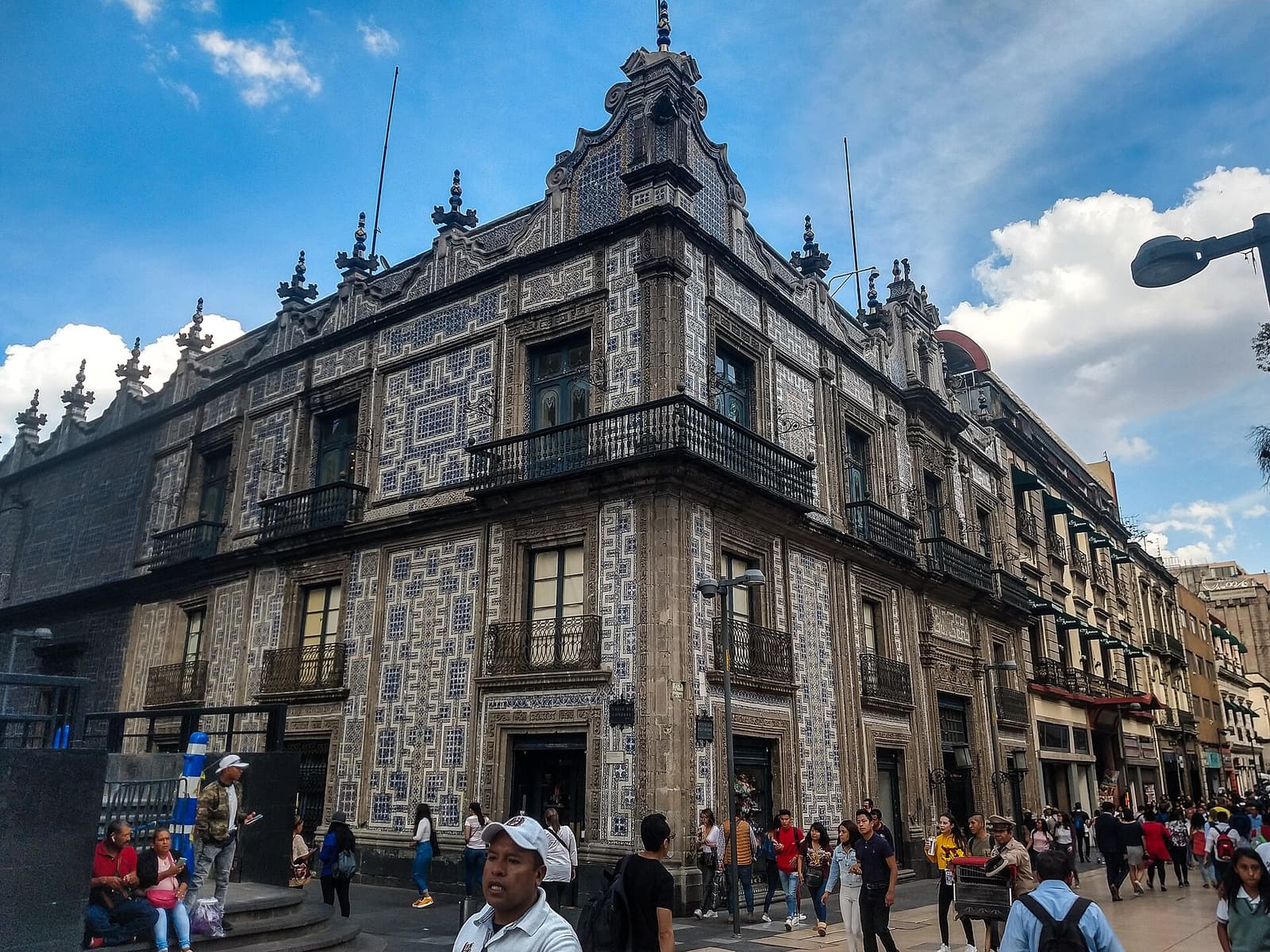
In Portugal, the azulejo is far more than a cladding material: it is a decorative language that, over more than five centuries, has covered churches, palaces, stairways, gardens, stations and entire façades. What makes it intangible cultural heritage is not the ceramic tile itself, but the know-how that gives rise to it — the body of gestures, recipes and knowledge that runs from the preparation of the clay to painting and laying on the wall, handed down from master to apprentice and still practised today in workshops and factories.
A know-how handed down
The production of a traditional azulejo follows a demanding sequence. It begins with the biscuit, the slab of red clay moulded and given a first firing that densifies it. Onto that surface the tin glaze is applied — a white, opaque glaze rendered opaque by tin oxide — which serves at once as ground and as canvas. It is upon this raw, powdery glaze that the painter works, with pigments of soluble metal oxides, in a gesture that admits no correction: the paint is absorbed at once. A second firing fuses, simultaneously, the glaze and the decoration, fixing the image forever.
This earthenware method, heir to the majolica that reached the Peninsula in the sixteenth century, demands the command of several arts at once — the chemistry of glazes, the control of the kiln, drawing and painting — and it is precisely that convergence of knowledge that justifies reading it as a traditional art of ceramics and earthenware. Alongside the making, the knowledge of laying — setting, aligning and finishing the panels on large surfaces — constitutes a craft of its own, indispensable to the monumental expression that defines the Portuguese case.
The Portuguese azulejo is distinguished not so much by its technique, shared with other countries, as by its use: no other country resorted to it on such an architectural scale and with such continuity over time.
Five centuries of invention
The story begins around 1503, when King Manuel I had rooms of the National Palace of Sintra clad with Hispano-Moresque azulejos brought from Seville, executed by the techniques of alicatado, cuerda seca and arista. The great turning point comes in the second half of the sixteenth century, with the arrival of majolica of Flemish and Italian lineage, which freed up the painting by allowing the pigment to be applied directly onto the white glaze.
There follows, in the seventeenth century, the cycle of the masters, with names such as Gabriel del Barco and António de Oliveira Bernardes, and the consecration of blue and white under the influence of Chinese porcelain and Delft earthenware. The eighteenth century is the golden age: the gold of Brazil financed great historiated Baroque panels and, after the 1755 earthquake, the pragmatic Pombaline azulejo clad the reconstruction of Lisbon. In the nineteenth century, industrialisation and stencilling spread the façade azulejo across the cities, and the turn of the century brings the renewal of Art Nouveau.
Identity and safeguarding
Today, the azulejo remains a living component of the Portuguese urban landscape and a central element of the Portuguese decorative arts. Its memory is gathered and studied at the Museu Nacional do Azulejo, in Lisbon, housed in the former Convent of Madre de Deus, where the evolution of the technique can be followed from the sixteenth century onwards. The continuity of the craft — threatened by the decline of the workshops and by the theft and dispersal of panels — depends on the transmission of this know-how, which is why its valorisation falls within the field of intangible cultural heritage. To know the azulejo is, then, to know a collective gesture that continues to shape the visual identity of Portugal.
Frequently asked questions
- What sets the Portuguese azulejo apart?
- More than a technique, it is a use: Portugal applied the azulejo to vast architectural surfaces, from floor to ceiling, on interiors and façades. That scale and continuity over five centuries has no parallel in other countries.
- How is a traditional azulejo made?
- One starts from a biscuit of fired clay, coated with a white, opaque tin glaze. On that raw surface the design is painted by hand, with pigments of metal oxides, followed by a second firing that fixes glaze and decoration at once.
- Why are so many azulejos blue and white?
- The blue-on-white monochrome became widespread in the late seventeenth and the eighteenth centuries, under the influence of Chinese porcelain and Delft earthenware, becoming the most recognisable image of Portuguese azulejo work.