Intangible Heritage
Caretos de Podence
The Caretos de Podence, the Entrudo Chocalheiro of Macedo de Cavaleiros inscribed by UNESCO in 2019: tin masks, woollen fringes and cowbells.
- Location
- Podence, Bragança
- UNESCO
- Intangible Heritage · since 2019
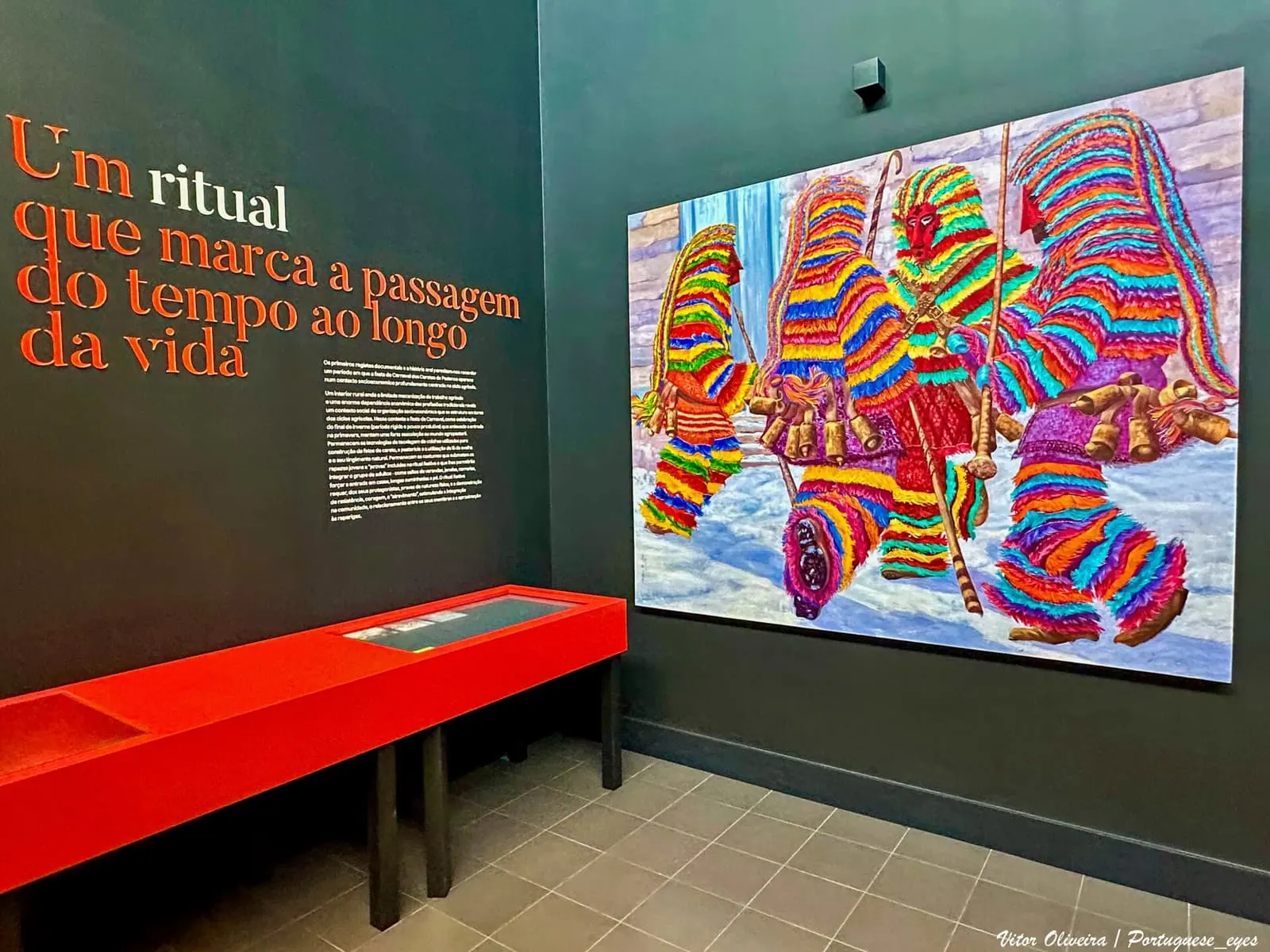
The Caretos de Podence are the central figures of the Entrudo Chocalheiro of this small Trás-os-Montes village, in the municipality of Macedo de Cavaleiros, district of Bragança. Dressed in costumes covered with fringes of coloured wool — red, yellow and green —, their faces hidden behind a tin or leather mask and their waists laden with cowbells, the Caretos run and leap through the streets during the days of Carnival, in a noisy, ancestral ritual that marks the end of winter and the arrival of spring. In December 2019, UNESCO inscribed the Winter Festivities, Carnival of Podence, on the Representative List of the Intangible Cultural Heritage of Humanity.
The ritual and its figures
The height of the festival takes place between Fat Sunday and Shrove Tuesday. The Caretos — almost always unmarried young men of the village — roam the streets in bands, sounding their cowbells in an unmistakable cadence. Under the anonymity of the mask, they pursue and surround the young women, dancing around them with a rhythmic swaying of the hips, the so-called «chocalhar». This gesture, playful and provocative, echoes an ancient symbolic dimension, associated with fertility and the renewal of the agrarian cycles.
The attire is an essential part of the Careto’s identity. The costume, once made from household bedspreads and blankets, is today composed of cloths covered with dense, striking woollen fringes. The mask, the piece that distinguishes each figure, has angular features and strong colours, with a prominent nose. At the waist runs the collection of cowbells that gives the Entrudo Chocalheiro its name and that makes sound an element as striking as the appearance.
The Careto does not speak: he communicates through gesture, through the mask and through the din of the cowbells. It is in anonymity that his ritual freedom resides.
Roots and transmission
The tradition has deep roots in the rural calendar of Trás-os-Montes, sharing traits with other Iberian manifestations of winter masks. Its survival owes much to the community work of Podence: in 1985 a local association dedicated to safeguarding the Caretos was founded, and in 2004 the Casa do Careto opened, a museum space and interpretation centre for the festival. These structures ensured the transmission of the know-how of the masks and costumes to new generations, in a context of depopulation that threatens many traditions of the interior.
International recognition came accompanied by a safeguarding plan, a condition of the candidacy accepted by UNESCO. The challenge is to balance the renown — the Carnival today attracts tens of thousands of visitors — with the preservation of the communal and spontaneous character that has always defined the festival.
Place in Portuguese intangible heritage
The Caretos form part of a remarkable set of manifestations recognised in the intangible cultural heritage of Portugal. The festival is documented in greater detail in the page dedicated to the Winter Festivities of Podence, and it dialogues with the craft knowledge that makes it possible, such as the manufacture of cowbells that arms each Careto with its symphony of metal. More than a spectacle, the Entrudo Chocalheiro of Podence is a living testimony to the culture of Trás-os-Montes and to the capacity of a small community to preserve and renew its memory.
Frequently asked questions
- When is the Carnival of the Caretos de Podence held?
- The Caretos take to the streets above all on Fat Sunday and Shrove Tuesday, although the celebrations of the Entrudo Chocalheiro extend over several days of Carnival.
- What are the Caretos' masks made of?
- The masks are traditionally made of tin or leather, often painted red, yellow and black, with a protruding nose; the costume is covered in fringes of coloured wool and girded with a row of cowbells.
- Why were the Caretos de Podence recognised by UNESCO?
- In 2019 UNESCO inscribed the Winter Festivities, Carnival of Podence, on the Representative List of the Intangible Cultural Heritage of Humanity, recognising a community ritual linked to the end of winter and the arrival of spring.