Intangible Heritage
Winter Festivities, Caretos de Podence
The Caretos de Podence, in Macedo de Cavaleiros, are part of the Winter Festivities inscribed as UNESCO Intangible Cultural Heritage of Humanity in 2019.
- Location
- Podence, Bragança
- UNESCO
- Intangible Heritage · since 2019
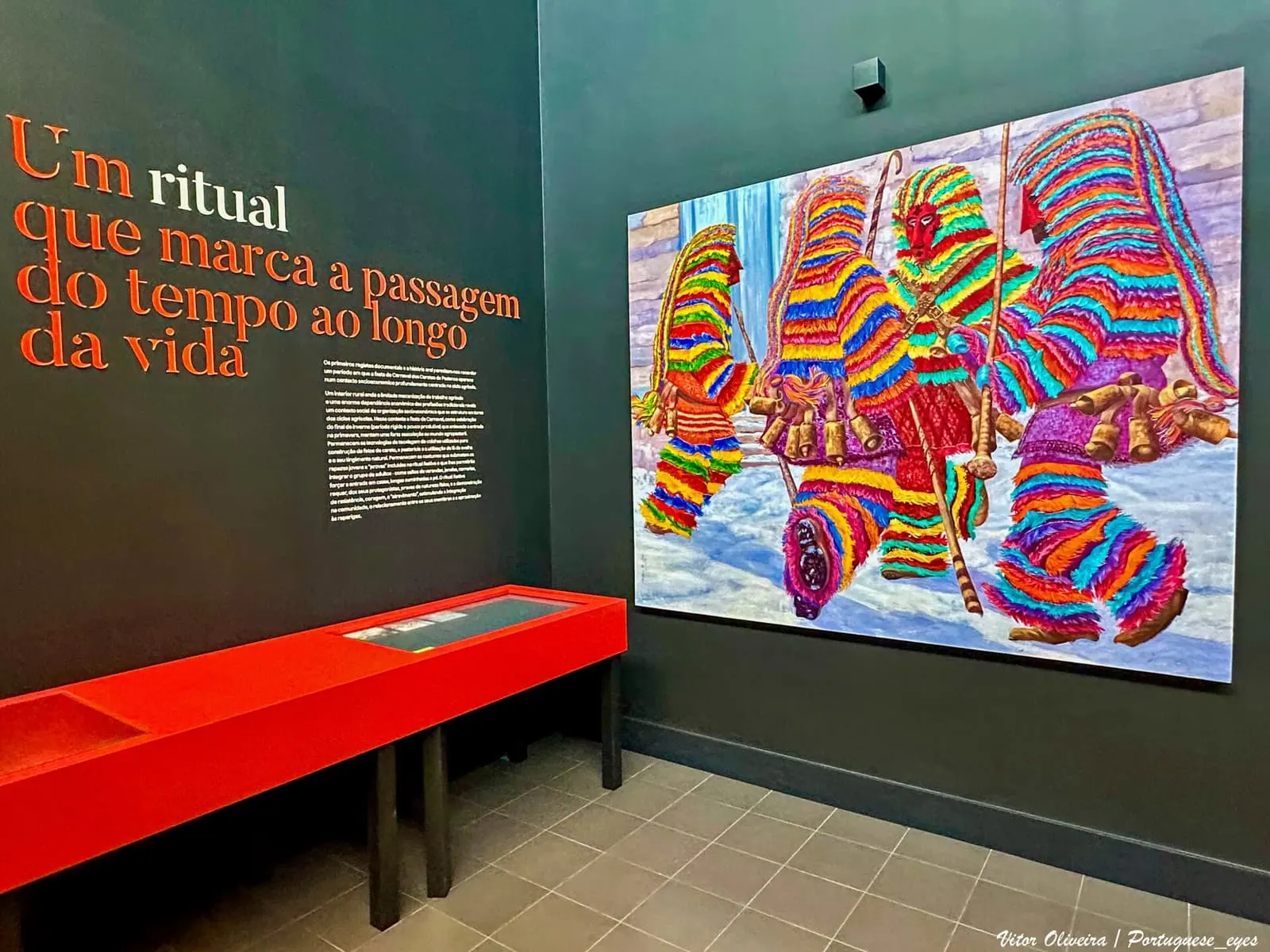
In the streets of Podence, a small village in the municipality of Macedo de Cavaleiros, in the district of Bragança, Shrovetide is transformed each year into a collective ritual of masking, noise and excess. The Caretos — young men dressed in costumes of colourful woollen fringes, their faces covered by masks of tin, leather or wood and cowbells fastened to their waists — race through the village in frenzied dashes, a custom that UNESCO inscribed in 2019 on the Representative List of the Intangible Cultural Heritage of Humanity.
A Trás-os-Montes winter rite
The Podence Carnival belongs to the cycle of winter festivities associated with the passing of the cold season and the arrival of spring. Under the official designation “Winter Festivities, Carnival of Podence” (reference 01463), international recognition emphasises less the spectacle and more the social function: in its origins it was a male rite of passage, today extended to women and children.
During the days of Shrovetide, with particular emphasis on Shrove Sunday and Shrove Tuesday, the Caretos come out in groups. Shaking their cowbells and chasing above all unmarried young women in a codified gesture known as the “chocalhada”, they enact a temporary inversion of the everyday order. The anonymity of the mask permits controlled transgression, releasing tensions and, paradoxically, reaffirming the bonds of the community.
The mask does not merely conceal the face: for a few days it suspends the village’s rules, only to return them renewed.
From near-extinction to the world stage
Like so many rural Trás-os-Montes traditions, the Podence Carnival came close to disappearing. Depopulation, emigration and the colonial war emptied the village of its young people in the 1960s and 1970s, and the custom was almost lost. Its survival was due to a revitalisation movement that culminated, in the mid-1980s, in the founding of a local association — the Grupo de Caretos de Podence — committed to recovering the costumes, recording the memory and ensuring the transmission.
This associative structure was decisive for the UNESCO nomination, formalised in 2018 and approved the following year in Bogotá, during the 14th session of the Intergovernmental Committee. The youngest, the “facanitos”, learn from an early age to put on the costume and wield the staff, ensuring the generational renewal that the nomination dossier itself highlighted as a condition of safeguarding.
Symbol of the north-east and of the Iberian Carnival
The Caretos de Podence belong to a wider family of winter masqueraders of the Trás-os-Montes north-east and of the Iberian Peninsula, whose origin is often associated with ancient cults of fertility and seasonal renewal. Their silhouette — red, green and yellow fringes, an angular mask, resounding cowbells — has become one of the visual icons of the north of Portugal and of its intangible cultural identity.
The UNESCO inscription placed Podence alongside other recognised Portuguese expressions, such as the Festas do Povo de Campo Maior and the Cante Alentejano, in a body that gives international visibility to the country’s intangible heritage. More than a tourist attraction — which today draws thousands of visitors — the Carnival remains, for the inhabitants of the village, an annual gesture of belonging and continuity.
Frequently asked questions
- When do the Caretos de Podence take place?
- The Podence Carnival is celebrated during the Shrovetide period, above all on Shrove Sunday and Shrove Tuesday, with the Caretos roaming the village streets over several days.
- Why are the Caretos a Heritage of Humanity?
- In 2019 UNESCO inscribed the Winter Festivities, Carnival of Podence, on the Representative List of the Intangible Cultural Heritage of Humanity, recognising their role as a social practice and as community identity.
- Where is Podence?
- Podence is a village in the municipality of Macedo de Cavaleiros, in the district of Bragança, in the Trás-os-Montes region, in north-eastern Portugal.