Monuments
Castle and Walls of Trancoso
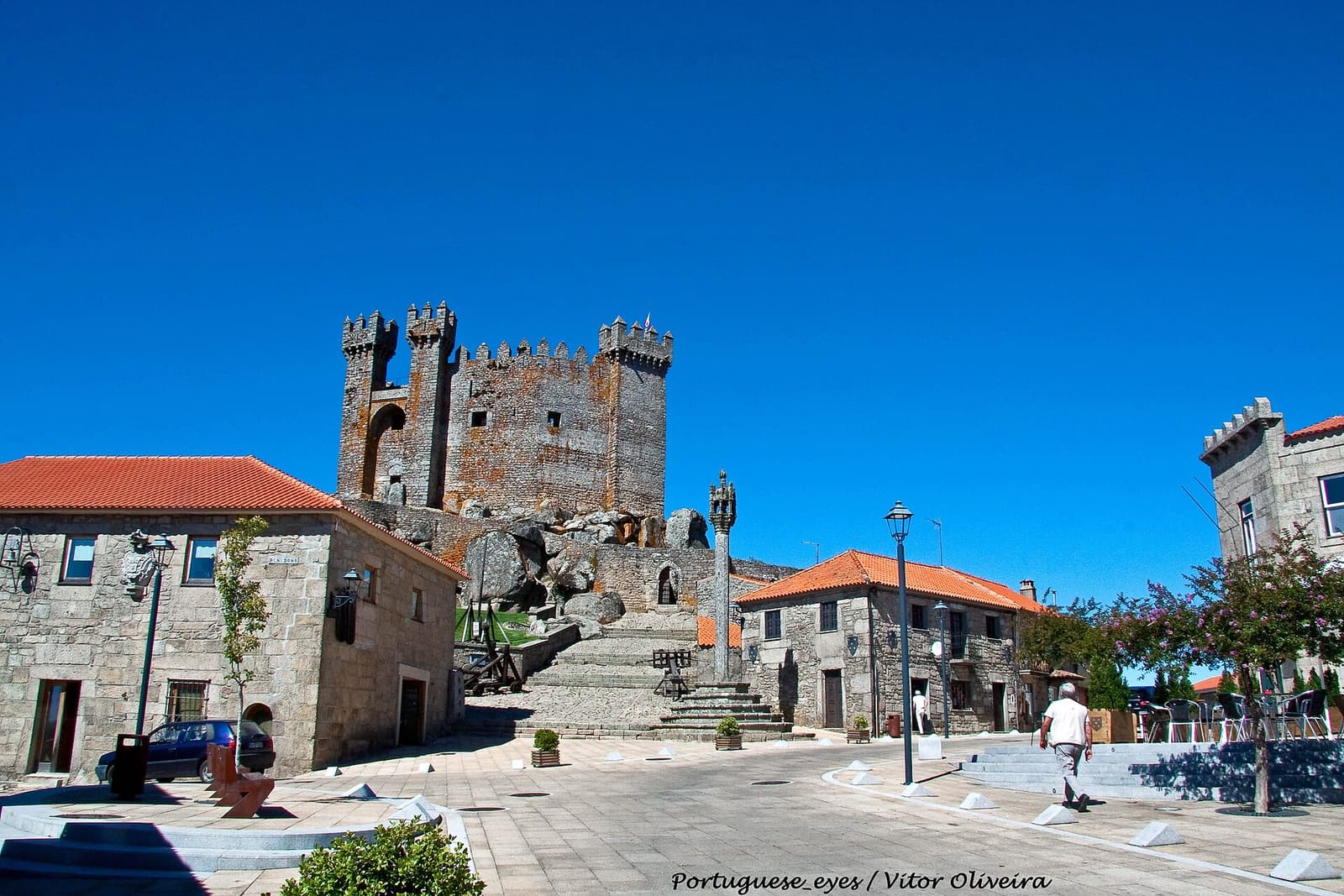
Medieval castle and walls of Trancoso, in the district of Guarda: the Dionysian enceinte, setting of the marriage of King Dinis to Queen Saint Isabel in 1282.
- Location
- Trancoso, Guarda
- Built
- Século XII; reforço dionisino a partir de 1282
- Style
- Românico e gótico medieval
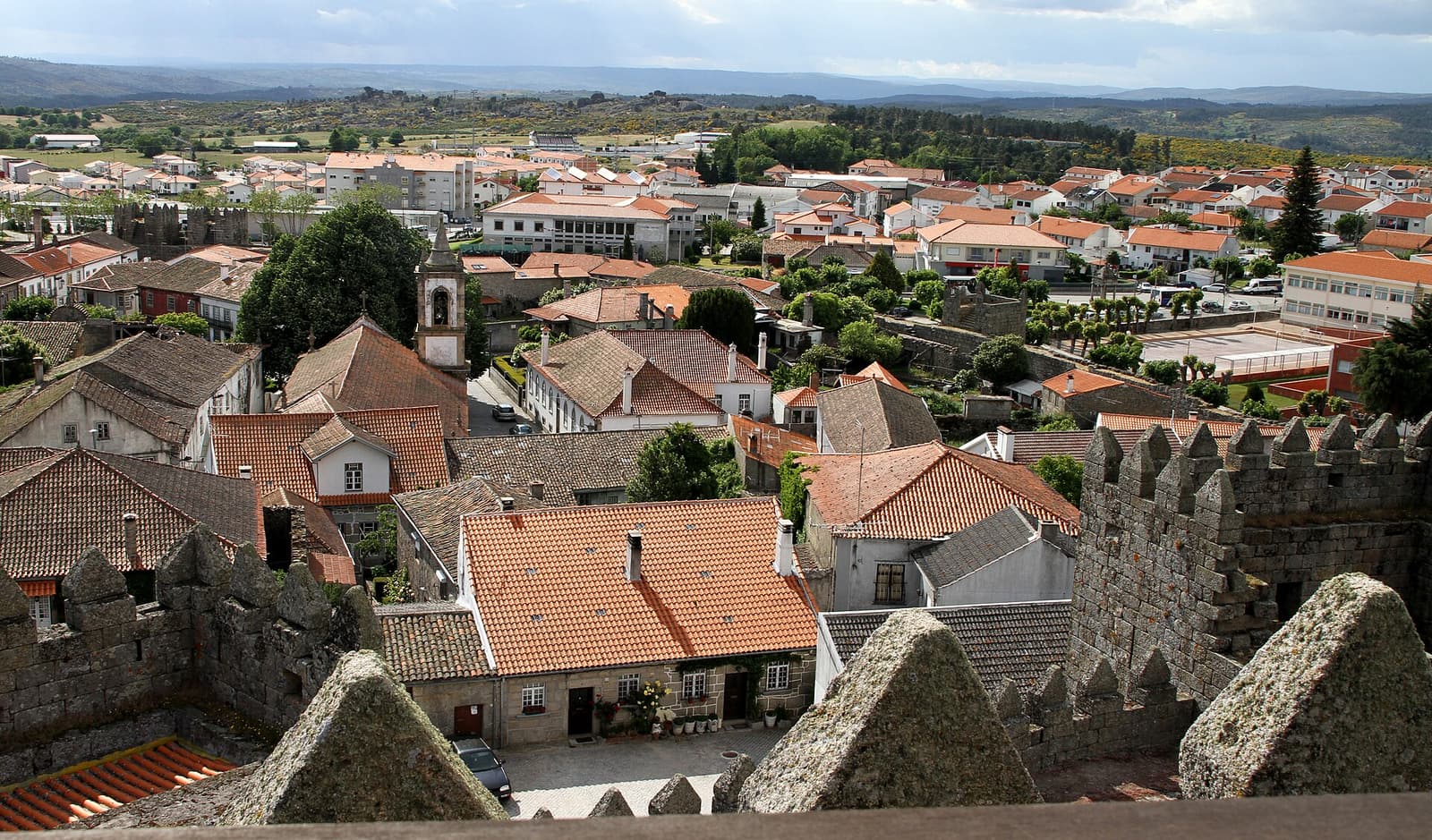
High on a plateau of the Beira Interior, dominating the lands on the way to the Douro, rises one of the most intact walled ensembles of the Portuguese interior. The Castle and Walls of Trancoso completely encircle the old core of the town, in the district of Guarda, in a ring of stone curtains pierced by monumental gates and punctuated by towers. Older than nationhood itself, the site acquired strategic importance from the very formation of the kingdom, on the restless frontier with León and Castile.
A frontier stronghold
The settlement received its charter in the twelfth century and soon established itself as a key point in the defence of the borderland, alongside Guarda and Covilhã. Decisive struggles for the assertion of the territory passed through here: Trancoso withstood assaults in the twelfth century and, in 1385, was the scene of a skirmish that preceded the victory of Aljubarrota, within the framework of the dynastic crisis. This condition of a frontier land explains the robustness of the enceinte, conceived not as a mere urban wall, but as a true war machine adapted to the terrain.
The most significant intervention is owed to King Dinis, who from the end of the thirteenth century reinforced and extended the defensive perimeter. To him is attributed the appearance we still recognise today: curtain walls of dressed masonry, crowned by battlements with pyramidal merlons, and reinforced by quadrangular towers distributed along the circuit.
Gates, towers and the Mudéjar mark
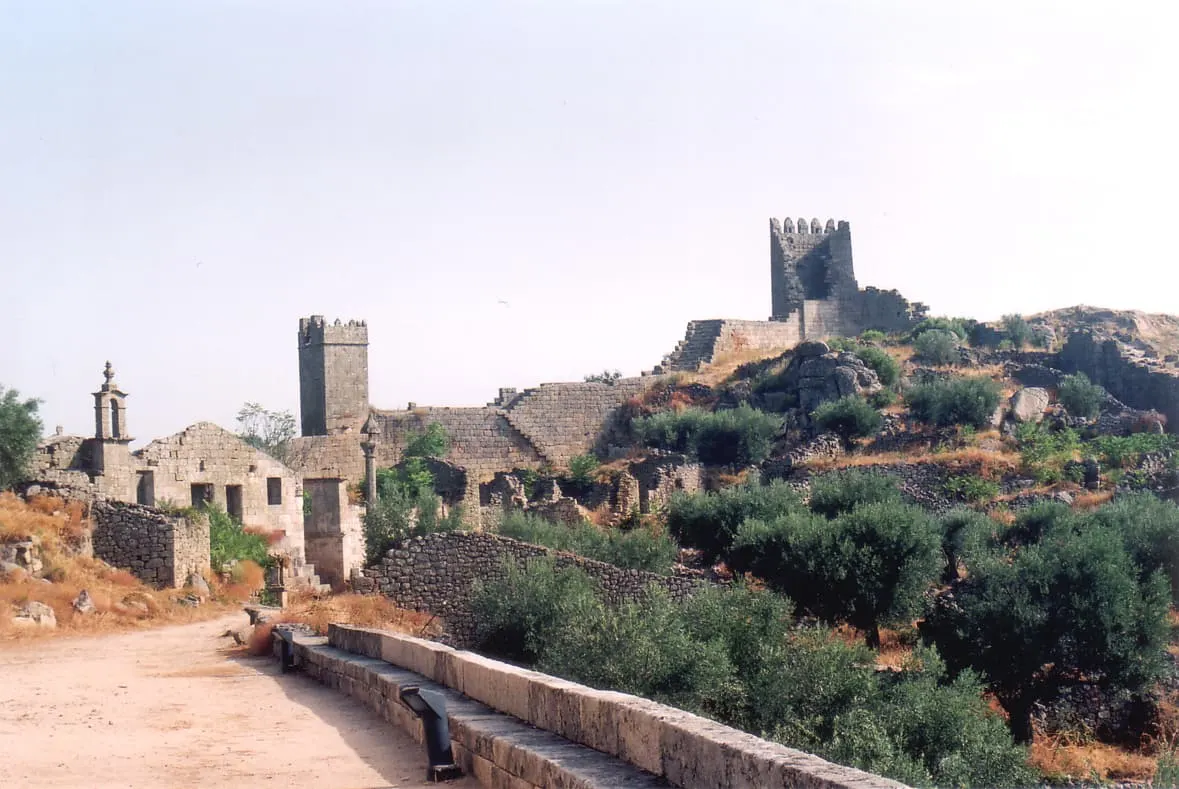
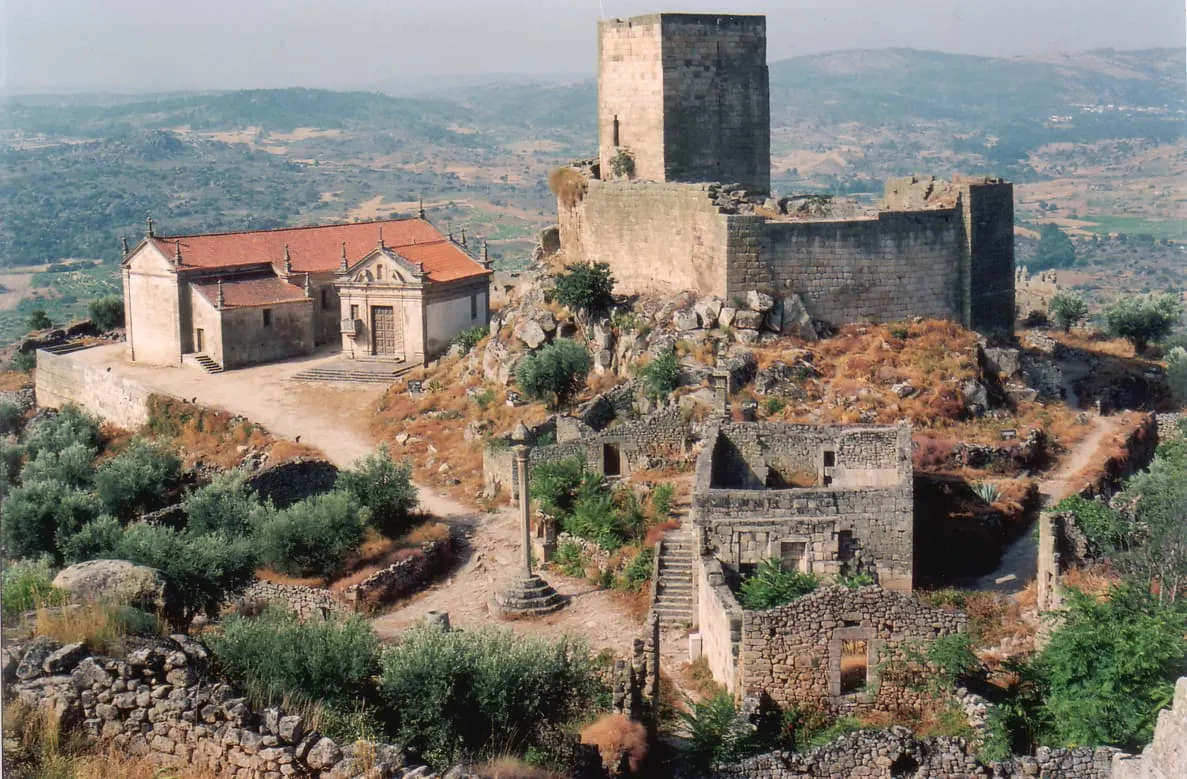
Access to the enclosure is mainly through two fortified gateways, flanked by towers and still today full of medieval scenography: the Porta d’El-Rei, to the south-west, and the Porta do Prado, to the north. Within the citadel stands out the keep, of a roughly trapezoidal plan, in which a horseshoe-arched window is prominent — a Mudéjar testimony that links this military architecture to the peninsular Islamic heritage, a trait shared by other frontier fortresses of the Beira such as Marialva.
The value of Trancoso lies not in an isolated tower, but in the survival of the complete ring: few Portuguese towns preserve, like this one, the enceinte fully embracing the old houses.
The curtain walls and the castle thus form a remarkable example of the role of urban walls and fortified towns in the organisation of the medieval territory. The work blends solutions of the late Romanesque with the Gothic idiom that was spreading under the monarchs of the second dynasty, in a dialogue that recurs in the nearby Cathedral of Guarda and in so many contemporary churches and fortresses of Gothic architecture in Portugal.
The royal marriage and the memory of the Bandarra
The importance of Trancoso was sealed by a major event: it was here that, on 24 June 1282, King Dinis received as his wife Isabel of Aragon, the future Holy Queen. The town and its castle then came to form part of the queen’s dower, joining the roll of seigneurial domains under her administration — a sign of the prestige of a stronghold that the king chose to seal one of the most celebrated alliances of Portuguese history.
Centuries later, Trancoso would again enter collective memory through the voice of one of its sons: Gonçalo Anes Bandarra, a cobbler born in the town around 1500. Author of verses of a prophetic and messianic character, he was summoned before the Inquisition, which compelled him to abandon his biblical interpretations; even so, his verses circulated widely and became one of the sources of Sebastianism, the current that awaited the return of King Sebastião. The house that tradition associates with him is still shown within the walls, linking the stone of the castle to that imagery of hope and frontier.
Classified as a National Monument by decree of 8 July 1921, the ensemble was the object of restoration campaigns throughout the twentieth century. To walk the wall-walk, to pass through the Porta d’El-Rei and to climb the keep is, today, to read in stone the long history of a town that was an advanced guard of the kingdom. The castle is part of the wider panorama of the medieval castles of Portugal, of which it constitutes one of the best-preserved testimonies of the Beira plateau.
Frequently asked questions
- Where is the Castle of Trancoso located?
- The castle rises at the highest point of the town of Trancoso, in the district of Guarda, in the Beira Interior, on a plateau near the sources of the River Távora.
- What royal marriage is associated with Trancoso?
- It was at Trancoso that King Dinis received as his wife Isabel of Aragon, the Holy Queen, on 24 June 1282. The town and its castle later formed part of the queen's dower.
- Who was the Bandarra of Trancoso?
- Gonçalo Anes Bandarra was a cobbler from Trancoso, author of prophetic verses of a messianic character, which would go on to feed Sebastianism in the following centuries.
Sources
Keep exploring
Heritage nearby
More places to discover from here. Approximate straight-line distances, within 50 km.