Monuments
Castle of Marialva
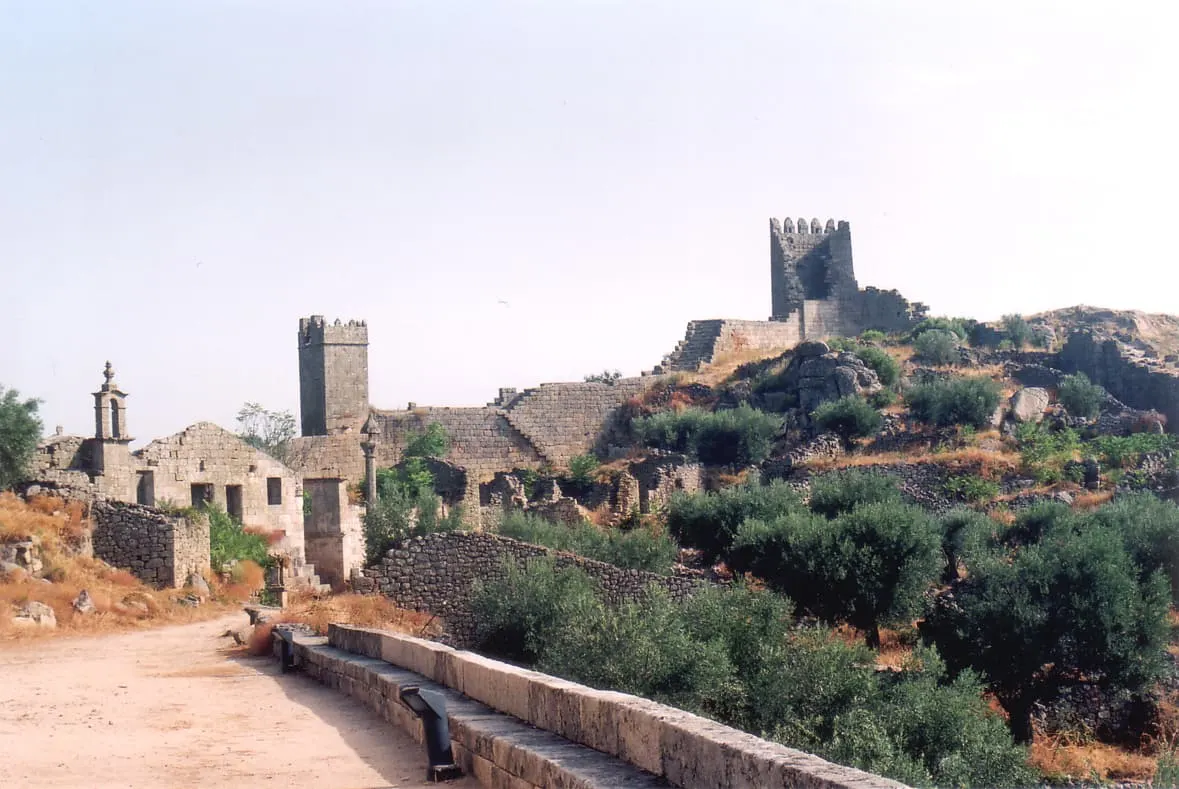
Medieval castle and citadel of Marialva, a historic village in the municipality of Mêda (Guarda): a walled, abandoned citadel on the Beira plateau.
- Location
- Marialva, Guarda
- Built
- Século XII; reconstruções de D. Sancho I e D. Dinis (1296–1297)
- Style
- Românico e gótico medieval
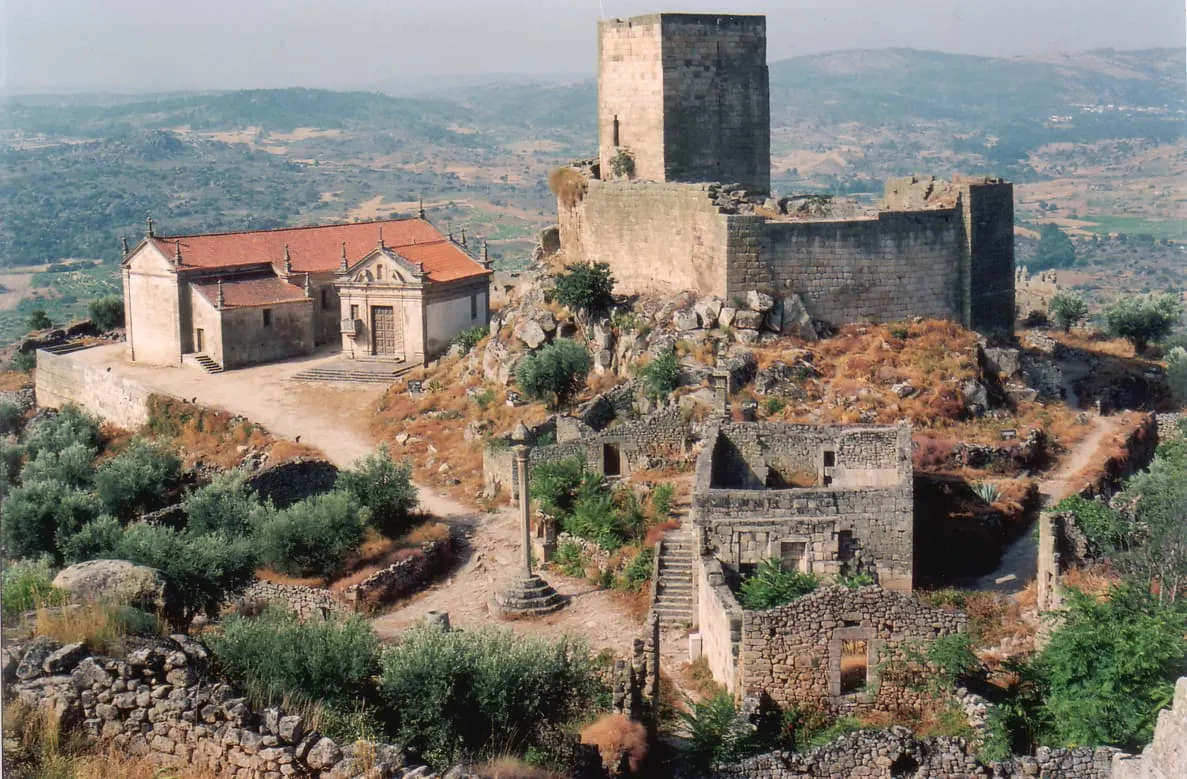
Atop a granite outcrop of the Beira plateau, dominating the plain of the Devesa, rises one of the most singular walled complexes of the Portuguese interior. The Castle of Marialva is not merely a fortress but an entire citadel: within the wall are preserved the ruins of houses, churches, a pillory and public buildings of a settlement that, over the centuries, gradually emptied. Almost uninhabited today, the citadel retains the appearance of a medieval town frozen in time, in the municipality of Mêda, district of Guarda.
From hillfort origins to the reconquest
The occupation of the site long predates Portuguese nationhood. Tradition links it to a hillfort of the Aravi, a Lusitanian people who controlled these lands, which the Romans transformed into the Civitas Aravorum, an important junction of roads on the route between Guarda and Numão. From the Muslim presence came the name Malva, which the Christian reconquest would latinise into Marialva.
Depopulated by the struggles of the Reconquest, the settlement was ordered to be repopulated by Afonso Henriques, who granted it its first charter around 1179. Already in the thirteenth century, Sancho I enlarged the defensive perimeter, and, in the wake of the Treaty of Alcanizes that fixed the border with Castile, Dinis rebuilt the castle in 1296–1297, giving it the form we still largely recognise today. This status as borderland territory brings Marialva close to other frontier strongholds of the Beira, such as the neighbouring Castle of Trancoso.
The citadel and the civil core
The complex is organised into two walled cores. The citadel, the military pole, occupies the highest point and incorporates the keep — of roughly trapezoidal plan, dating back to the thirteenth century and crowned with battlements — as well as other defensive towers; it communicates with the town through two gates. The civil or urban core distinguishes two poles: the administrative one, with the pillory, the former Town Hall, the courthouse and the jail; and the religious one, with two churches and the cemetery.
The wall, of local granite masonry, traces an irregular oval plan that adapts organically to the lie of the land. The enclosure girds the old medieval burgh, in a remarkable example of the role of urban walls and fortified towns in the organisation of the borderland. The work blends late Romanesque solutions with the Gothic language that asserted itself under the monarchs of the second dynasty.
Historic village and abandoned monument
Marialva saw interventions throughout the Early Modern period — there are sixteenth-century inscriptions on the walls and works associated with Manuel I and Sebastian —, but its vitality gradually shifted, over time, from the intramural citadel to the outskirts and to the Devesa, on the plain. From this process resulted one of the most striking features of the place: a monumental citadel that is almost uninhabited, in which the stone ruins speak of an extinct community.
The Castle of Marialva has been classified as a National Monument since 1978, by decree of 12 September. The village belongs to the network of the Historic Villages of Portugal, which celebrates settlements of the Beira interior with a strong heritage character. To walk the silent streets of the citadel, climb the keep and contemplate the plain from the wall-walk is to read in stone the long memory of a frontier of the kingdom. The complex is set within the wider panorama of the medieval castles of Portugal, of which it is one of the most evocative witnesses of the Beira plateau.
Frequently asked questions
- Where is the Castle of Marialva?
- It rises in the village of Marialva, in the parish of the same name, in the municipality of Mêda, district of Guarda, atop a granite outcrop of the Beira plateau, in the Beira Alta.
- Why is the citadel of Marialva almost abandoned?
- The intramural core was gradually depopulated as life shifted to the outskirts and to the Devesa, on the plain. Today the citadel is a monumental complex that is almost uninhabited, with the ruins of houses, churches and public buildings inside the wall.
- What are the origins of the site of Marialva?
- The place is thought to have begun as a hillfort of the Aravi, which the Romans transformed into the Civitas Aravorum. The name Marialva derives from the Arabic place name Malva, latinised after the Christian reconquest.
- Since when has it been a National Monument?
- The Castle of Marialva has been classified as a National Monument since 1978, by decree of 12 September of that year.
Sources
Keep exploring
Heritage nearby
More places to discover from here. Approximate straight-line distances, within 50 km.