Monuments
Guarda Cathedral
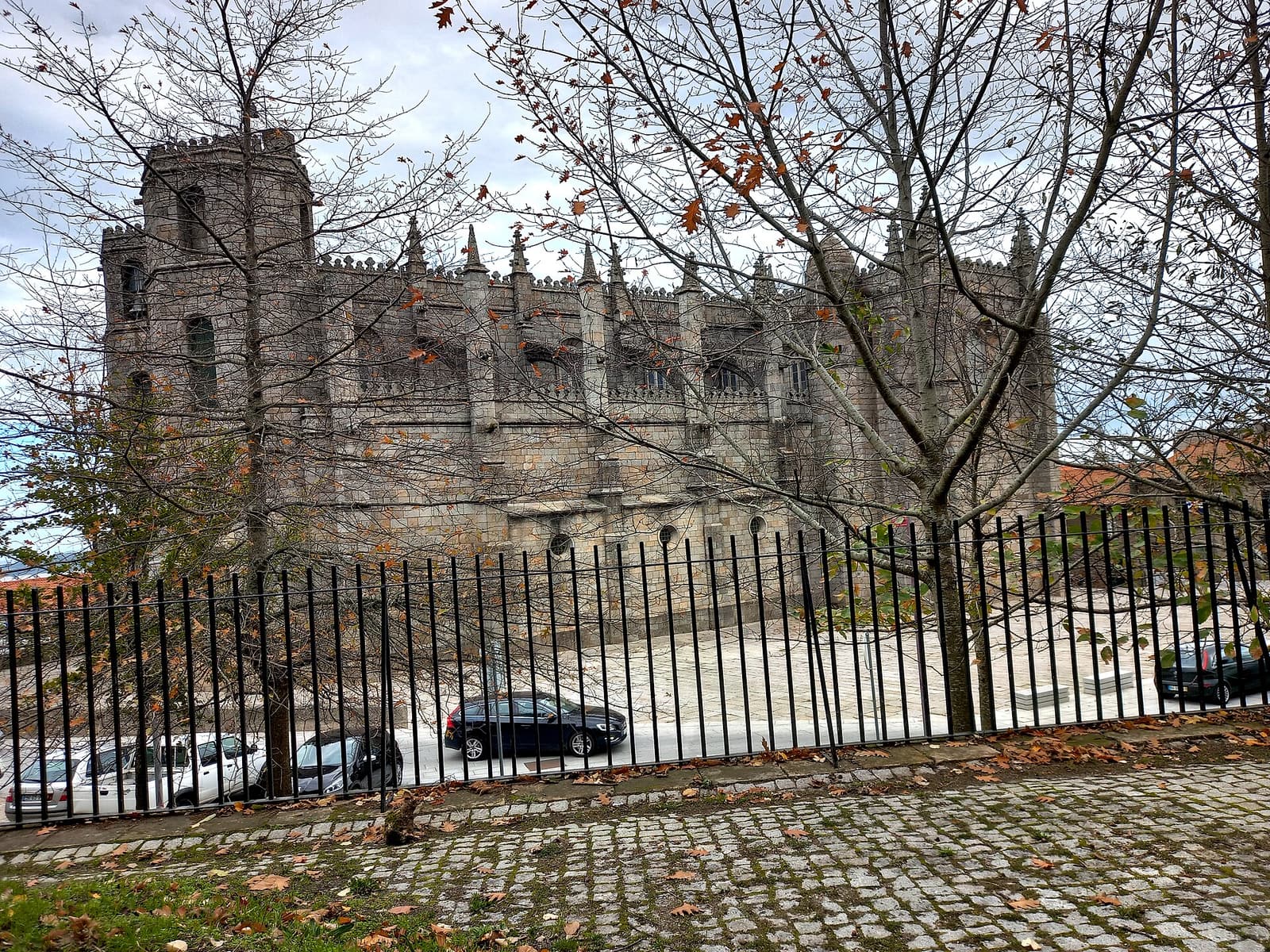
Guarda Cathedral, a Gothic-Manueline fortress-cathedral in Portugal's highest city, built between 1390 and 1540 under the influence of Batalha Monastery.
- Location
- Guarda, Guarda
- Built
- 1390–1540
- Style
- Gótico e Manuelino
Guarda Cathedral stands at the highest point of Portugal’s loftiest city, dominating the urban landscape with its austere granite silhouette. Simultaneously cathedral and fortress, it represents both one of the last great testimonies of Portuguese Gothic and one of its most expressive transitions to Manueline style. Its construction, spanning nearly a century and a half, captures in stone the passage from the late Middle Ages to the Renaissance.
From Egitânia to the city of Guarda
The diocese has ancient origins: at the request of King Sancho I to Pope Innocent III, the episcopal see was transferred from ancient Egitânia (Idanha-a-Velha) to the newly founded city of Guarda in 1199, established to strengthen the border defense against León and Castile. Nothing remains of the original Romanesque cathedral, and even a second building was sacrificed to military wall reforms during King Fernando I’s reign.
The current cathedral began construction around 1390 under King João I through the initiative of Bishop Vasco de Lamego, a supporter of the House of Avis during the 1383-1385 dynastic crisis. Work continued throughout the 15th century with a decisive expansion phase between 1504-1517 under Bishop Pedro Vaz Gavião, concluding around 1540.
A fortress-cathedral between Gothic and Manueline
The building reveals a true amalgamation of styles. The initial Gothic phase shows direct influence from Batalha Monastery, then under construction, sharing models and solutions with Guarda’s works. The later Manueline phase connects distantly to Diogo Boitaca’s art, visible in the main portal, twisted columns in some naves, and the ribbed, star-shaped vaulting of the transept.
The Latin cross floor plan features three stepped naves of five bays divided by cruciform pillars, a protruding transept, and a polygonal apse with two smaller apses. The main facade’s Manueline portal is flanked by two massive octagonal towers with keel-shaped bases that give the ensemble its unmistakable defensive character, reinforced by buttresses, merlons, and battlements.
The dark granite from the mountains, fortified appearance, and elevation over 1,000 meters make Guarda Cathedral one of Portugal’s cathedrals where the inseparable connection between faith, territory, and border defense reads most clearly.
João de Ruão’s altarpiece and revivalist restoration
The interior features the monumental Ançã limestone altarpiece in the main chapel, created in the 1550s by French-born sculptor João de Ruão (Jean de Rouen). Organized into about one hundred figures depicting Christ’s life in narrative registers, it’s considered a masterpiece of Portuguese Renaissance sculpture. The Renaissance-style Pina Chapel with its founder’s recumbent tomb also merits attention.
Designated a National Monument in 1907, the cathedral underwent late 19th-century restoration by architect Rosendo Carvalheira—one of Portuguese revivalist restoration’s most important projects—which sought to return the temple to its Gothic-Manueline character by removing later additions.
As a cathedral of great dignity, Guarda Cathedral forms part of Portugal’s major cathedrals, dialoguing through its medieval matrix and stylistic transition with buildings like Coimbra’s Old Cathedral. Today it stands as the monumental heart of Beira Alta and the supreme symbol of the so-called city of five Fs—fortified, fertile, frigid, faithful, and fair.
Frequently asked questions
- When was Guarda Cathedral built?
- Construction of the current cathedral began around 1390 during the reign of King João I and lasted approximately 150 years, concluding around 1540 during the Manueline period.
- What is the architectural style of Guarda Cathedral?
- The cathedral combines an initial Gothic phase influenced by Batalha Monastery with a later Manueline phase visible in the main portal, transept vaulting, and octagonal facade towers.
- Who created the main chapel altarpiece?
- The monumental limestone altarpiece in the main chapel was executed in the 1550s by French-born sculptor João de Ruão (Jean de Rouen), considered one of Portugal's greatest Renaissance sculptural works.
Sources
Keep exploring
Heritage nearby
More places to discover from here. Approximate straight-line distances, within 50 km.