Monuments
Almourol Castle
Almourol Castle, a Templar fortress on an island in the Tagus at Vila Nova da Barquinha, district of Santarém: history, architecture and visiting.
- Location
- Vila Nova da Barquinha, Santarém
- Built
- 1171
- Style
- Românico militar (arquitetura templária)
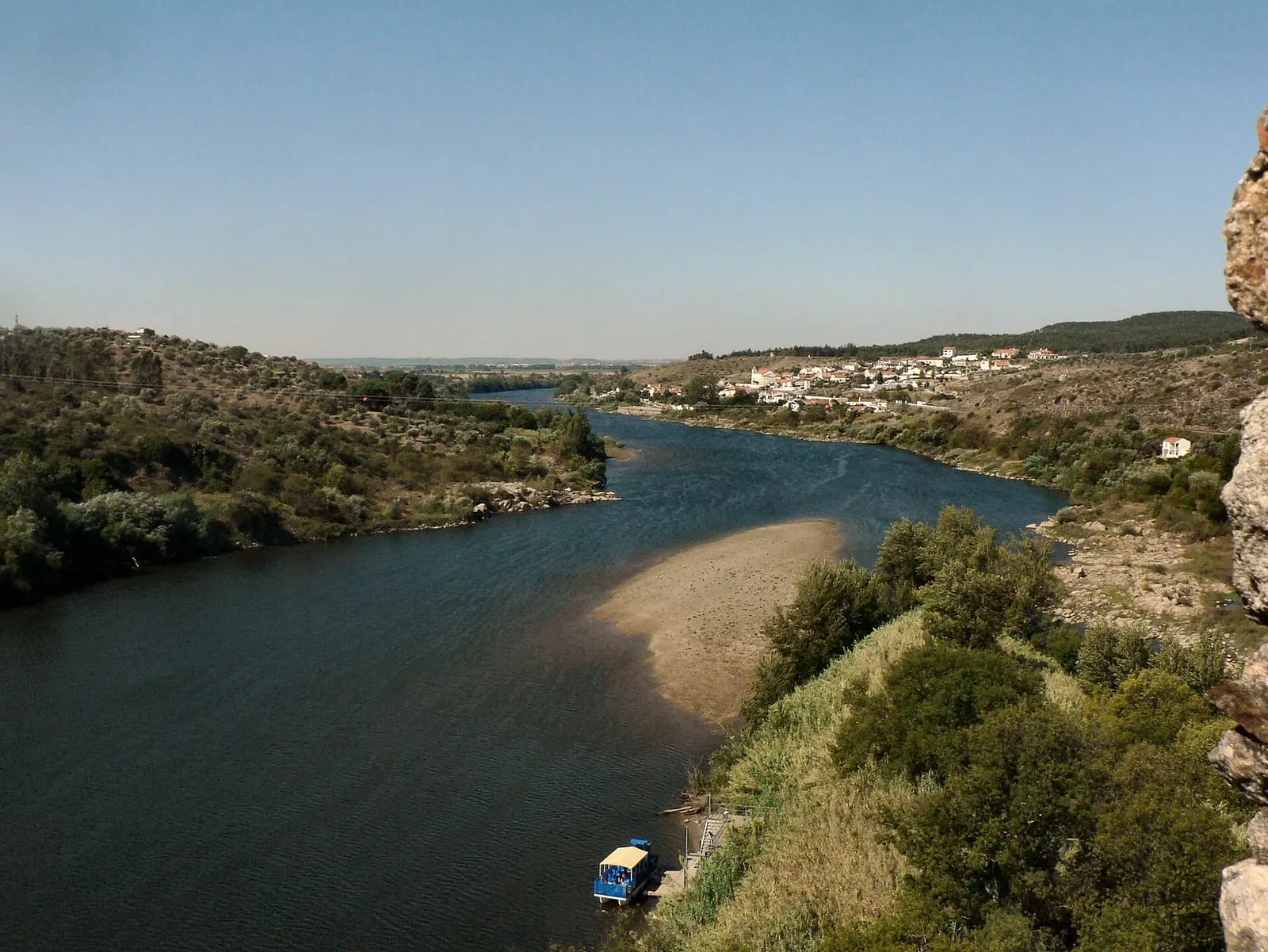
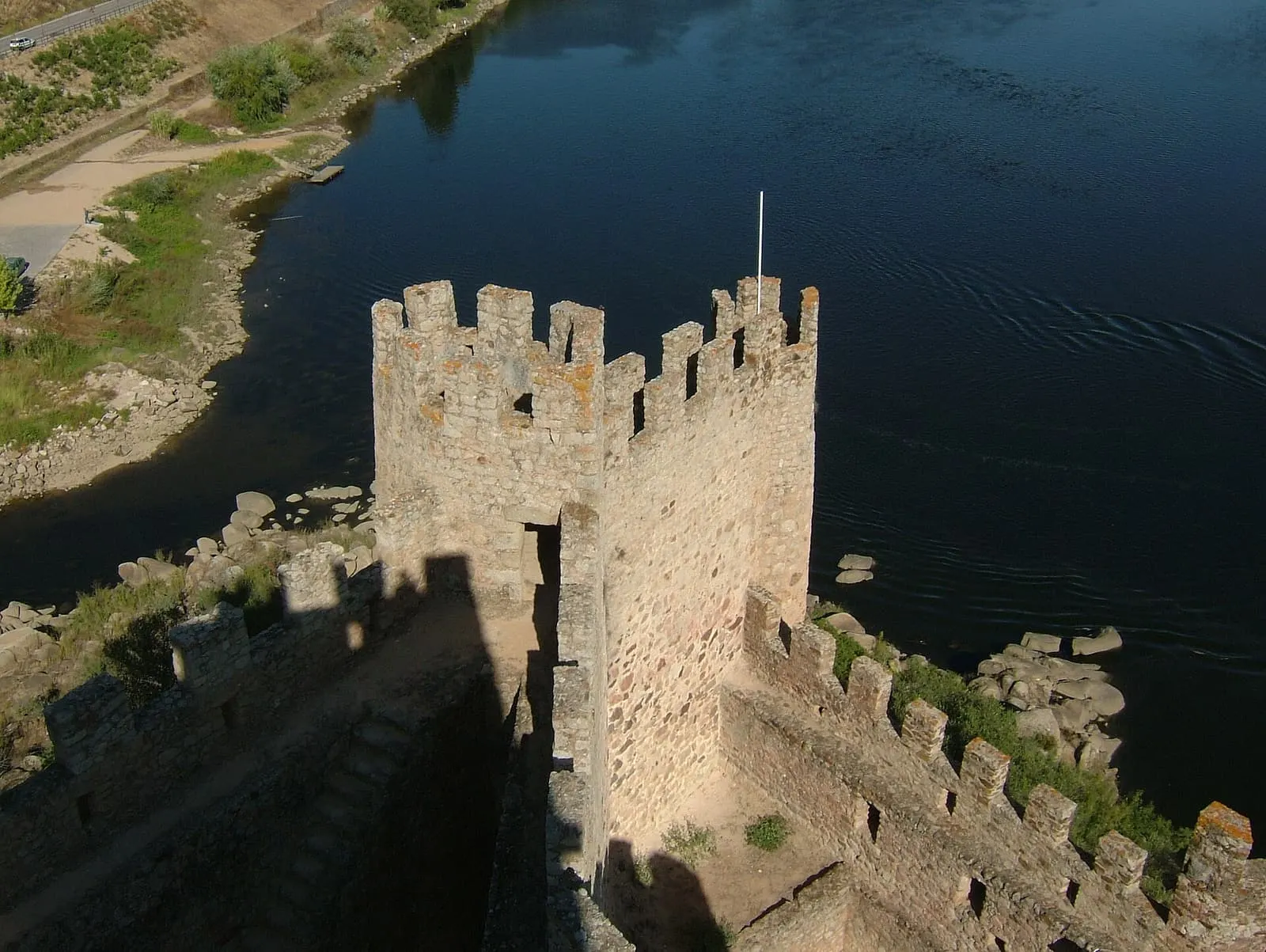
In the middle of the River Tagus, upon an outcrop of granite that emerges from the waters, stands one of the most evocative monuments in Portugal. Almourol Castle occupies the whole of a small island some 310 metres long, in the parish of Praia do Ribatejo, municipality of Vila Nova da Barquinha, district of Santarém. Its isolated silhouette, outlined against the current, has made it an enduring symbol of the Templar presence in the Tagus valley and one of the most romanticised images of the Portuguese medieval imagination.
Origins and the Templars
The site was occupied before the foundation of the nation, forming part of the line of fortifications that defended the middle Tagus after the Christian reconquest. Captured in 1129 by Afonso Henriques, the place was handed over to the Order of the Temple, which established there a strategic point for controlling the river. The fortress we know today resulted from a building campaign directed by Master Gualdim Pais — the same man responsible for Tomar and for other strongholds of the Order — its completion being fixed at 1171, the date inscribed beside the door of the keep.
The architectural profile is characteristic of Templar military Romanesque: high walls crowning the rock, reinforced by attached towers of circular plan and dominated by a robust keep. Its function was chiefly one of watch and command over the river, controlling the movement of goods along a vital stretch of the waterway.
Almourol was not conceived as a seigneurial residence but as a sentinel: its strength lies less in the thickness of its walls than in geography itself, making the river its natural moat.
From the Order of Christ to Romanticism
With the dissolution of the Order of the Temple in the early fourteenth century, Almourol passed into the holdings of the Order of Christ, successor to the Templars in Portugal and based at the Convent of Christ in Tomar. Once the military relevance of the Tagus was lost, the castle entered a prolonged abandonment.
Its symbolic revival owes itself to the nineteenth century. Romanticism found in the solitary island and its ruins the ideal setting for legends of knights and damsels, and Almourol became a literary and pictorial subject. Restoration works, chiefly in the twentieth century, consolidated the structure and fixed the scenic image that draws visitors today. Like other medieval fortifications recovered in that period, the castle was classified as a National Monument in 1910.
Significance and visiting
Almourol is an essential piece of the network of castles that structured Portuguese territory, distinguished by its island setting, rare in Europe and almost unique in the country. The boat crossing — the only means of access — lends the visit a ritual character, isolating the monument from everyday life and restoring to it part of the mystery that has always surrounded it.
More than a defensive complex, the castle is a physical document of the Templar expansion in central Portugal and a landmark of chivalric memory. Its reading is enriched when set within the broader context of the castles of the reconquest, in which each stronghold answered a logic of controlling rivers, passages and frontiers.
Frequently asked questions
- Where is Almourol Castle?
- It rises on a small granite island in the bed of the River Tagus, in the parish of Praia do Ribatejo, municipality of Vila Nova da Barquinha, district of Santarém.
- How do you visit the castle?
- Access is exclusively by boat, from the quay at Tancos or from the bank beside the island, with the crossing forming an integral part of the visiting experience.
- Who ordered Almourol Castle to be built?
- The present fortress was raised by the Order of the Temple, under the direction of Master Gualdim Pais, with the works completed in 1171.
Sources
Keep exploring
Heritage nearby
More places to discover from here. Approximate straight-line distances, within 50 km.