Monuments
Castro de São Lourenço
Castro de São Lourenço, an Iron Age fortified settlement in Vila Chã, Esposende, an emblematic centre of the Castro culture of the Minho coast.
- Location
- Vila Chã, Esposende, Braga
- Built
- Idade do Ferro (séc. III–II a.C.)
- Style
- Cultura castreja
The Castro de São Lourenço is a fortified settlement set on the hill of the same name, in the parish of Vila Chã, municipality of Esposende (district of Braga). Occupying one of the granite spurs of the fossil cliff that runs along the Minho coast, at about two hundred metres in altitude, it commands a wide horizon over the mouth of the Cávado and the Atlantic — a position that combines defensive advantage with control of the coastal routes. It is one of the reference sites for the study of the Castro culture in the peninsular Northwest.
Chronology and occupation
The excavations begun in 1985, directed by Carlos Alberto Brochado de Almeida (Faculty of Arts of the University of Porto), revealed a very long occupation, with traces reaching back to the Late Bronze Age and extending into the Middle Ages. The most significant phase, however, corresponds to the Iron Age, between the third and second centuries BC, when the settlement took on its fully Castro character, with dense housing protected by several lines of wall.
After the first century AD, São Lourenço was gradually Romanised, becoming a small settlement with minor commercial and administrative functions — a vicus — before being abandoned between the end of the Empire and the beginning of the Middle Ages. Later, between the twelfth and fourteenth centuries, the site saw a reoccupation linked to the building of a small medieval fortification.
Castro architecture and the wall
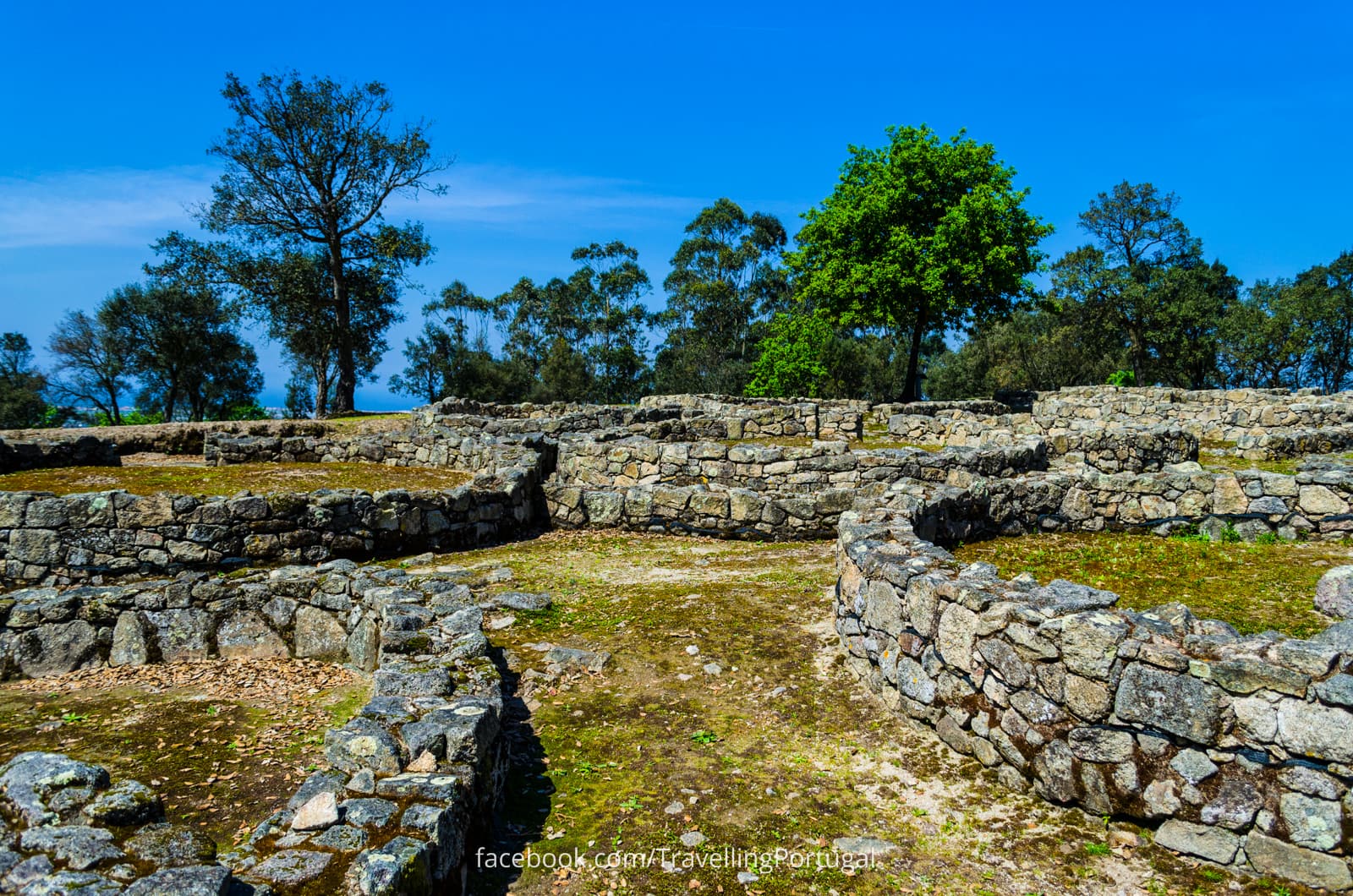
The defensive system is organised in three lines of wall, reinforced to the north by a ditch cut into the rock. Within, the habitation space is laid out in individualised family clusters, bounded by low walls and arranged around courtyards and shared circulation areas — a model of social organisation that archaeologists consider characteristic of the hillforts of the Minho coast.
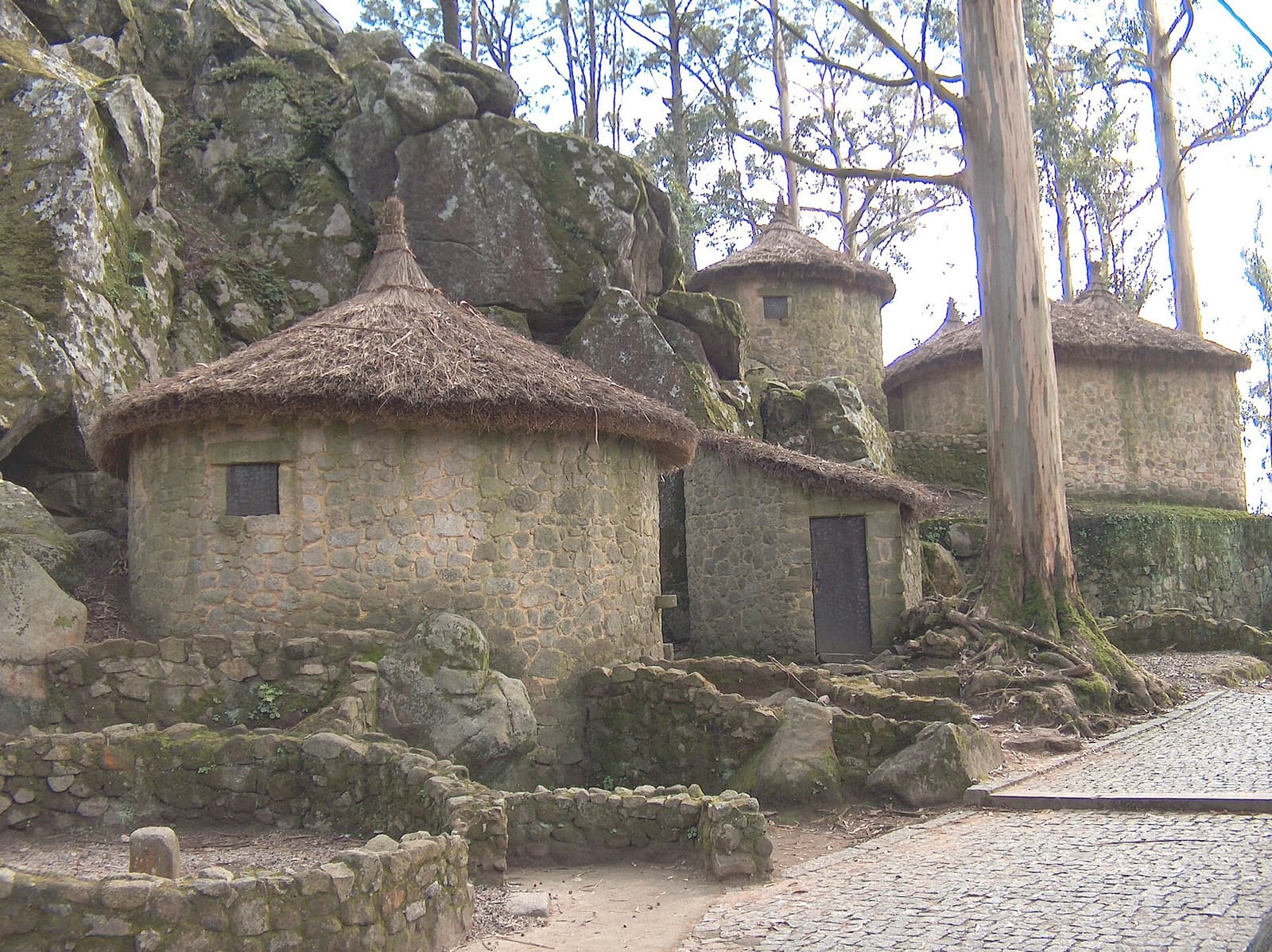
The oldest dwellings were circular, roofed with plant materials, some provided with an atrium or vestibule; others, larger and elongated, served as storehouses or granaries. Over time, subcircular and rectangular plans appeared, a sign of the progressive Roman influence on the indigenous building tradition.
The Castro de São Lourenço is the Portuguese hillfort settlement with the largest number of reconstructed houses, which makes it a privileged place to understand, on the ground, the daily life of Iron Age communities.
Research and enhancement
The continuity of the archaeological campaigns made it possible not only to establish the sequence of occupation but also to reconstruct a significant set of dwelling units, today open to visitors along an interpretive route. The collection of materials — pottery, metals and other testimonies of Castro and Roman material culture — is associated with the Museu Municipal de Esposende, which supports the reading of the site.
Classified as a Property of Public Interest since 1986 (Decree no. 1/86, of 3 January), the monument forms part of the dense network of fortified settlements of the Northwest, alongside sites such as the Citânia de Briteiros or the neighbouring Castro de Romariz. Read together, this territory of hillforts offers one of the most complete panoramas of Portuguese proto-history, in which São Lourenço stands out for the scale and visibility of its reconstructions.
Frequently asked questions
- Where is the Castro de São Lourenço located?
- It stands on Monte de São Lourenço, in the parish of Vila Chã, municipality of Esposende, district of Braga, on a granite spur of the fossil cliff overlooking the Minho coast.
- What protected status does the Castro de São Lourenço hold?
- It is classified as a Property of Public Interest under Decree no. 1/86, published in the Diário da República on 3 January 1986.
- Why is the Castro de São Lourenço important to the Castro culture?
- It is the Portuguese hillfort settlement with the largest number of reconstructed houses, offering a unique reading of the domestic organisation of the Iron Age communities of the Northwest.
Sources
Keep exploring
Heritage nearby
More places to discover from here. Approximate straight-line distances, within 50 km.