Themes
The Portuguese city
Is there a Portuguese way of making a city? From the medieval town to the Pombaline square, the reading of a distinctive urban culture.
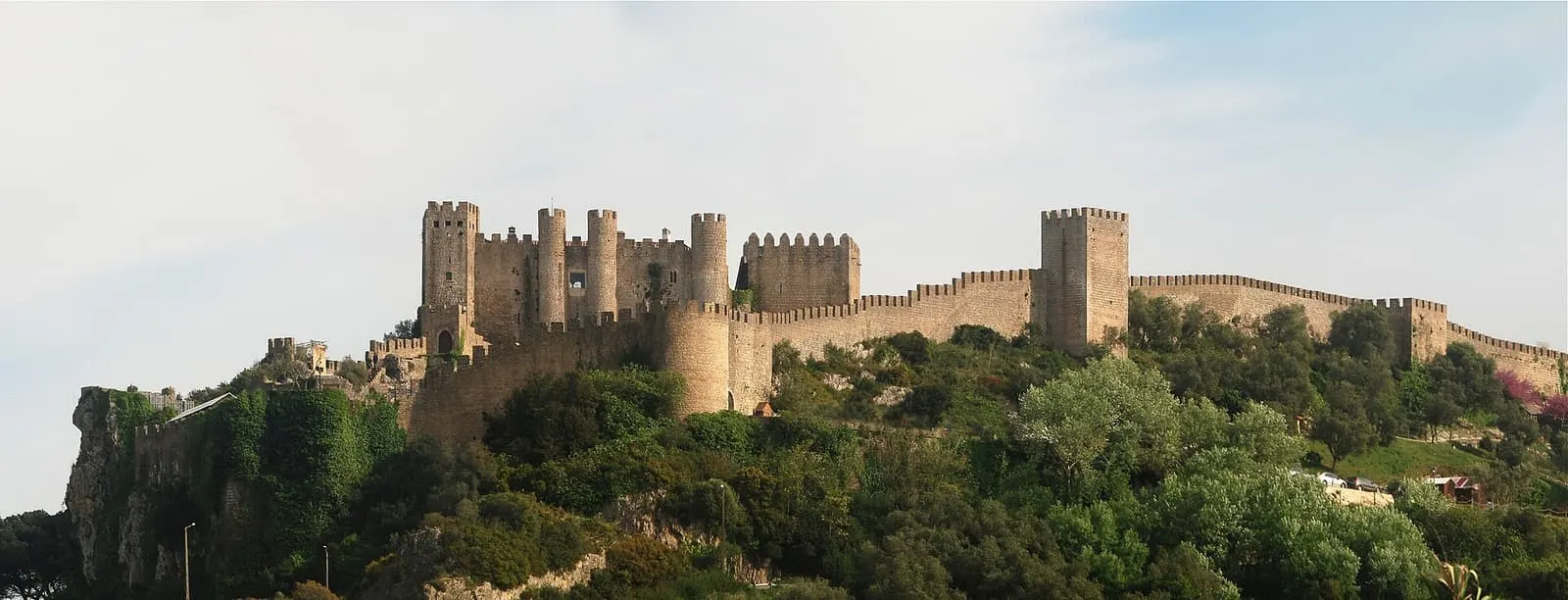
The phrase “Portuguese city” poses a problem before it offers an answer. Does Portugal have its own way of making a city — distinct from the Castilian, the Italian or the Flemish — or did it merely receive and adapt common European models? The question runs through a century of historiography and remains productive, because it compels us to see the city not as a backdrop, but as a cultural artefact.
The medieval inheritance
The Portuguese urban network was established early. In the aftermath of the Reconquista, the charters (forais) of the twelfth and thirteenth centuries drew a country of small and numerous towns, many of them walled, fitted to the topography — the hill, the spur above the river, the defensible slope. Óbidos, Marvão and Monsaraz are living fossils of that urbanism of adaptation to the site, in which the form of the city is dictated less by a plan than by the terrain and the wall.
The invention of the square
It is in the Early Modern period that a more deliberate gesture takes shape. The opening of the Terreiro do Paço in Lisbon, the regular squares and the founding of new towns from scratch — such as Vila Real de Santo António, laid out by order of the Marquis of Pombal in 1774 along an orthogonal plan executed in a matter of months — reveal a State capable of conceiving the city as a political and geometric project.
The Portuguese city oscillates, throughout its history, between two poles: organic adaptation to the site and the imposition of an abstract order. To understand it is to understand that tension.
An urban culture
There is an argument, today widely accepted, that Portugal developed a true urban culture — a know-how passed down among military engineers, master builders and works overseers — which was then exported on the scale of an empire, from Brazil to Goa. The interest of studying the Portuguese city within its borders is, in part, to reconstruct that knowledge at its point of origin, before its oceanic dissemination.
To read a Portuguese city is, then, to read layers: the medieval wall, the convent that overflowed it, the modern square, the nineteenth-century extension, the twentieth-century avenue. None has wholly erased the one before it — and it is from this accumulation that its density is born.