Archaeology
Cividade de Bagunte
The Cividade de Bagunte, in Vila do Conde, is one of the largest oppida of the Castro culture in the Ave valley, classified as a National Monument since 1910.
- Location
- Bagunte (Vila do Conde), Porto
- Built
- séc. IV a.C. – séc. IV d.C.
- Style
- Cultura castreja
The Cividade de Bagunte is one of the most extensive fortified Iron Age settlements in the north-west of the Iberian Peninsula. Set on the Monte da Cividade, at about 206 metres above sea level, in the parish of Bagunte, Ferreiró, Outeiro Maior e Parada (municipality of Vila do Conde, district of Porto), it commands the confluence of the Ave and Este rivers and the routes that led from the coast into the interior of the Minho. Its strategic position, together with its exceptional size, made it one of the great oppida — the semi-urban hillforts (cividades) that the Romans encountered on their arrival.
An oppidum of the Castro culture
With an archaeologically significant area of about 50 hectares, Bagunte ranks alongside the most important settlements of the Castro culture, such as the Citânia de Briteiros and the Citânia de Sanfins. The known chronology of occupation broadly extends from the 4th century BC to the 4th century AD, spanning both the Castro apogee of the Iron Age and the later Romanisation of the territory.
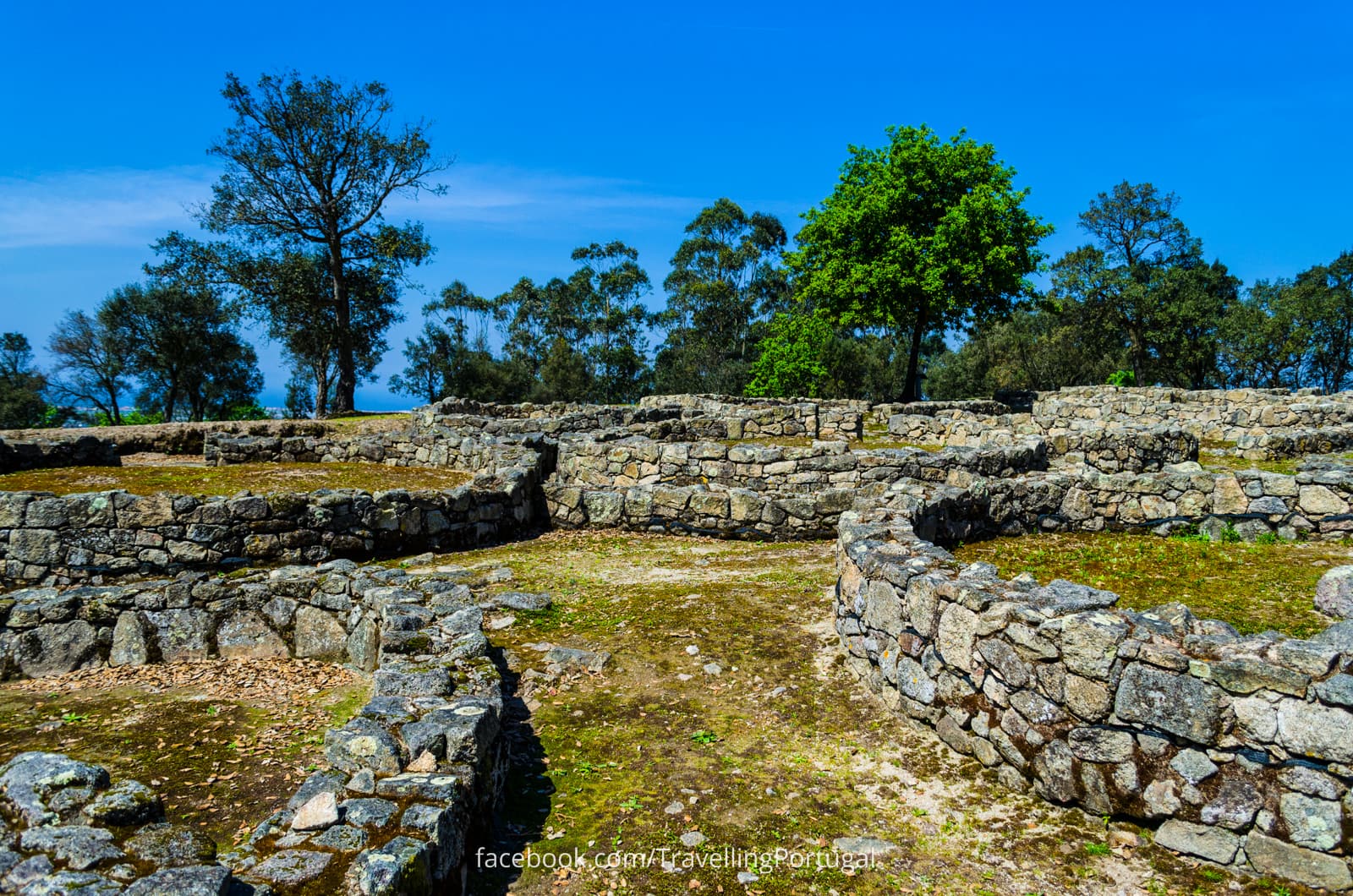
The site is organised into terraces defended by several concentric lines of walls — at least five walled circuits have been identified — enclosing a dense cluster of dwellings. The residential structures, of circular and rectangular plan, are arranged in groups that suggest an organisation into blocks, a trait of incipient urbanism that sets the great oppida apart from the small hillforts scattered across the valley.
The scale of Bagunte helps to explain why ancient authors spoke of civitates: these were not mere fortified villages, but centres that concentrated population, production and territorial power around the lower Ave.
Research and classification
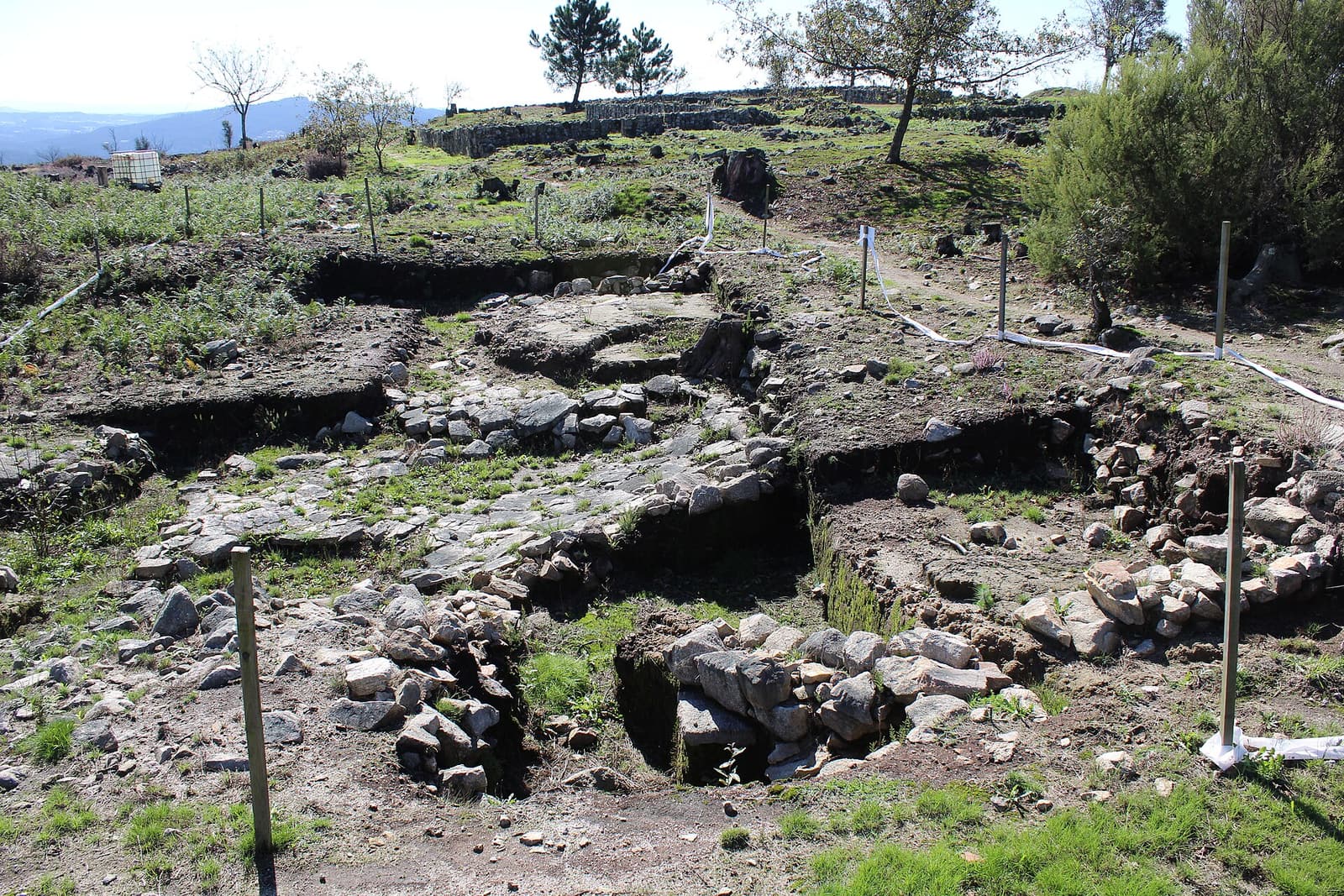
The Cividade de Bagunte was classified as a National Monument in 1910, forming part of the first major list of properties protected by the Portuguese State. It is the most widely publicised archaeological site in the municipality of Vila do Conde and has been the subject of excavation campaigns that, over the course of the 20th and 21st centuries, have gradually revealed stretches of wall, streets and dwelling units.
Despite its importance, much of the area remains unexcavated, which leaves open questions about the internal articulation of the settlement, its relationship with other coastal hillforts — such as the nearby Cividade de Terroso, in Póvoa de Varzim — and the pace of its integration into the Roman world. Bagunte therefore constitutes a privileged laboratory for understanding the transition between the indigenous world and the Roman provincial order at the western edge of the Peninsula.
Visiting Bagunte
The complex can today be visited along an open-air route, with consolidated stretches of wall and dwelling clusters. Reading the remains on the ground is more demanding than at sites with museum displays, but the breadth of the enclosure and its visual command over the Ave and Este valleys convey clearly the reason for this powerful oppidum, a central piece in the network of Castro settlements that still marks the landscape of north-western Portugal.
Frequently asked questions
- Where is the Cividade de Bagunte located?
- It stands on the Monte da Cividade, in the parish of Bagunte, Ferreiró, Outeiro Maior e Parada, in the municipality of Vila do Conde, district of Porto, near the confluence of the Ave and Este rivers.
- How large was the settlement?
- It is one of the largest oppida of the Castro culture in the north-west of the Iberian Peninsula, with about 50 hectares of archaeologically significant area and several concentric lines of walls.
- When was it classified as a National Monument?
- The Cividade de Bagunte was classified as a National Monument in 1910, forming part of the country's first major group of protected properties.
Sources
Keep exploring
Heritage nearby
More places to discover from here. Approximate straight-line distances, within 50 km.