Archaeology
Cividade de Terroso
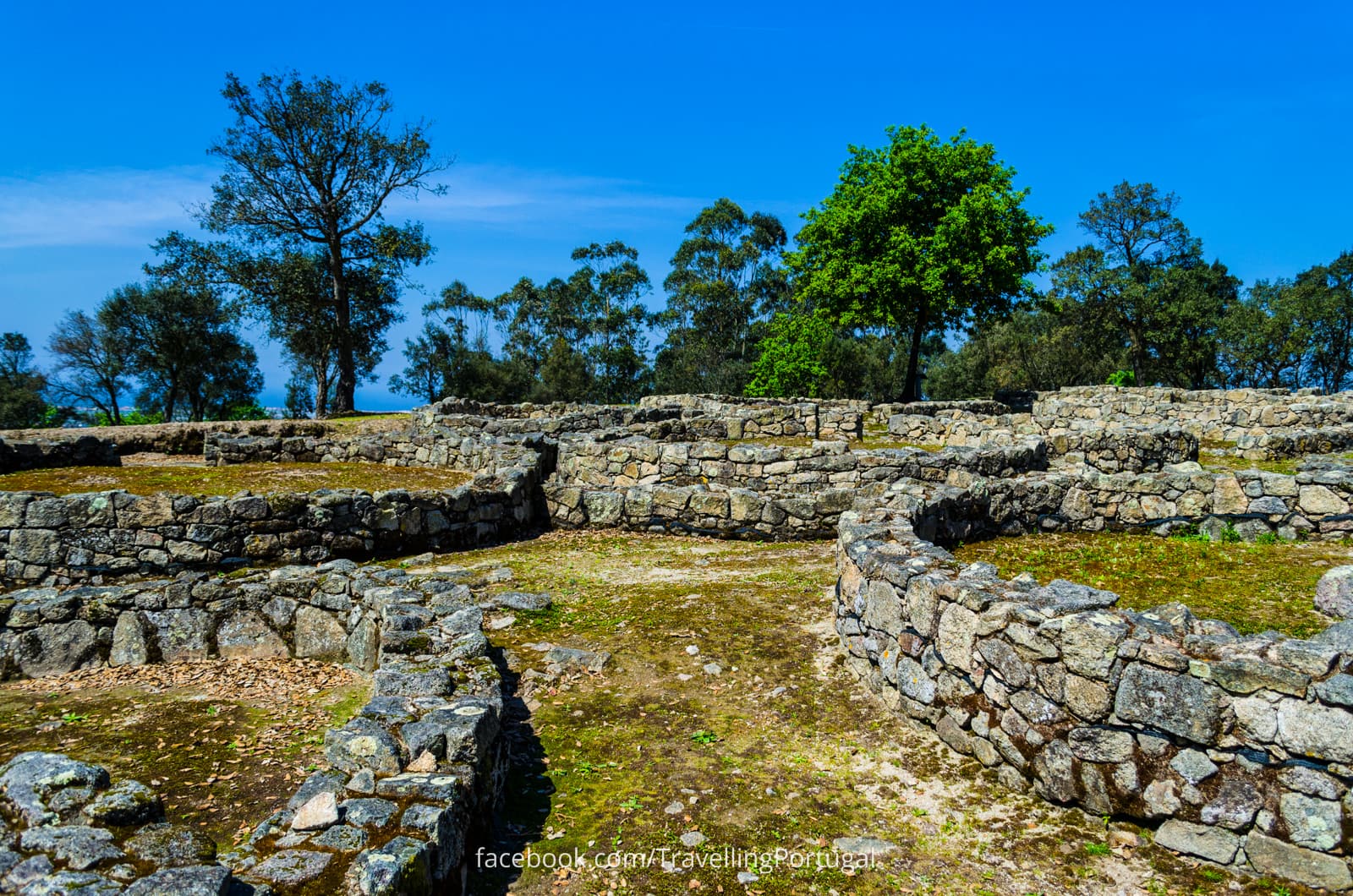
Cividade de Terroso, a Castro-culture settlement in Póvoa de Varzim: one of the great proto-urban oppida of the northern coast, with three lines of walls.
- Location
- Póvoa de Varzim, Porto
- Built
- séc. IX–VIII a.C.
- Style
- Arquitetura castreja
The Cividade de Terroso is one of the most remarkable fortified settlements of the Castro culture of the north-western Iberian Peninsula. Set on the summit of the Monte da Cividade, at around 152 metres in altitude, in the parish of Terroso (Póvoa de Varzim, district of Porto), it dominates a broad territory between the Atlantic coast and the valley of the river Ave. The name itself preserves the memory of the place: “cividade” derives from the Latin civitas, city, an echo of the urban scale that the site once attained.
An oppidum of the northern coast
Occupied from the 9th–8th centuries BC, at the transition from the Late Bronze Age to the Iron Age, the Cividade developed over almost a millennium. The settlement extended across some twelve hectares and was organised around an acropolis defended by three lines of concentric walls, raised in granite blocks adapted to the slope of the terrain. On the most exposed approaches — to the south, east and west — the fortifications gained greater height and thickness, with stretches reaching up to 5.30 metres in width.
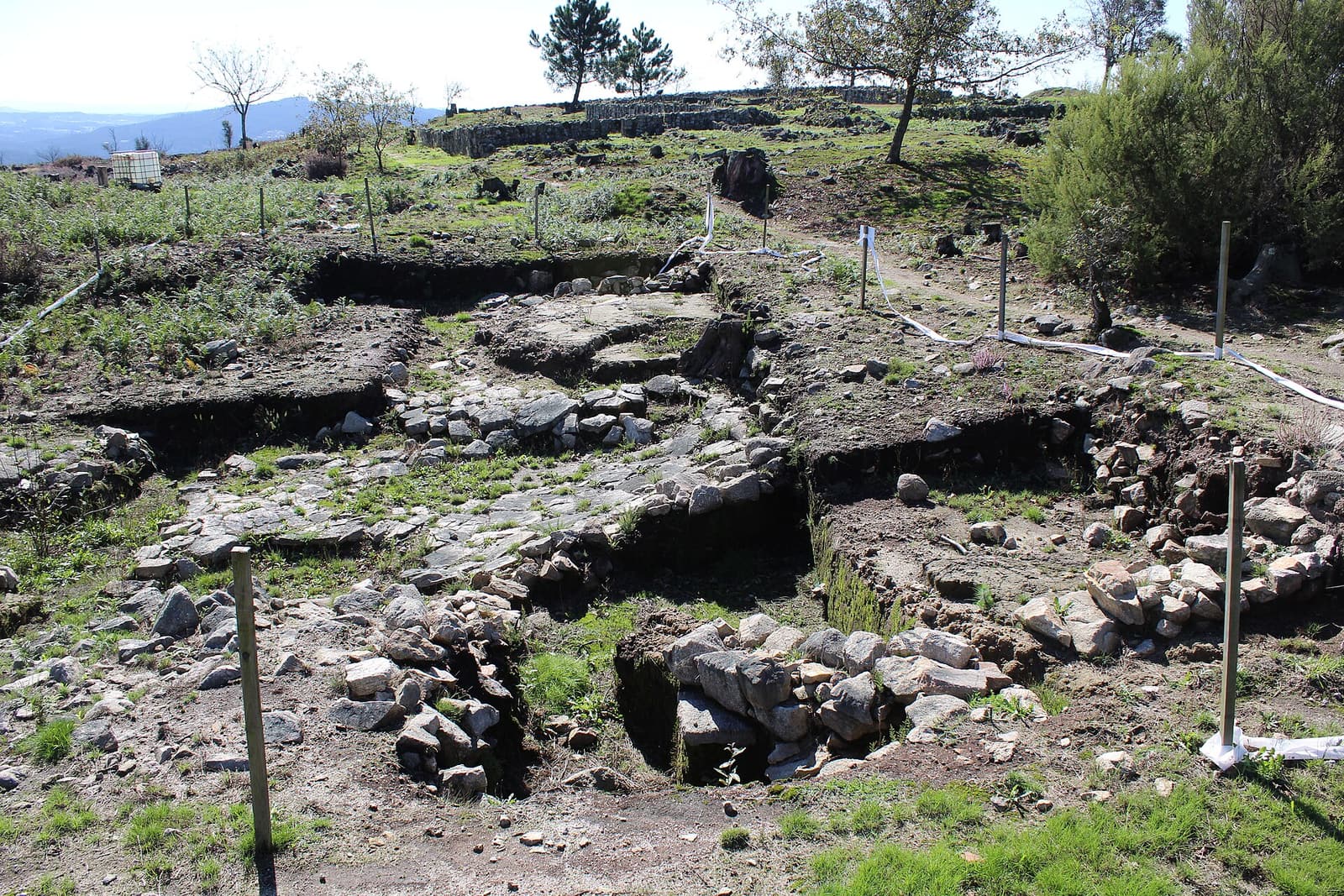
In the interior, successive campaigns revealed dozens of round-plan houses, characteristic of Castro architecture, later accompanied by quadrangular-plan buildings already under Roman influence. The scale, the density of construction and the defensive apparatus place Terroso among the great proto-urban oppida of northern Portugal, alongside sites such as the Citânia de Sanfins and the neighbouring Cividade de Bagunte, with which it shared the same settlement territory of the lower Ave.
Trade, conquest and Romanisation
The position of the Cividade, close to the mouth of the Ave and to the Atlantic maritime routes, integrated it early on into long-distance trade networks that reached the Mediterranean. This dynamism was reflected in the richness of the materials recovered — pottery, ornaments and evidence of metallurgical activity — which help us understand the place of the settlement in the economy of the Iron Age of the north-west.
The name of the hill is, in itself, a document: in calling it “cividade”, the medieval people recognised there, centuries after its abandonment, the unmistakable vestiges of an ancient city.
The settlement’s trajectory shifts with the Roman expansion. After the assassination of Viriatus, the campaign of Decimus Junius Brutus, around 138 BC, is thought to have struck the region violently. The Cividade was later rebuilt and Romanised, above all from the age of Augustus, prolonging its occupation into the first centuries of our era, before its definitive decline in favour of the new centres of the Roman territory.
Discovery and research
Archaeological investigation of the site began on 5 June 1906, under the direction of Rocha Peixoto and with the collaboration of António dos Santos Graça, in campaigns that continued through 1906 and 1907. The materials then unearthed were incorporated into museum collections in Porto and Póvoa de Varzim. New excavations, directed by Armando Coelho Ferreira da Silva from 1980, renewed the reading of the settlement and fixed it on the map of Portuguese Castro culture.
Classified as a Property of Public Interest since 1961, the Cividade de Terroso is today a visitable site and an unmissable landmark for anyone exploring the Portuguese archaeology of the northern coast, where proto-historic memory and Atlantic landscape remain closely intertwined.
Frequently asked questions
- Where is the Cividade de Terroso?
- It stands on the Monte da Cividade, in the parish of Terroso, municipality of Póvoa de Varzim, district of Porto, at around 152 metres above the Minho coast.
- From what period does the settlement date?
- It was occupied from the 9th–8th centuries BC, at the transition from the Late Bronze Age to the Iron Age, until the 1st–2nd centuries AD, by then in a Romanised phase.
- Is it listed as heritage?
- Yes. The Cividade de Terroso has been classified as a Property of Public Interest since 1961.
Sources
Keep exploring
Heritage nearby
More places to discover from here. Approximate straight-line distances, within 50 km.