Places
Elvas
Elvas, a UNESCO-listed frontier garrison town of the Alto Alentejo, with bastioned fortifications, the Amoreira Aqueduct and a historic centre.
- Location
- Elvas, Portalegre
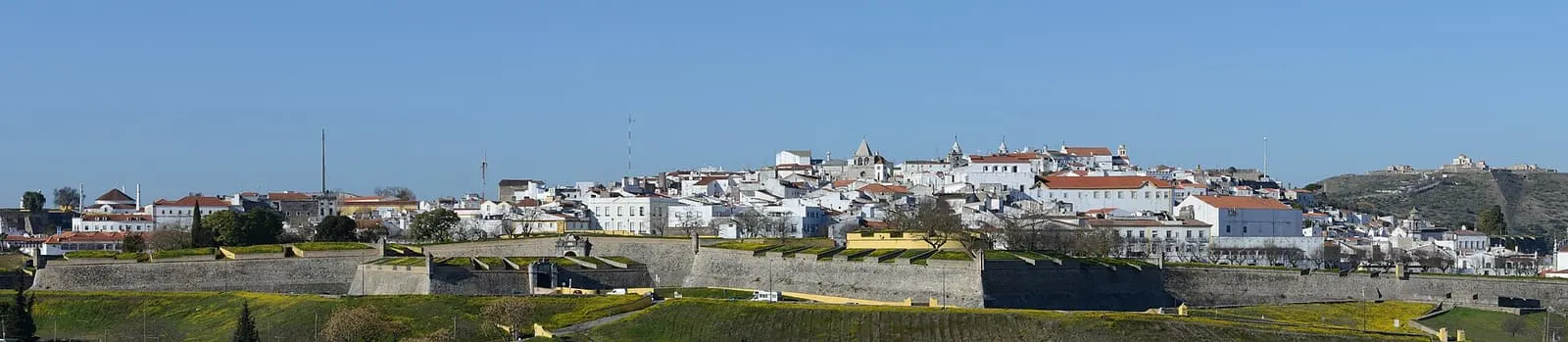
Elvas rises on a hill of the Alto Alentejo, just a few kilometres from the Spanish border and the city of Badajoz. A town in the district of Portalegre, it is the largest in the district and one of the most striking in the eastern Alentejo. Its history is bound up with the defence of the frontier: for centuries, Elvas was the military key that guarded the road to Lisbon against any invasion coming from Castile. That role left it a rare legacy — the largest complex of bastioned fortifications with a dry moat in the world, which in 2012 earned it classification as a UNESCO World Heritage Site.
From Muslim frontier to Christian stronghold
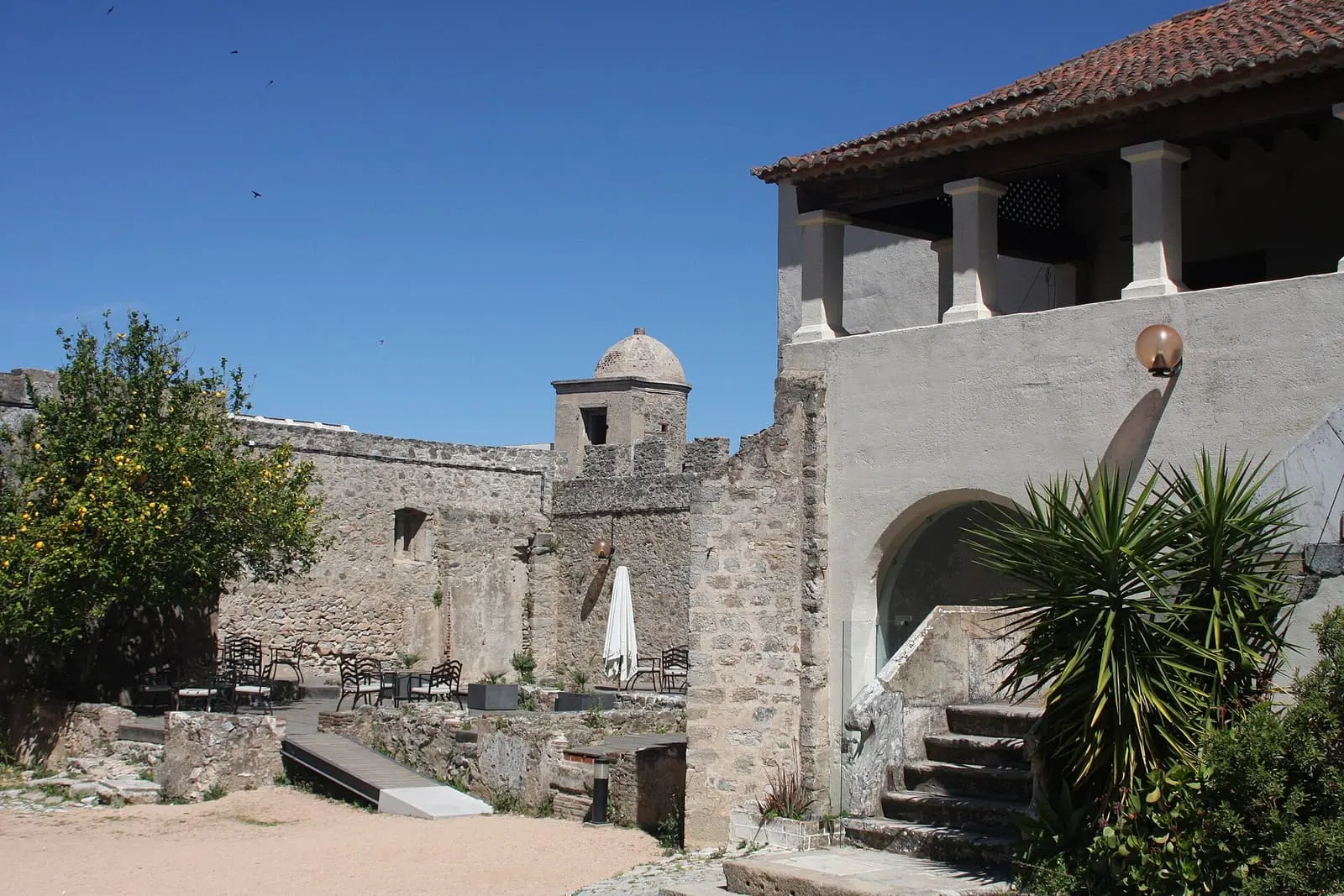
The strategic position of Elvas attracted settlement from Antiquity, but it was under Muslim rule that it took on urban form, before being definitively integrated into the kingdom of Portugal in 1229, during the reign of Sancho II. In the following centuries, successive monarchs reinforced its medieval walls, of which the castle of Islamic and medieval origin is still the most visible testimony, dominating the white houses from the highest point of the city.
The consecration of Elvas as a stronghold came with the Restoration War (1640–1668). It was then that the star-shaped ring of bastions that still surrounds the historic core was raised, designed according to the principles of the Dutch school of fortification — associated with the Jesuit engineer Cosmander — and completed by detached forts on the neighbouring hills, such as those of Santa Luzia and Graça.
In January 1659, at the so-called Lines of Elvas, a besieged Portuguese army defeated a much larger Castilian force: the victory helped to seal the independence regained in 1640.
The complex listed by UNESCO
The 2012 inscription covers not only the walled historic centre, but the entire defensive system surrounding it. The frontier fortifications of Elvas constitute the most complete and best-preserved example of bastioned fortification in the world, with kilometres of curtain walls, bastions, ravelins and the impressive dry moat that gives the classification its singular character.
Inseparable from this military engineering is the Amoreira Aqueduct, completed in 1622 after more than a century of works. With its superimposed arches and cyclopean pillars, it ensured the water supply of a city that had to withstand prolonged sieges — without water, no stronghold could sustain its defence. Today it is one of the most recognisable images of Elvas and one of the largest aqueducts on the Iberian Peninsula.
A city to explore on foot
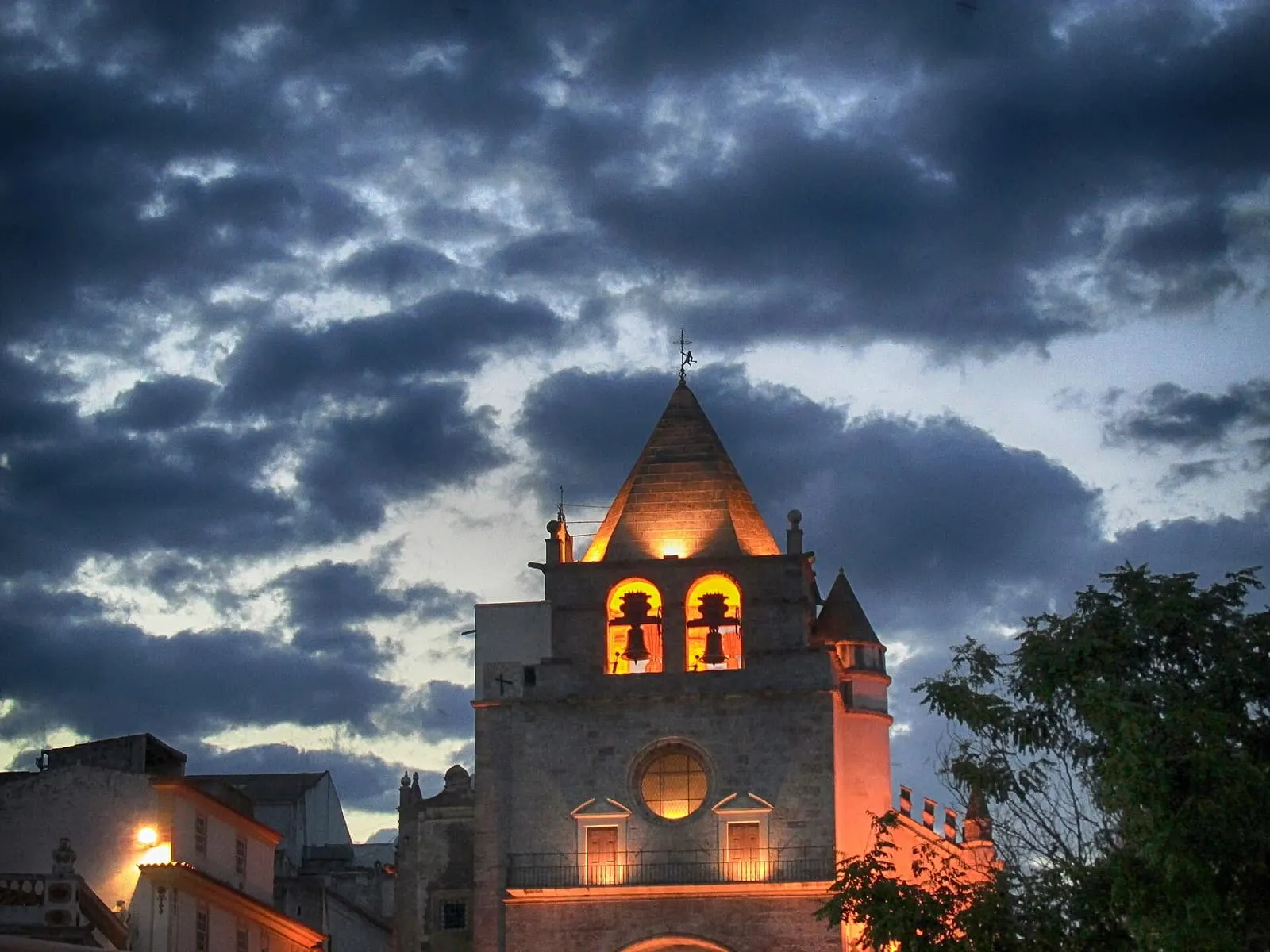
Within the walls, narrow streets lead to the Praça da República, the whitewashed houses and the former Cathedral of Elvas, built in the 16th century when the city was elevated to the seat of a bishopric. Along the way one discovers churches, convents and the singular Church of Nossa Senhora da Consolação, octagonal in plan and clad in azulejos. Round about, the territory preserves far older remains, such as the megalithic dolmens that dot the nearby fields.
Anyone who visits Elvas naturally fits the route into a broader journey through the Alentejo, a region where light, plain and military and religious heritage intertwine. Few places condense, as this garrison town does, the long history of a frontier that for centuries defined the limits of Portugal — and which today is crossed in a few minutes, but is read in every bastion.
Frequently asked questions
- Why is Elvas a UNESCO World Heritage Site?
- Elvas was listed in 2012 for bringing together the largest system of bastioned fortifications with a dry moat in the world, a remarkable example of military architecture from the 17th to the 19th centuries and of the Dutch school of fortification.
- In which district and region is Elvas located?
- Elvas lies in the district of Portalegre, in the Alto Alentejo, close to the border with Spain, just a few kilometres from Badajoz.
- What is the most emblematic monument of Elvas?
- The Amoreira Aqueduct, completed in 1622, is the city's most imposing monument, but the bastioned complex and the Fort of Santa Luzia are equally central to its identity.
Sources
Keep exploring
Heritage nearby
More places to discover from here. Approximate straight-line distances, within 50 km.