Monuments
Elvas Cathedral (Church of Our Lady of the Assumption)
The former Cathedral of Elvas, Church of Our Lady of the Assumption: a Manueline and Mannerist temple by Francisco de Arruda in the Alentejo fortress-town.
- Location
- Elvas, Portalegre
- Built
- 1517–1537
- Style
- Manuelino e maneirista
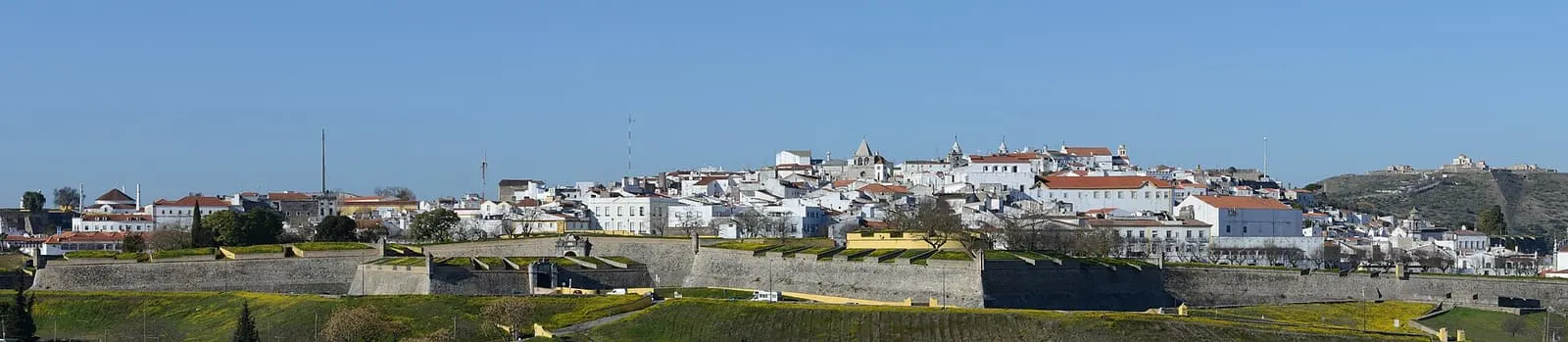
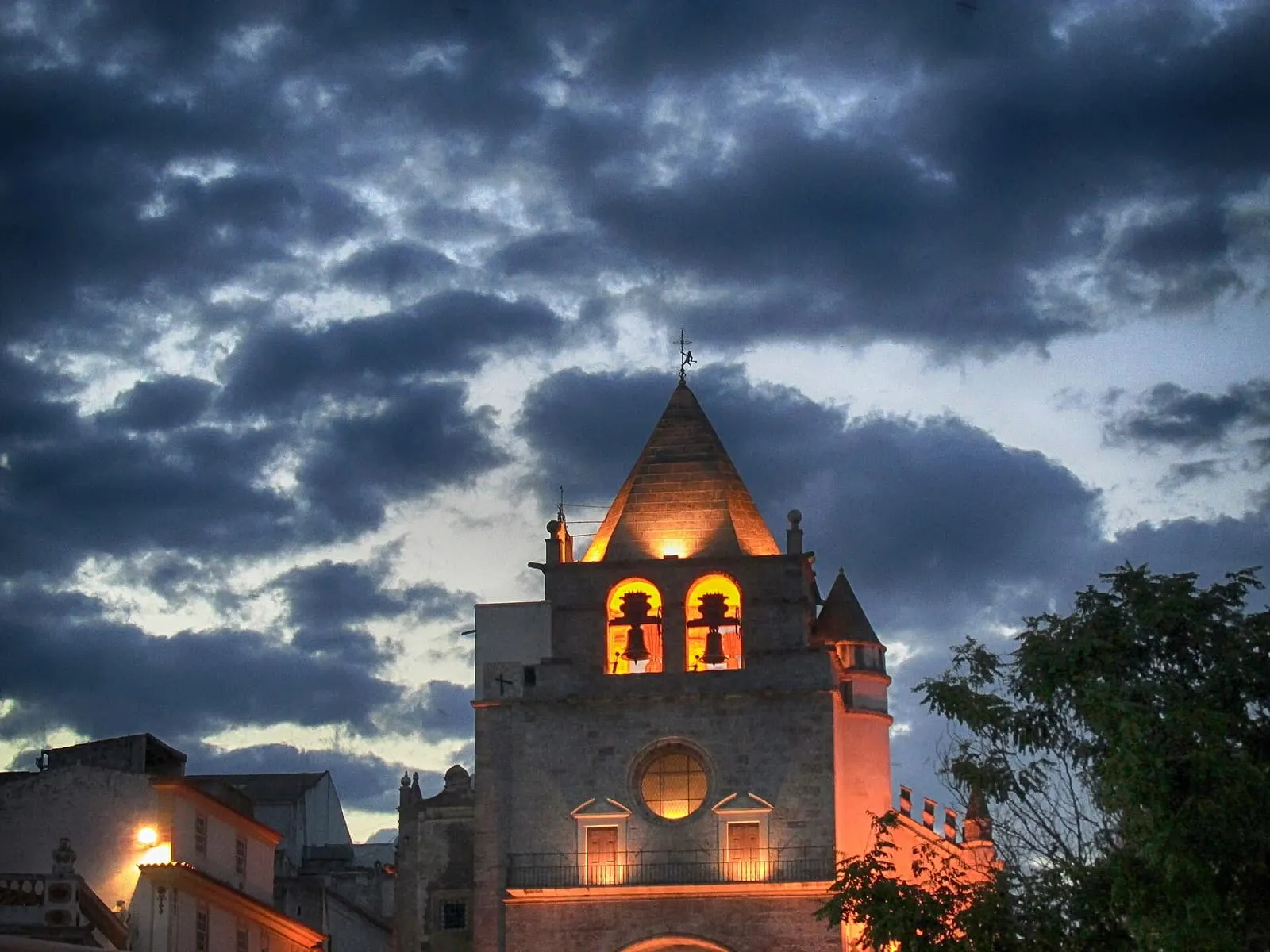
Elvas Cathedral, officially the Church of Our Lady of the Assumption, rises at the heart of the Alentejo fortress-town, overlooking the former Praça da República. This Manueline-origin temple dominates the city skyline with its battlemented bell tower crowning the facade — an architectural echo fitting for one of the most remarkable fortified towns along the border.
Construction and authorship
Construction began in 1517, replacing an earlier Gothic church, with the design attributed to Francisco de Arruda, the royal architect who was simultaneously directing work on the monumental Amoreira Aqueduct in the same city. The building opened for worship in 1537 while still incomplete, with work continuing under master mason Diogo Mendes until the late 16th century. The result is a robust, luminous three-nave structure where Manueline heritage converses with the Mannerist sobriety of the latter 1500s.
The battlemented bell tower reveals how in Elvas, sacred and military architecture shared the same stone vocabulary: the church makes no secret of its birth in a city built for resistance.
From church to cathedral
In 1570, Pope Pius V established the Diocese of Elvas, elevating the Church of Our Lady of the Assumption to cathedral status as the episcopal seat of this strategically sensitive border territory. This cathedral dignity brought centuries of artistic enrichment. During the 17th-18th centuries, decorative campaigns multiplied: Estremoz marble altarpieces, 18th-century tilework programs, and gilded woodcarving. Particularly intensive was the renovation promoted by Bishop D. Lourenço de Lencastre (1759–1780), who commissioned among other works the organ’s carved frame by Italian woodcarver Pascoal Caetano Oldoni in 1777.
The diocese was suppressed in 1881, and the building lost its cathedral status, though popular usage has preserved the name Cathedral to this day. Like other former cathedrals in Portugal such as Évora Cathedral, its architecture preserves the memory of lost functions.
Significance and classification
Elvas Cathedral has been classified as a National Monument since 1910, forming part of the heritage complex that makes this city a unique example of European military urbanism. Since 2012, the temple has been included within the perimeter of the Garrison Border Town of Elvas and its Fortifications, inscribed on UNESCO’s World Heritage List. To visit it is to understand Elvas from within: a fortress-town where cathedral, castle and bastioned walls were conceived as an integrated whole.
Among Portugal’s cathedrals and sees, Elvas illustrates the close connection between ecclesiastical power and kingdom defense along the borderlands, where faith and warfare were inscribed side by side in the same stone landscape. Those exploring the city will find in the former Cathedral one of the highlights of Elvas’ heritage.
Frequently asked questions
- Who was the architect of Elvas Cathedral?
- The design is generally attributed to Francisco de Arruda, the royal architect who simultaneously oversaw construction of the Amoreira Aqueduct in the same city.
- Is Elvas Cathedral still a cathedral?
- No. It served as a cathedral between 1570 and 1881 during the existence of the Diocese of Elvas. Today it functions as a parish church, though it retains the popular name 'Cathedral'.
- Is Elvas Cathedral a World Heritage Site?
- It forms part of the UNESCO-listed Garrison Border Town of Elvas and its Fortifications (inscribed 2012), being one of the landmark buildings within the fortress-town.
Sources
Keep exploring
Heritage nearby
More places to discover from here. Approximate straight-line distances, within 50 km.