World Heritage
Laurisilva of Madeira
Laurisilva of Madeira: the world's largest expanse of laurisilva forest, the only Portuguese natural site classified by UNESCO, inscribed in 1999.
- Location
- Ilha da Madeira, Madeira
- UNESCO
- World Heritage · since 1999
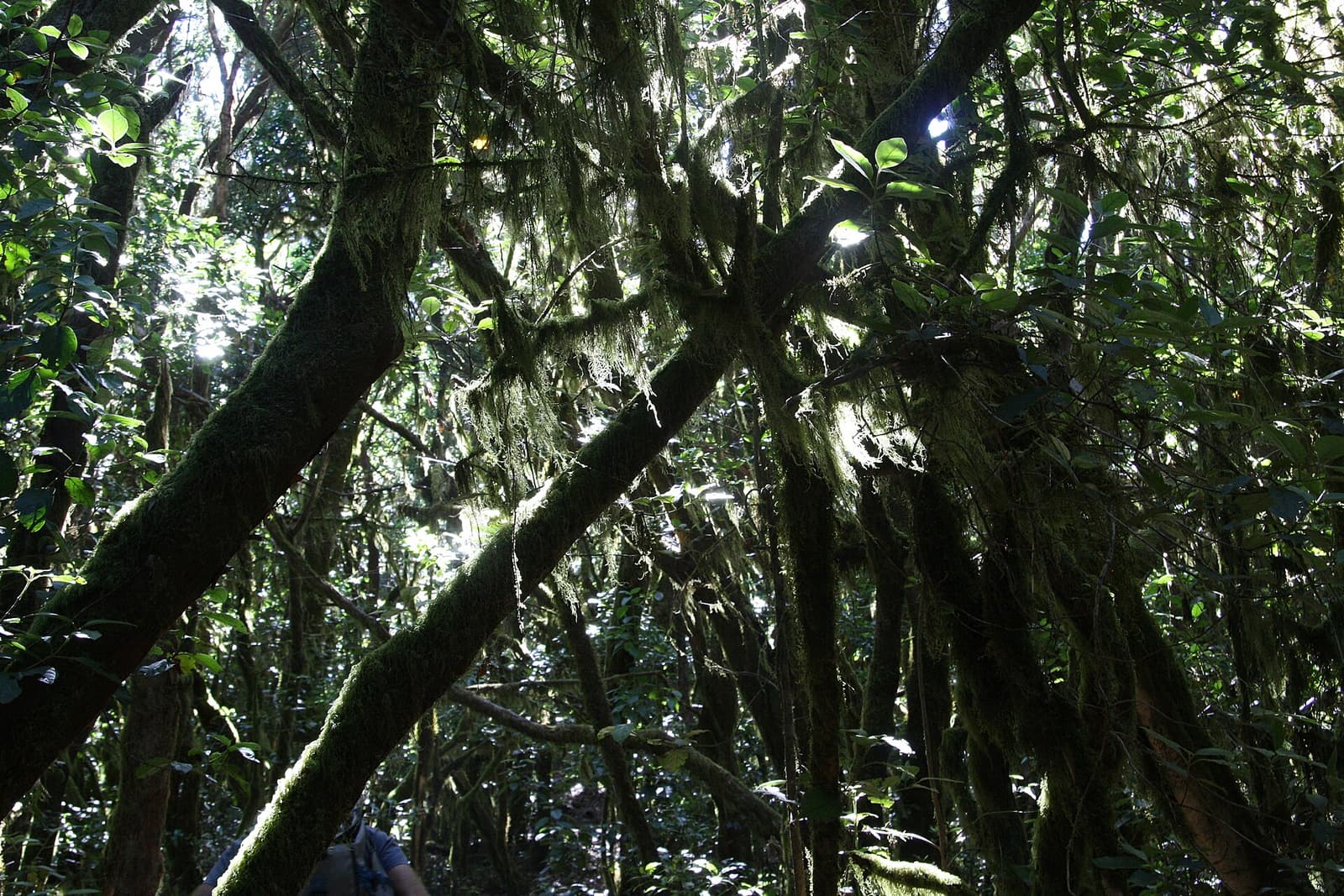
The Laurisilva of Madeira is the world’s largest surviving expanse of subtropical laurisilva forest and the only Portuguese natural property inscribed on UNESCO’s World Heritage List, classified in 1999. It occupies around 15,000 hectares — roughly one fifth of the surface of the island of Madeira — concentrated above all on the northern slope, where humidity and shade allowed the survival of an ecosystem that once covered much of southern Europe and the Mediterranean basin.
A relic of the Tertiary
The laurisilva is a type of evergreen broad-leaved forest, dominated by species of the laurel family, which flourished along the European Atlantic fringe during the Tertiary period. The climatic changes that accompanied the glaciations caused it to disappear from the continent, surviving only in the archipelagos of Macaronesia — the Azores, Madeira, the Canaries and Cape Verde. The Madeiran expanse is by far the most extensive and best preserved, with an estimated 90% corresponding to primary forest.
Among the structuring trees are the til (Ocotea foetens), the vinhático (Persea indica), the barbusano (Apollonias barbujana) and the laurel (Laurus novocanariensis), which gives the assemblage its name. The dense, perpetually green understorey shelters tree ferns, lichens and mosses that thrive in the constant mist of the high slopes.
The laurisilva acts as a natural sponge: it captures moisture from the clouds — so-called horizontal precipitation — and releases it slowly into the springs, feeding the watercourses that made the island habitable.
Endemic biodiversity
The value of the forest lies not only in its antiquity but in its biological singularity. It shelters a remarkable set of endemic species, foremost among them the Trocaz pigeon (Columba trocaz), a bird exclusive to Madeira and a seed disperser essential to the regeneration of the woodland. Alongside it live countless invertebrates, bryophytes and plants that exist nowhere else in the world, which justified the application of UNESCO’s natural criteria (ix) and (x), relating to ongoing ecological processes and the conservation of biological diversity.
Forest, water and human landscape
The relationship between the laurisilva and human populations is ancient and inseparable from the network of levadas of Madeira, the irrigation channels that capture the water generated in the forested zones and carry it to the farmland of the southern coast. This hydraulic engineering, a candidate for Portugal’s own Tentative List, depends directly on the health of the woodland that feeds it, illustrating how natural conservation and built heritage intertwine.
The classified area forms part of the Madeira Natural Park and is today one of the archipelago’s leading nature destinations, criss-crossed by trails that follow the levadas through deep valleys and waterfalls. Together with the Selvagens Islands, a nature reserve likewise belonging to Madeira, the Laurisilva affirms the archipelago’s role as one of the most valuable ecological sanctuaries of the Atlantic.
Frequently asked questions
- Why is the Laurisilva of Madeira a World Heritage Site?
- Because it is the world's largest surviving expanse of subtropical laurisilva forest, with about 90% primary forest and numerous endemic species. It was inscribed by UNESCO in 1999 under the natural criteria (ix) and (x).
- Where is the Laurisilva of Madeira?
- It extends mainly across the northern slope of the island of Madeira, at medium altitudes, within the Madeira Natural Park. It covers around 15,000 hectares, roughly 20% of the island's surface.
- Is it the only Portuguese natural site on the UNESCO list?
- Yes. The Laurisilva of Madeira is, to this day, the only Portuguese natural property inscribed on UNESCO's World Heritage List; the remaining Portuguese sites are cultural in nature.
Sources
Keep exploring
Heritage nearby
More places to discover from here. Approximate straight-line distances, within 50 km.