Places
Guarda
Guarda, the highest city in Portugal, in the Serra da Estrela: the Gothic fortress-cathedral, the medieval Jewish quarter and the walls that guarded the Beira…
- Location
- Guarda, Guarda
- Built
- 1199 (foral)
Guarda rises at about 1,056 metres above sea level, on the north-eastern slope of the Serra da Estrela, a condition that earned it the title of the highest city in mainland Portugal. This position is no picturesque accident: for centuries the city served as a sentinel on the kingdom’s eastern frontier, watching over the roads that linked Portugal to the neighbouring kingdoms of León and Castile. Its very name (Guarda, “guard”) sums up this military vocation, and the cold granite from which its houses, churches and walls are built is the material that defines the urban landscape.
The city received its charter (foral) from King Sancho I in 1199, at a time when the Portuguese monarchy was seeking to settle the population and organise the defence of the Beira Interior. Its elevation to the seat of a diocese consolidated its administrative and religious weight, and Guarda became part of the system of fortified strongholds that protected the territory. Tradition holds that four reasons for its prestige came together here — forte, farta, fria e fiel (strong, abundant, cold and faithful) — a popular formula still repeated today that distils the memory of a frontier city.
The fortress-cathedral and the medieval town
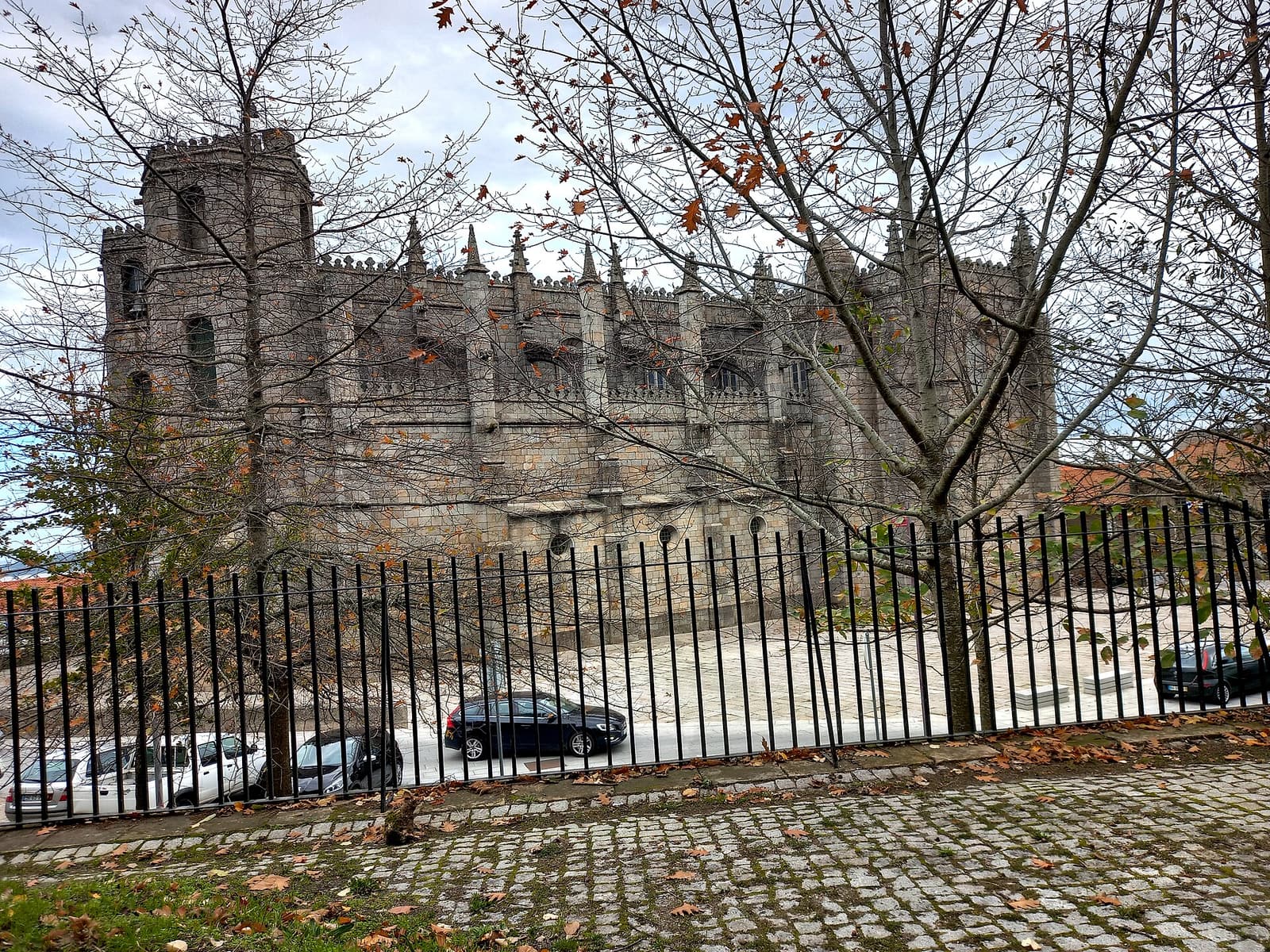
The city’s greatest monument is the Cathedral of Guarda, raised in granite between the late fourteenth and the mid-sixteenth century. Its sturdy silhouette, with towers and battlements, makes it as much a church as a military bulwark, reflecting the troubled times in which it was built. Inside, the Gothic vocabulary of the naves and the vault coexists with the Manueline exuberance of the portals and the magnificent stone retable of Ançã limestone, attributed to the workshop of João de Ruão. It is one of the most imposing cathedrals in the Beira, part of the tradition of the great medieval Portuguese cathedrals that defined the episcopal cities.
Around the cathedral spreads the historic centre, a maze of narrow streets and stone houses protected by stretches of wall. Gates and towers of the defensive perimeter survive, notably the Torre dos Ferreiros and the Porta d’El-Rei, vestiges of the castle and the walled enclosure that surrounded the upper town.
Guarda is a city to be read first through its stone: the granite that builds the cathedral is the same that raises the walls, the houses and the paving, giving it a severe and luminous unity that few Portuguese cities possess.
The Jewish quarter and the Sephardic memory
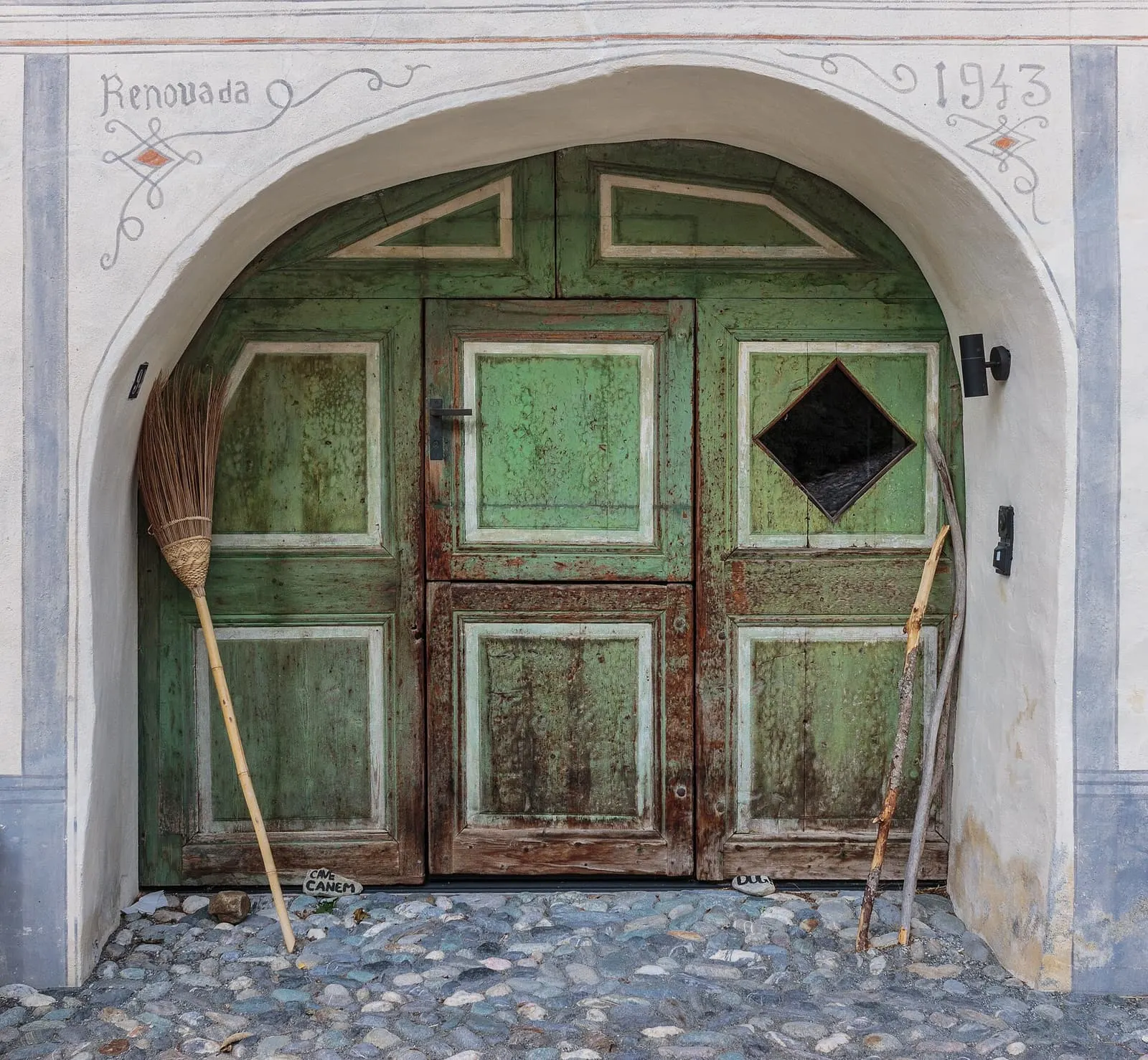
Beside the walls, in the area of present-day Rua do Amparo, one of the most significant Jewish communities of the Beira took root. The sources document a Jewish presence from the thirteenth century onward, with marked growth over the following centuries. The doorposts bearing cross-shaped marks, carved after the forced conversion of the late fifteenth century, are discreet but eloquent testimonies of that heritage. The former Jewish quarter is today part of the routes of the Network of Jewish Quarters of Portugal, which celebrates the Sephardic legacy across the country.
Guarda and the monumental Beira
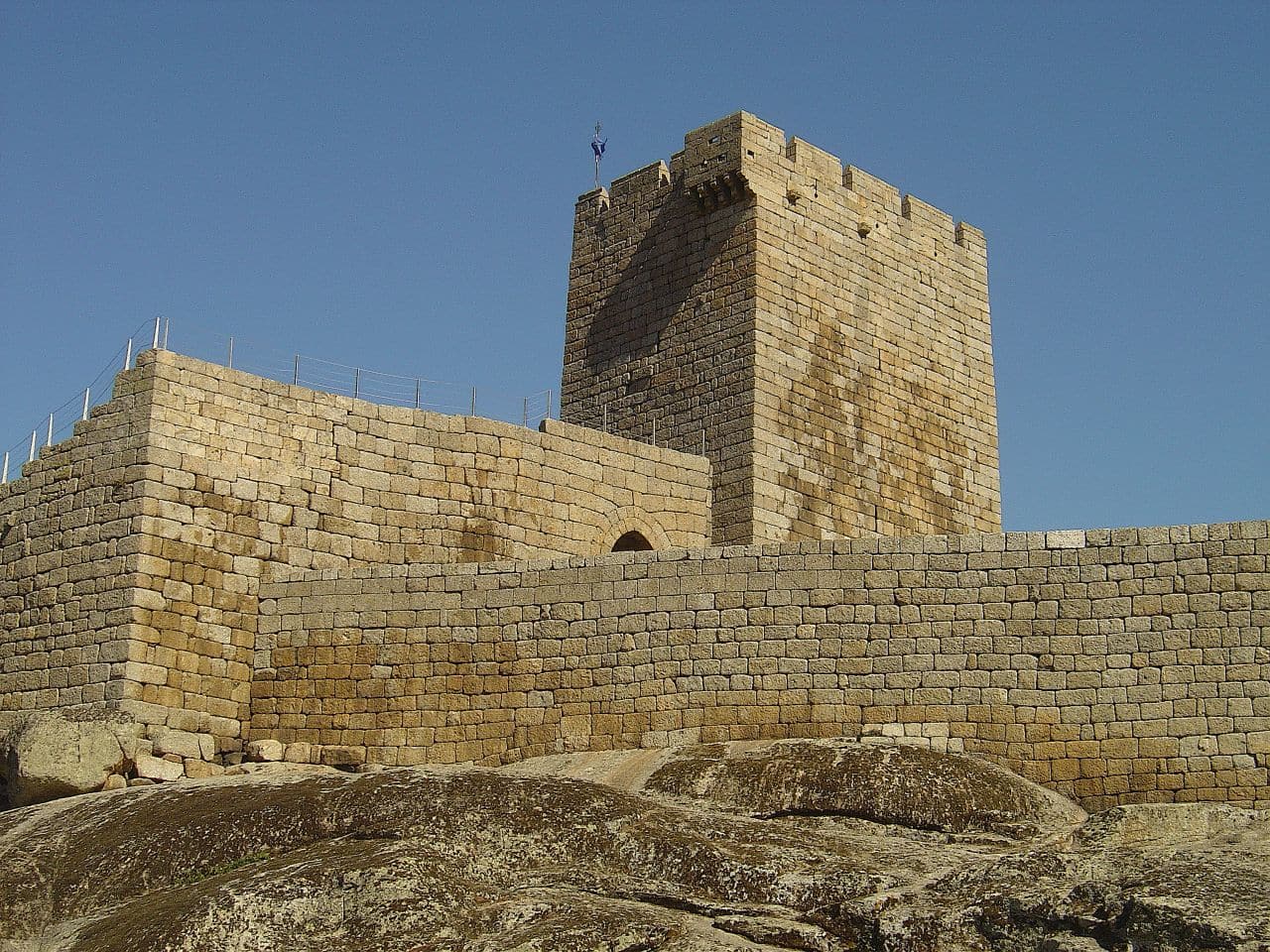
The city is also a gateway to a territory extraordinarily rich in fortified heritage. A few kilometres away stretches a string of historic villages and frontier castles, among them Linhares da Beira, overlooking the valley of the Mondego, and Belmonte, birthplace of Pedro Álvares Cabral and of one of the most enduring crypto-Jewish communities in Europe. Set within the Centro region, Guarda thus weaves its urban identity together with a landscape of granite, mountain and frontier memory that makes it one of the most singular places in the Portuguese interior.
Frequently asked questions
- Why is Guarda known as the highest city in Portugal?
- Guarda lies at about 1,056 metres above sea level, on the north-eastern slope of the Serra da Estrela, which makes it the highest city in mainland Portugal. Its elevated position also explains its harsh climate and its historic defensive role on the Beira frontier.
- When was the city of Guarda founded?
- Guarda received its charter (foral) from King Sancho I in 1199, in the context of consolidating the kingdom's eastern frontier. The settlement nonetheless has earlier occupation, and its elevation to the seat of a bishopric reinforced its regional importance from an early date.
- What is there to see in Guarda when visiting the historic centre?
- The essential sights are the Gothic and Manueline cathedral, the former Jewish quarter, the Torre dos Ferreiros, the stretches of wall and medieval gates such as the Porta d'El-Rei, as well as the granite squares of the old town.
Sources
Keep exploring
Heritage nearby
More places to discover from here. Approximate straight-line distances, within 50 km.