Places
Belmonte
Belmonte, a historic village in the district of Castelo Branco and birthplace of Pedro Álvares Cabral, with a medieval castle, a Roman tower and a unique…
- Location
- Belmonte, Castelo Branco
- Built
- Foral de 1199
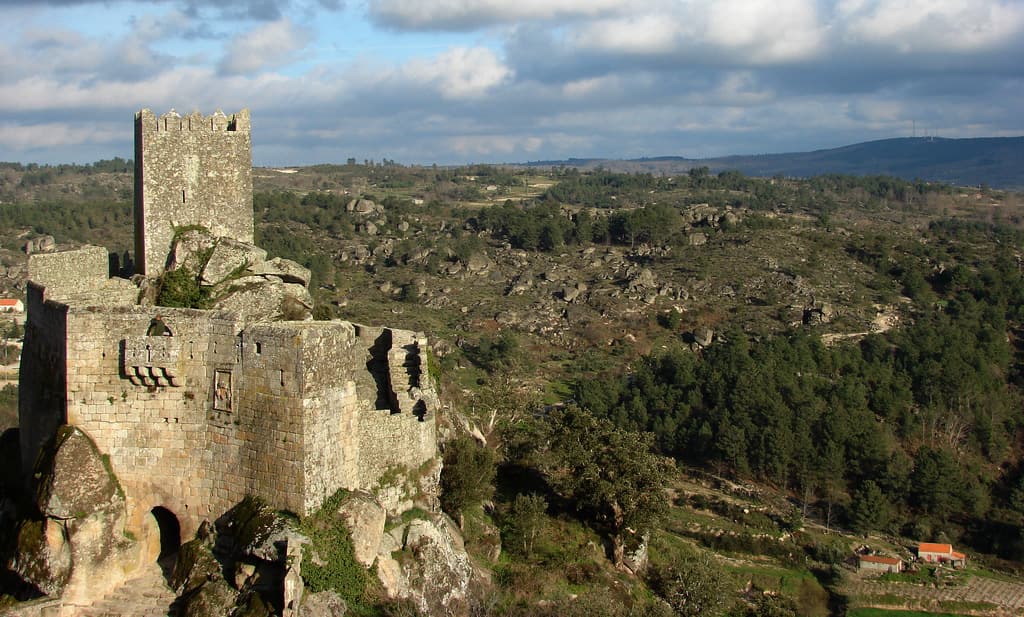
Perched on a granite spur overlooking the valley of the Zêzere, on the southern flank of the Serra da Estrela, Belmonte is one of the twelve Historic Villages of Portugal and one of the places most densely charged with memory in the Beira interior. Its name — belo monte, “beautiful hill” — describes precisely the position that gave it its military vocation: a fortified settlement that watched over the Beira frontier and the routes linking the Cova da Beira to the Guarda plateau.
The importance of Belmonte is rooted in the Middle Ages. In 1199, King Sancho I granted it a charter, formalising a defensive stronghold that, at the end of the thirteenth century, would become a stone castle. Around it grew a prosperous town, endowed with two churches — Santiago and Santa Maria — and a synagogue, a sign of a coexistence of communities that would leave an indelible mark on the identity of the place.
The castle and the memory of Cabral
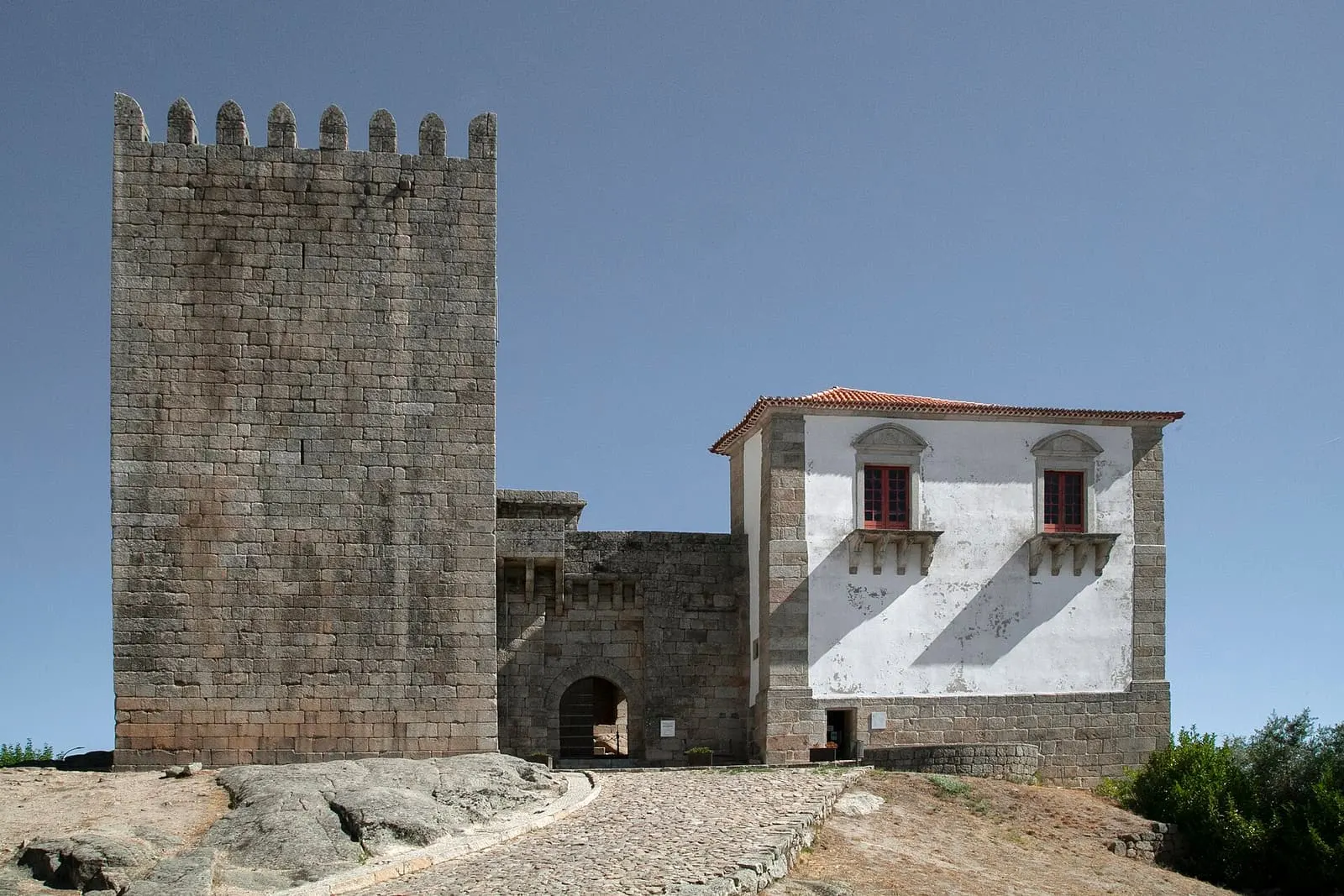
The Castle of Belmonte, with its keep and the walls that embrace the hill, is the emblem of the town. Its history became bound up with that of the Discoveries: the alcaides of the castle belonged to the Cabral family, and it is at Belmonte that tradition places the birth, around 1467–1468, of Pedro Álvares Cabral, commander of the fleet that in 1500 reached the coasts of Brazil. Beside the fortress stands the Church of São Tiago, a late Romanesque temple that houses the Cabral Pantheon, with the tombs of the navigator’s lineage, and a moving Marian image, Nossa Senhora da Esperança (Our Lady of Hope), which tradition holds accompanied the voyage to the Atlantic.
Few places in Portugal condense, within so few metres, the medieval frontier, the oceanic epic and the resistance of a clandestine faith.
The last crypto-Jewish community
The most singular face of Belmonte is its Jewish community. After the edict of forced conversion of 1496, part of the town’s Jews became New Christians, while keeping, in absolute secrecy, the rites of their faith. Isolated and endogamous, this crypto-Jewish community resisted inquisitorial vigilance over the centuries, transmitting prayers and traditions orally and almost exclusively through women.
It was in 1917 that the Polish mining engineer Samuel Schwarz, on settling in the region, discovered to his astonishment that those inhabitants believed themselves to be the last Jews in the world. His work, published in 1925, made the phenomenon known. The community only publicly assumed its identity in the twentieth century, with the opening of the Bet Eliahu synagogue in 1996 and, in 2005, of the Jewish Museum of Belmonte, the first of its kind in Portugal.
Roman heritage and the landscape of the Beira
About four kilometres from the historic centre stands the Tower of Centum Cellas, an enigmatic Roman granite monument dating from the first century, whose original function — villa, tax post or travellers’ lodging — remains debated among archaeologists. It is one of the best-preserved Roman vestiges in the country and extends, into an even more remote past, the antiquity of human occupation in this territory.
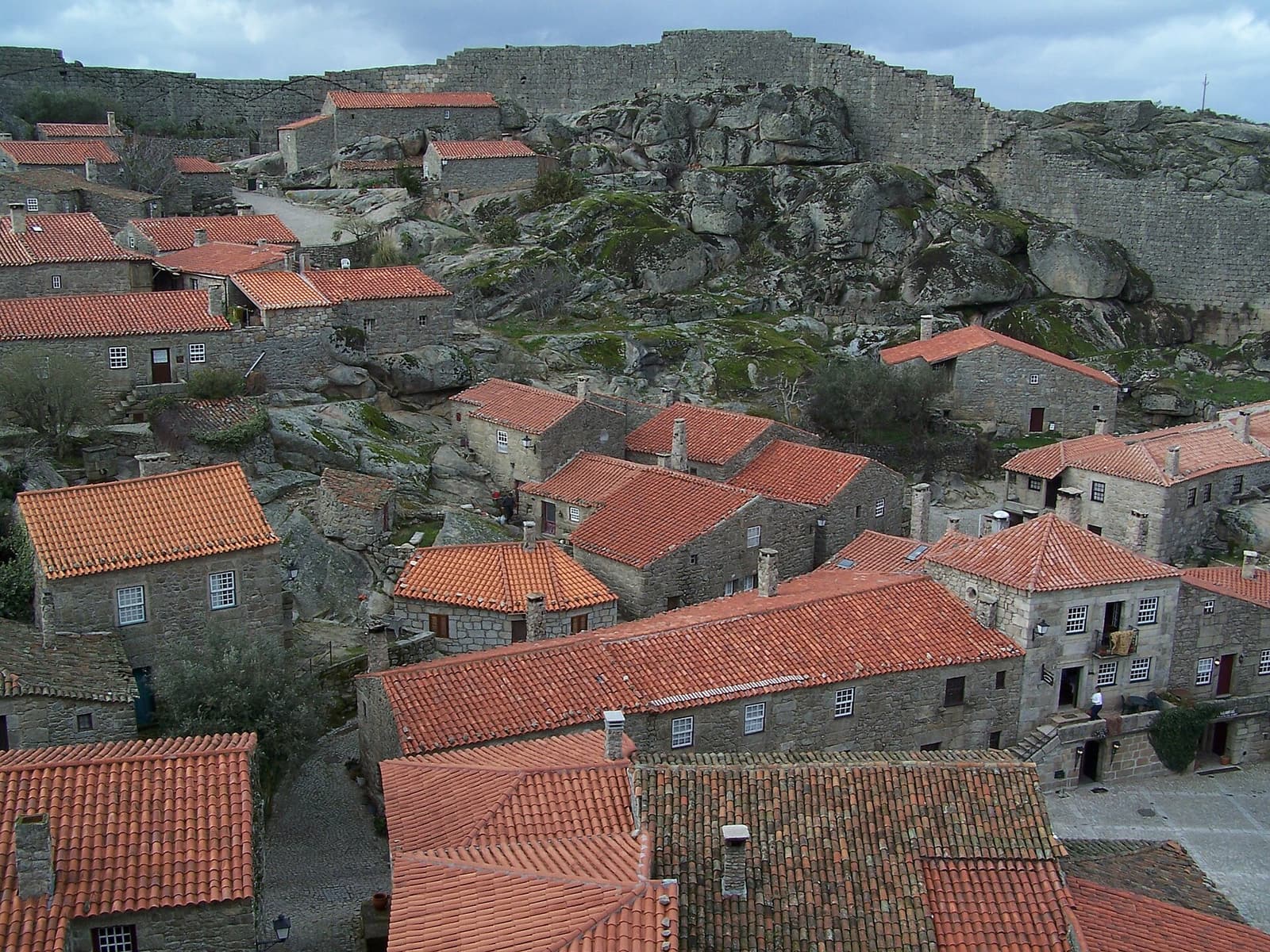
Belmonte thus forms part of an itinerary of fortresses and granite villages that punctuate the central interior of the country, in dialogue with places such as Sortelha and Trancoso, and with the neighbouring frontier city of Guarda. To walk its cobbled streets, lined with armorial houses and Jewish doorways, is to cross, in a single place, several layers of Portuguese history.
Frequently asked questions
- Where is Belmonte?
- Belmonte lies in the district of Castelo Branco, in the Beiras e Serra da Estrela sub-region, on the left bank of the river Zêzere, about 30 km from the city of Guarda.
- Why is Belmonte known for Pedro Álvares Cabral?
- Belmonte is traditionally regarded as the birthplace of Pedro Álvares Cabral, commander of the fleet that reached Brazil in 1500. The Cabral family were alcaides of the castle and are buried in the Church of São Tiago.
- What makes the Jewish community of Belmonte unique?
- Belmonte preserved, in secret and over centuries, a crypto-Jewish community that survived the Inquisition. It was revealed to the world in 1917 by the engineer Samuel Schwarz.
Sources
Keep exploring
Heritage nearby
More places to discover from here. Approximate straight-line distances, within 50 km.