Places
Linhares da Beira
Linhares da Beira, a historic village in the municipality of Celorico da Beira, on the slopes of the Serra da Estrela, with a medieval castle, pillory and forum.
- Location
- Linhares da Beira, Guarda
- Built
- século XII (foral 1169)
Perched on a granite slope that commands the Mondego valley and the north-western edge of the Serra da Estrela, Linhares da Beira is one of the best-preserved historic villages of the Beiras. Its stone houses, narrow streets in an irregular chequerboard and the silhouette of two crenellated towers form an urban ensemble of medieval character that has changed little over the centuries. It belongs to the municipality of Celorico da Beira, in the district of Guarda, and lies at about 810 metres above sea level, a position that earned it the status of a sentinel settlement over the surrounding lands.
Origins and charter
The occupation of the site is far older than the nation itself. The rocky spur is thought to have housed a pre-Roman hillfort, later used by the Romans in a region that served as a passage between the inland Lusitania and the coast. With the formation of the kingdom, Linhares received from Afonso Henriques its first charter, in 1169, which constituted it as a town and seat of a municipality — a condition it retained until the administrative reforms of the mid-nineteenth century. In 1510, Manuel I granted it a new charter, inscribing it within the great charter reform of his reign.
The place name “Linhares” alludes to the fields of flax (linho) that for centuries sustained the local economy, in an age when the cultivation and spinning of this fibre shaped the daily life of the mountain villages.
The castle and the houses
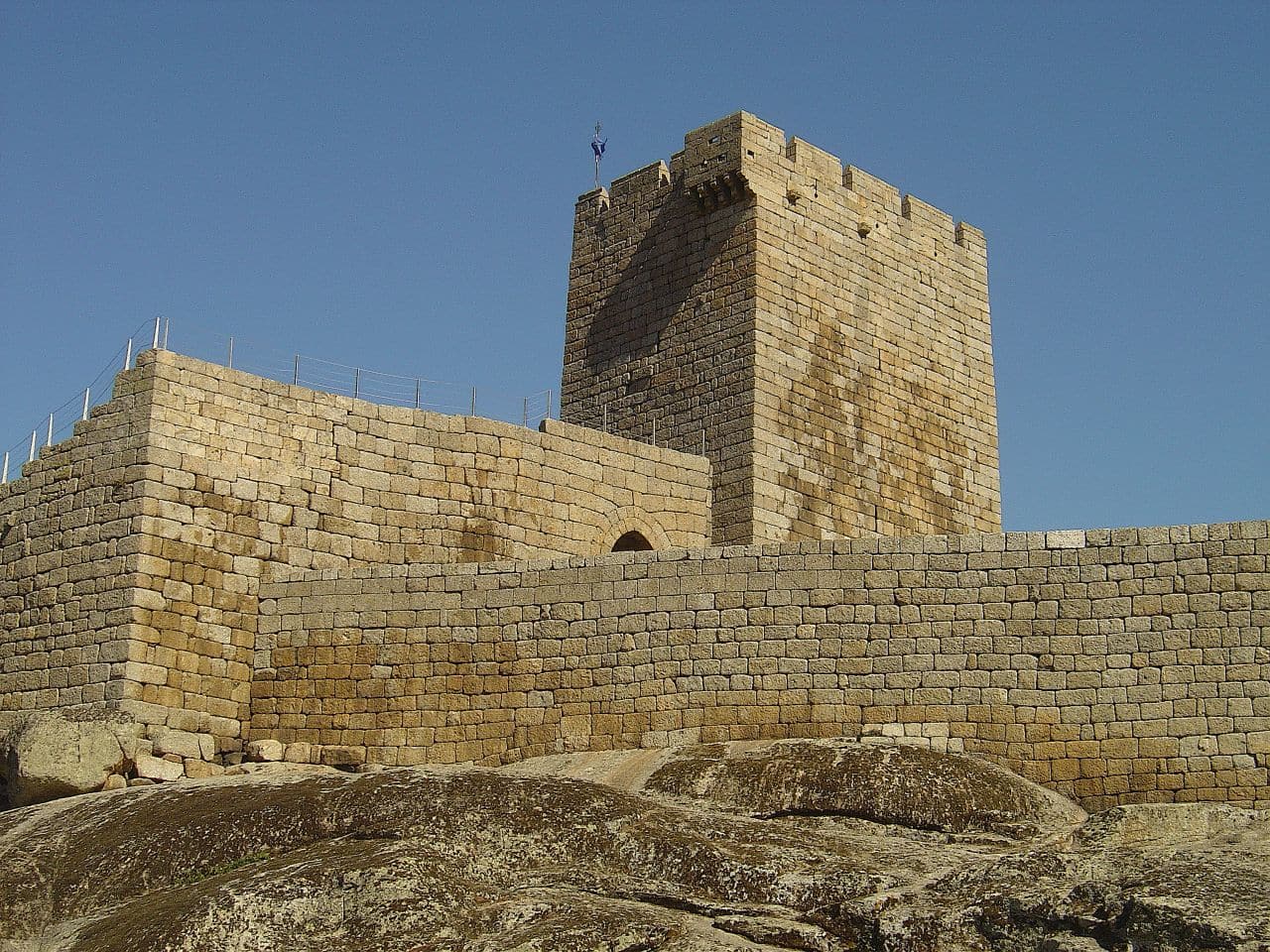
The element that most defines the village’s profile is its medieval castle, raised in the thirteenth century and classified as a National Monument since 1922. Set upon the highest crags, it preserves the curtain wall, the keep and the so-called clock tower, as well as cisterns hewn into the rock that ensured water in time of siege. From the wall-walk a wide view opens over the Beira plain, where tradition makes Linhares a favoured launch point for hang-gliders.
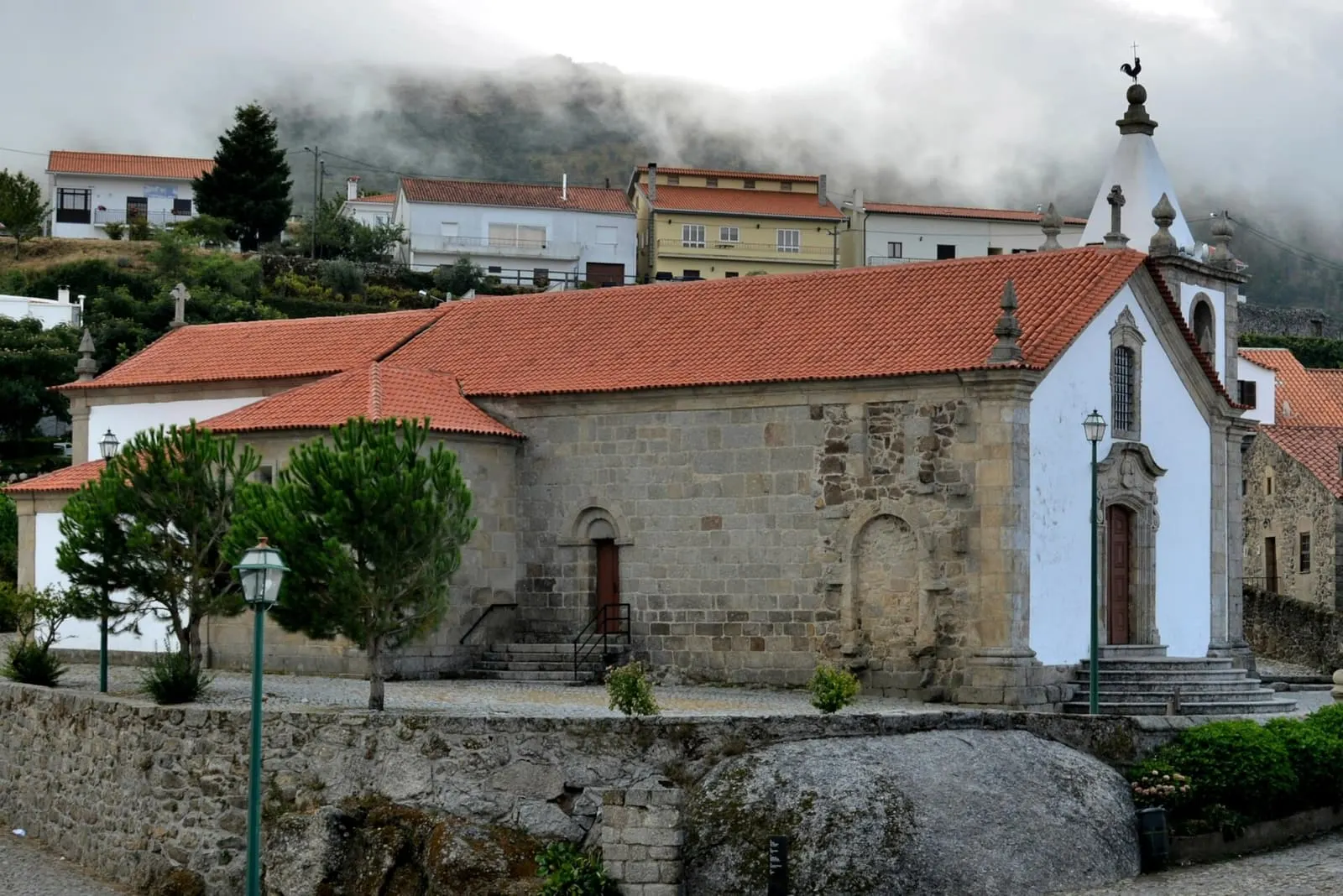
At the foot of the fortress spreads the granite housing, dotted with windows and portals that reveal various periods. The parish church, dedicated to Our Lady of the Assumption, preserves Manueline and Baroque elements in its fabric, a sign of the successive campaigns that renewed a temple of medieval roots.
Pillory and medieval forum
In the heart of the village stands the sixteenth-century pillory, a symbol of the municipal autonomy reaffirmed by the Manueline charter. Beside it survives an ensemble rare in Portugal: a small stone tribune around a table, identified as a medieval forum, the place where the community’s decisions were proclaimed and tributes were collected. It is an exceptional testimony to late-medieval municipal organisation, which survived the loss of town status.
Since 1991 Linhares has formed part of the network of Historic Villages of Portugal, a programme that restored a group of granite settlements of the Beira interior. Its meaning is best grasped in dialogue with neighbouring villages of the same frontier character, such as Marialva and Trancoso, all of them marks of a borderland that for centuries articulated defence, trade and settlement.
Frequently asked questions
- Where is Linhares da Beira?
- Linhares da Beira is a parish in the municipality of Celorico da Beira, district of Guarda, situated at about 810 metres above sea level on a north-western slope of the Serra da Estrela.
- Why is it considered a Historic Village of Portugal?
- In 1991 it was incorporated into the network of Historic Villages of Portugal for the value of its medieval ensemble: the castle, the granite houses, the pillory and the rare open-air stone forum.
- When did Linhares receive its charter?
- The first charter was granted by Afonso Henriques in 1169; Manuel I issued it a new charter in 1510, as part of the charter reform.
Sources
Keep exploring
Heritage nearby
More places to discover from here. Approximate straight-line distances, within 50 km.