World Heritage
Historic Centre of Guimarães and Couros Zone
Explore Guimarães and the Couros Zone: World Heritage since 2001, extended in 2023, with medieval squares, historic houses and the traces of leather tanning.
- UNESCO
- World Heritage · since 2001
The Historic Centre of Guimarães and Couros Zone brings together the medieval town and the working district that developed beyond its walls. The historic centre joined the World Heritage List in 2001; UNESCO approved an extension incorporating the Couros Zone on 19 September 2023. The enlarged property connects the origins of Portugal and its historic squares with the landscape of leather tanning.
From the medieval town to the tanneries
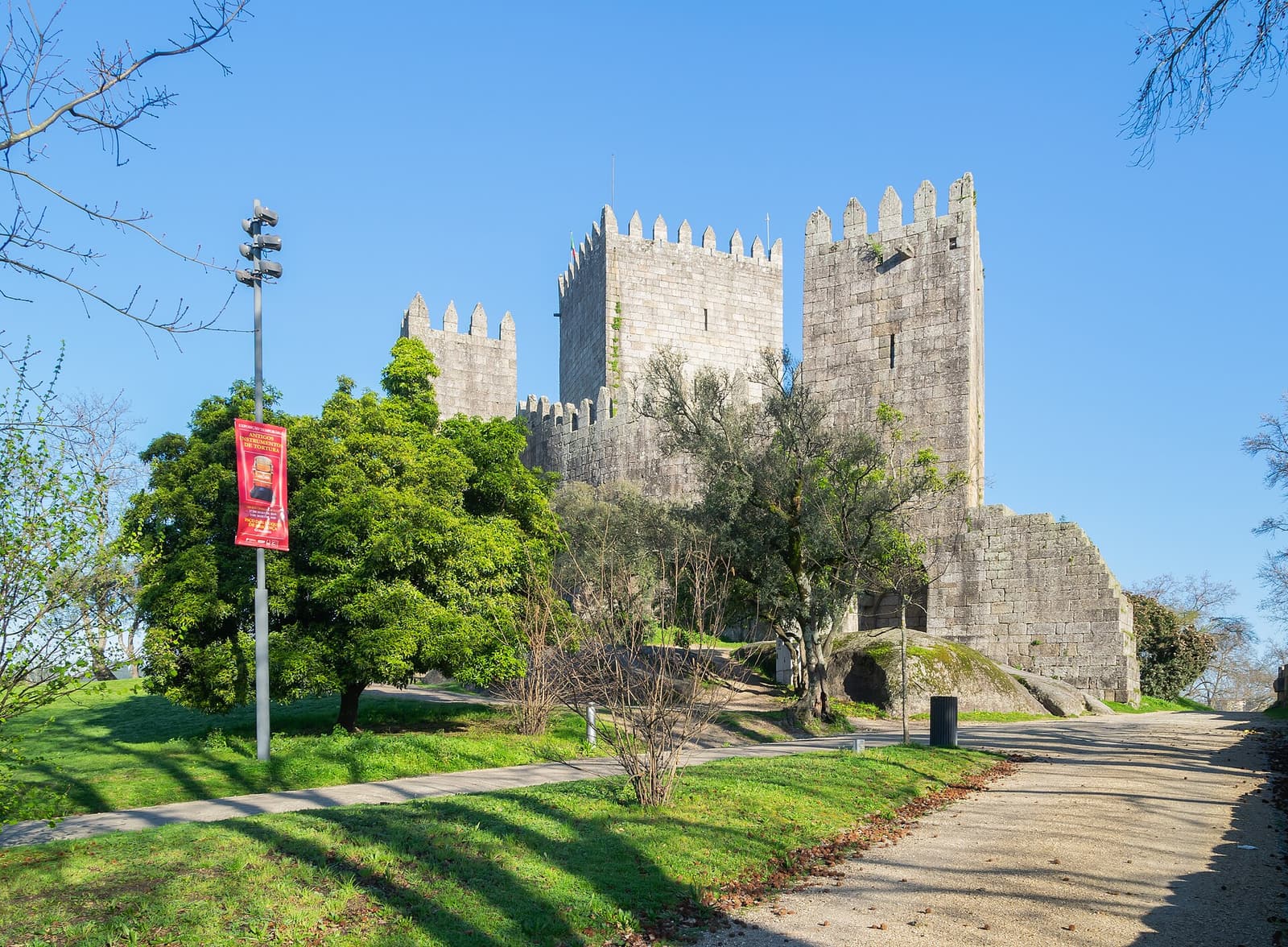
The castle and the religious settlement at Oliveira formed two centres of urban growth. In Largo da Oliveira, the church, the Padrão do Salado and the former town hall reveal different stages of that history. Around the streets, look at how granite ground floors support upper storeys built with timber frames.
The Couros Zone adds a different set of traces. Leather working left tanning tanks, channels, factory buildings and the homes of workers and owners. Water and production spaces help explain the district’s layout. These remains show how crafts and everyday life shaped Guimarães alongside its better-known monuments.
What changed in 2023
The extension enlarged the property inscribed in 2001; it did not create a second UNESCO site. Its current name is Historic Centre of Guimarães and Couros Zone. The official UNESCO record distinguishes the original inscription from the boundary modification and provides the property’s documentation.
Recognition applies to a defined area. The buffer zone protects its setting, while the designation does not extend to the whole municipality. Conservation involves houses, public spaces and continuing uses: caring for an inhabited district means considering its community as well as its buildings.
Exploring the two areas
Combine Largo da Oliveira and the streets of the historic centre with a walk through Couros. Around the former tanneries, look for the relationship between tanks, water and industrial buildings. The Palace of the Dukes and the castle offer further perspectives on local history.
Use the municipal tourism website to plan building visits and activities. Check each monument’s opening arrangements with its operator; exploring public streets and entering historic interiors involve different access conditions.
Frequently asked questions
- When did Guimarães become a World Heritage Site?
- The historic centre was inscribed in 2001. On 19 September 2023, UNESCO approved its extension to the Couros Zone. This enlarged the same property rather than creating a separate second inscription.
- What does the Couros Zone add to a visit?
- It introduces the history of work and leather production through tanning tanks, water channels, former factories and houses associated with workers and owners.
- Is the whole city of Guimarães a World Heritage Site?
- The inscription covers the defined Historic Centre and Couros Zone. A buffer zone protects its surroundings; the designation does not cover the entire municipality.