World Heritage
Jerónimos Monastery and Belém Tower
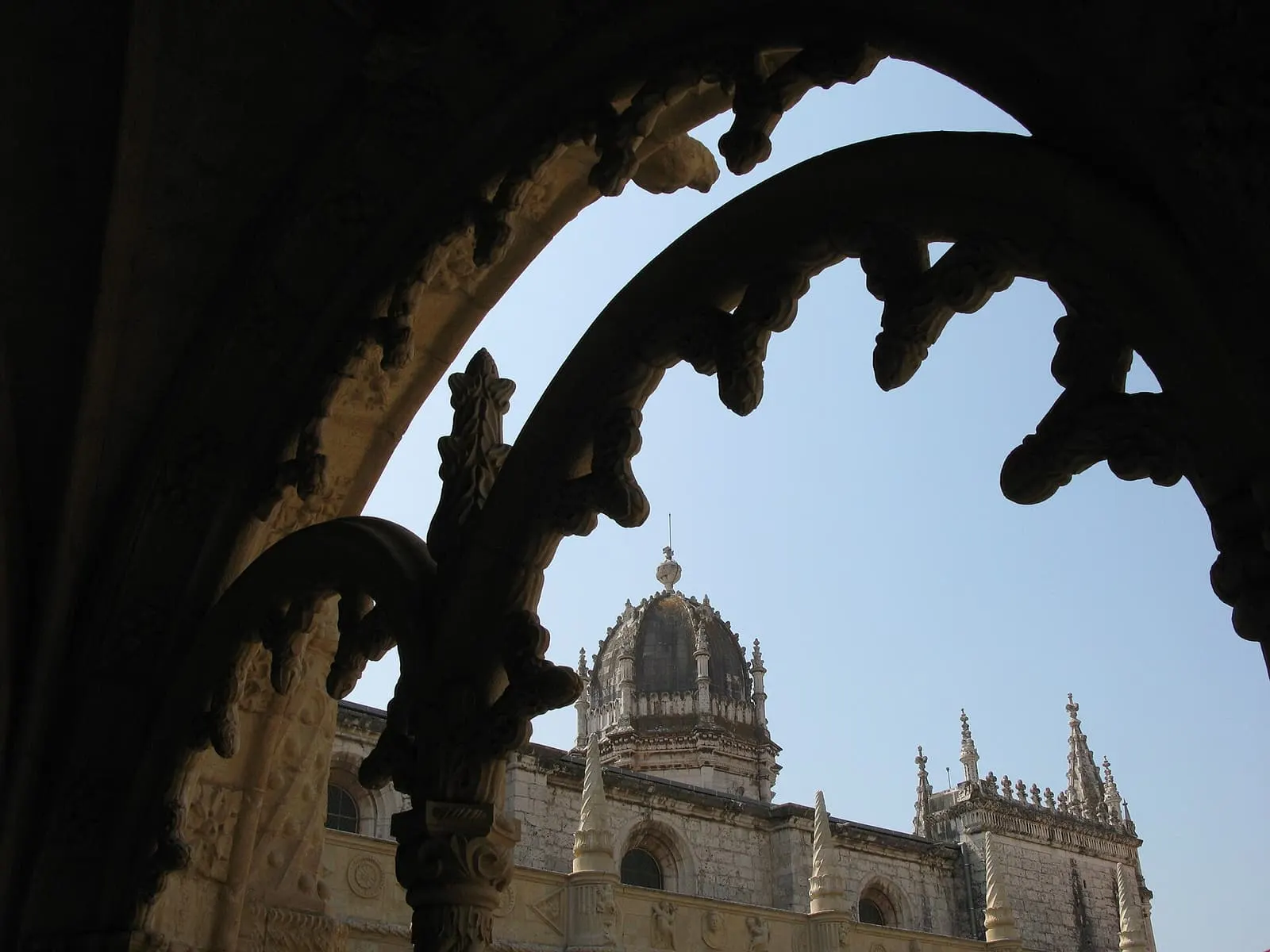
The Manueline ensemble at Belém, in Lisbon, inscribed on UNESCO's World Heritage List in 1983.
- UNESCO
- World Heritage
On the bank of the Tagus, at the point from which the ships set sail, stands the ensemble that best sums up Portugal’s ambition at the start of the sixteenth century. The Jerónimos Monastery and the Belém Tower were inscribed together on UNESCO’s World Heritage List in 1983 — not as two separate monuments, but as the coherent expression of a historical moment: that of the encounter between a faith, a dynasty and an oceanic economy.
An imperial commission
The building of the monastery begins in 1501, by order of King Manuel I, financed in good part by the vintena — the tax on trade with India and Guinea. The site is no accident: it replaces the chapel where Vasco da Gama had kept vigil before setting out in 1497. The building is, from its first stone, a monument to the Expansion as much as to the Order of Saint Jerome that was to inhabit it.
The work passes through several hands. The initial architect, Diogo de Boitaca, gives the space its structural daring; João de Castilho, from 1517, brings a more learned ornamental grammar, of Plateresque roots. From this succession is born the improbable coherence of the ensemble.
The Manueline, in its purest state
Jerónimos is the place where the Manueline is best understood — that late-Gothic style, exuberant and hybrid, which flourishes in Portugal in the reign of King Manuel. In the vaults of the church, the ribs multiply until they trace stone palm trees over the finest of columns, dissolving the distinction between support and covering.
In the cloister, the limestone is worked as if it were ivory: ship’s cables, armillary spheres, crosses of Christ and plant elements interweave in an iconography that is itself a tale of the voyage.
The Tower, guardian of the river
Downriver, the Belém Tower (1514–1519), by Francisco de Arruda, served a military function — controlling the entrance to the harbour — but does so with the language of a small palace. Its Moorish balconies, its domed watchtowers and the famous rhinoceros carved at its base reveal the same Manueline taste for the synthesis between the defensive and the decorative, between Europe and the worlds Portugal had just made contact with.
Why it matters
The universal value of the ensemble, recognised by UNESCO, lies precisely in that synthesis: Belém is the built witness of a moment when European architecture opened itself to the scale of the world. To visit it is to read, in stone, Portugal’s passage from the end of the Middle Ages to the first globalisation.