World Heritage
University of Coimbra — Alta and Sofia
The oldest Portuguese university and the city that grew up around it, inscribed on UNESCO's World Heritage List in 2013.
- UNESCO
- World Heritage
Few institutions have shaped a country as profoundly as the University of Coimbra shaped Portugal. Founded in 1290, it is one of the oldest universities in continuous operation in the world — and the city that houses it is, to a great extent, its work. In 2013, UNESCO inscribed the ensemble “University of Coimbra — Alta and Sofia” on the World Heritage List.
The Alta: the city on the heights
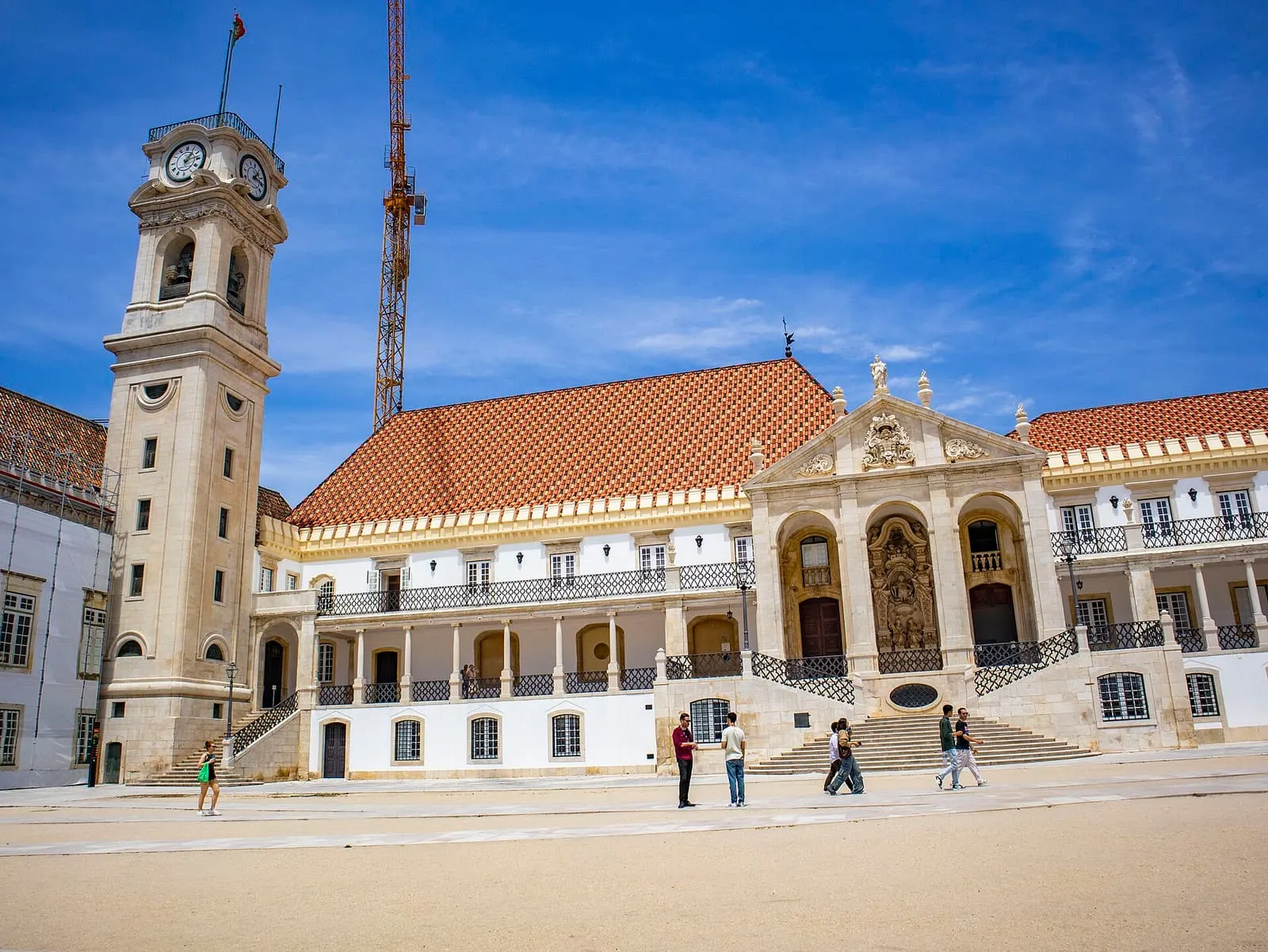
The heart of the university occupies the highest point of the city, in the former royal palace granted to the university in 1537. The Paço das Escolas is organised around a courtyard dominated by the University Tower — known as the “Cabra” — and opens onto the river. From here radiates an urban fabric of colleges, narrow streets and student repúblicas that grew up in the service of a single function: to teach.
The Joanina
The jewel of the ensemble is the Joanina Library (1717–1728), built by order of King John V. Its three halls, lined with gilded shelving and exotic carving, form one of the most dazzling Baroque interiors in Europe — and harbour a population of bats that, by night, protect the books from insects: a curious conservation solution three centuries old.
The Joanina is a statement: the library as a temple of knowledge, as sumptuous as a royal chapel. In it, architecture places itself at the service of an idea of knowledge.
The Sofia: the first university city
The UNESCO inscription also includes the Rua da Sofia, in the lower town, where the first great colleges were installed in the sixteenth century. Conceived from scratch to house teaching, the Sofia is considered one of the first examples of university town planning in Europe — the city designed in function of the academy.
Universal value
What UNESCO recognised was not merely the beauty of the buildings, but the role of Coimbra as an institutional and architectural model exported throughout the Portuguese-speaking world over centuries. Coimbra is the proof that a university can itself be a monument — and that knowledge, too, builds cities.