Monuments
Church of Leça do Balio (Matosinhos)
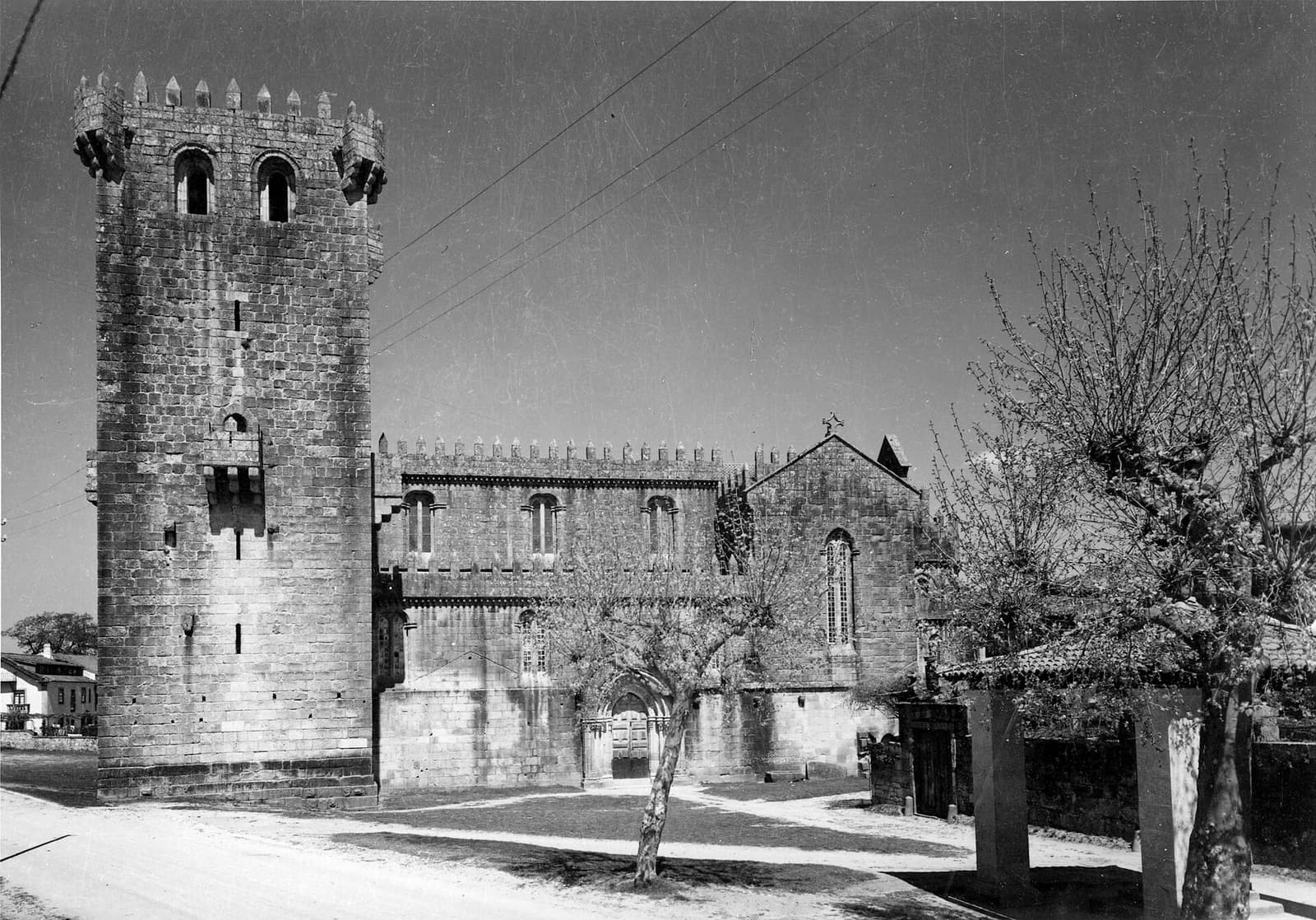
The Gothic fortress-church of Leça do Balio, in Matosinhos: the first seat of the Order of the Hospital in Portugal and a National Monument since 1910.
- Location
- Leça do Balio, Porto
- Built
- séc. XIV (campanha de 1330-1336)
- Style
- Gótico (transição do românico)
The Church of Leça do Balio rises in the parish of Leça do Balio, in the municipality of Matosinhos and district of Porto, as one of the most singular Gothic monuments of northern Portugal. It is what remains of a former monastery that was, in the twelfth century, the first seat of the Order of the Hospital of Saint John of Jerusalem on Portuguese soil. Its severe, fortified appearance sets it apart at once from the other Portuguese medieval churches: it is, above all, a fortress-church.
Hospitaller origins
Documentary evidence attests to the existence of a monastic community at Leça as far back as remote times, but it is in the twelfth century that the place acquires its historical destiny. The estate of Leça was handed over to the monastic knights of the Order of the Hospital — later known as the Order of Malta —, who there established their mother house in the kingdom. The place name “do Balio” recalls precisely that function: the bailiwick was the administrative district of the order, and Leça became the seat of the bailiff, its highest dignitary in Portugal.
These warrior-monks combined the religious life with military duty, an inheritance of the orders born in the context of the Crusades. That dual nature explains the physiognomy of the building, conceived as much for prayer as for defence.
The fourteenth-century Gothic campaign
The temple admired today results above all from the works of reconstruction and enlargement carried out between 1330 and 1336, on the initiative of the bailiff Frei Estêvão Vasques Pimentel, whose tomb is preserved in the interior. This campaign gave the monument its Gothic coherence, albeit upon earlier Romanesque foundations and elements, making it an example of the transition between the two styles.
The church has a cruciform plan, divided into three naves, and is flanked by a tall quadrangular tower that lends it its military character. Provided with balconies bearing machicolations, with battlements and arrow slits, the tower evokes a true fortress. The main façade opens into a wide rose window crowned by the cross of the order, while the chancel displays a ribbed vault, a mark of Gothic maturity.
Few Portuguese temples express so clearly the fusion between faith and arms that defined the medieval military orders: at Leça do Balio, the nave and the defensive tower belong to the same constructive gesture.
Artistic treasures and classification
The interior preserves one of the most celebrated pieces of early sixteenth-century Portuguese sculpture: the Manueline baptismal font, dated 1515 and attributed to the master Diogo Pires, o Moço. Its exuberant decoration, of vegetal and maritime motifs, contrasts sharply with the Gothic sobriety of the space. Also kept here are tombs of knights and friars of the order, among them that of Frei João Coelho, witnesses to the long Hospitaller presence.
The Church of Leça do Balio was classified as a National Monument in 1910, joining the body of the first properties recognised by the Portuguese State. It belongs to the rich tradition of Gothic architecture in Portugal and dialogues, in its geography, with the great monuments of Porto, from the Porto Cathedral to the urban churches. Its status as the seat of a military order brings it close, on the historical plane, to houses such as the Convent of Christ in Tomar, seat of the Templars and later of the Order of Christ. Distinct in its more intimate and fortified character, Leça do Balio occupies a place of its own among the country’s medieval parish churches.
Frequently asked questions
- Why does the Church of Leça do Balio look like a fortress?
- The church was the seat of the monastic knights of the Order of the Hospital, who gave it a military character: the powerful quadrangular tower, with machicolations, battlements and arrow slits, protected the complex and symbolised the power of the military order.
- What is the connection between Leça do Balio and the Order of Malta?
- The Order of the Hospital of Saint John of Jerusalem, later known as the Order of Malta, received the estate of Leça in the twelfth century and there established the order's first mother house and bailiwick in Portugal.
- Can the church be visited?
- Yes. The Church of Leça do Balio has been a National Monument since 1910 and remains in worship, being accessible to visitors who wish to discover its Gothic architecture and the remarkable Manueline baptismal font.
Sources
Keep exploring
Heritage nearby
More places to discover from here. Approximate straight-line distances, within 50 km.