Typologies
Mother churches and parish churches of Portugal
The mother churches and parish churches of Portugal: the network of temples that structures the religious territory, from the medieval mother church to the…
- Style
- Arquitetura religiosa (do românico ao barroco)
Before the town hall, before even the square, it was the mother church that fixed the centre of many Portuguese settlements. Each parish had its own: the principal temple where one was baptised, married and buried, where the orders of the realm were announced and where the community recognised itself. This typology gathers the mother churches and parish churches — the densest and most capillary mesh of Portuguese religious heritage, present from north to south, from the great town to the most isolated village.
Matriz: the mother church of the parish
The name says it all. Matriz comes from the Latin mater, mother: it is the mother church of a district, the one on which the chapels, hermitages and oratories scattered across the territory depended. Its basic unit is the parish — the smallest cell of ecclesiastical organisation, served by a parish priest —, which in Portugal often coincides with the freguesia, the civil administrative division. Church and freguesia thus frequently share the same name and the same patron saint.
They are distinguished from the cathedrals, which are the head churches of a diocese, seat of the bishop, and from the churches of monasteries and convents, linked to religious communities. The mother church belongs to the secular clergy and to the community of the faithful: it is the temple of everyday life, not that of a monastic order.
To read a mother church is to read the history of a land in layers: the plan may be medieval, the portal Manueline, the woodwork baroque and the churchyard nineteenth-century. Few buildings condense so many generations of a single community.
A network that organises the territory
The parish network consolidated above all from the Middle Ages onward, as the Reconquista settled population and it became necessary to frame the faithful. Many mother churches were born linked to the right of patronage (padroado) — the faculty of the founder or patron of a church to present the parish priest and draw revenues —, which the Crown, the monasteries and the nobility contested. To present the parish priest and receive the tithes of a parish was economic power and influence over souls.
It was this mesh of parishes and mother churches that, replicated overseas, accompanied the Portuguese expansion: wherever the caravels arrived, a mother church was raised, and parish organisation became one of the most enduring instruments of the Portuguese presence in the world.
From medieval stone to the gold of the baroque
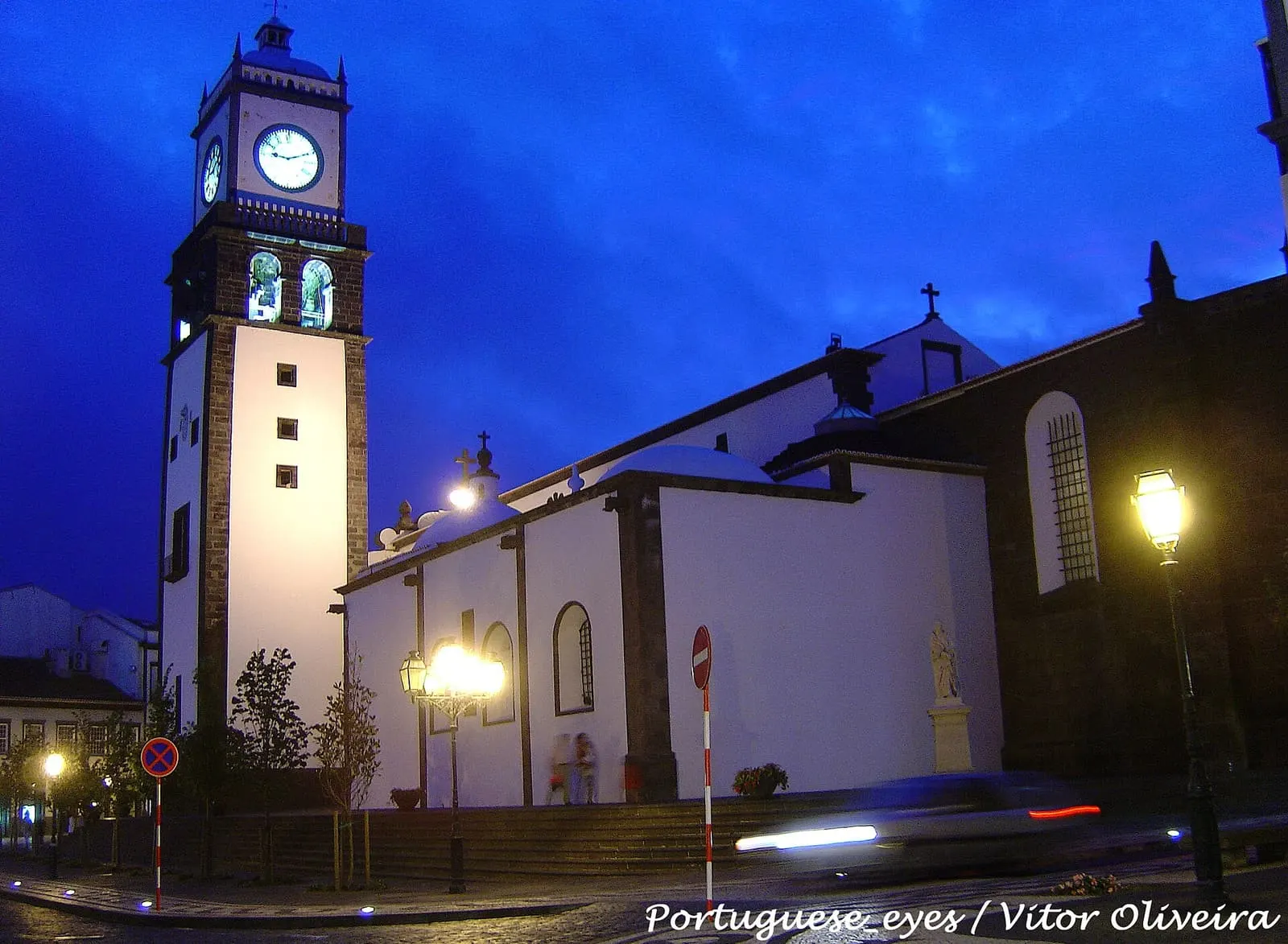
Architecturally, the Portuguese mother church has no single form — it is rather a palimpsest. The overwhelming majority have a medieval foundation, with Romanesque or Gothic cores, but few have reached our day intact. The Manueline period left portals and vaults; Mannerism regularised plans and façades; and it was above all the baroque, of the seventeenth and eighteenth centuries, that transformed the interiors, lining them with gilded woodwork, azulejo and monumental altarpieces, in an effort of devotion fed by the Counter-Reformation and by the wealth of Brazil.
The typical result is a sober ashlar façade, opened by an axial portal and crowned by one or two bell towers, contrasting with an interior teeming with gilding. From the plain façade to the dazzling altarpiece, the mother church sums up the whole course of religious art and architecture in Portugal.
Frequently asked questions
- What is a mother church (igreja matriz)?
- The mother church is the principal church of a parish or municipality, seat of the parish and a point of reference for local religious life. The term 'matriz' (from the Latin mater, mother) designates the mother church of the district, on which the chapels and hermitages of the territory depended.
- What is the difference between a parish church and a cathedral (sé)?
- The cathedral (sé) is the head church of a diocese, where the bishop's cathedra stands; the parish or mother church is the principal church of a parish, the smallest territorial cell of ecclesiastical organisation, served by a parish priest and not by a bishop.
- Why are so many mother churches baroque on the inside?
- Many mother churches are medieval in origin but were profoundly remodelled between the seventeenth and eighteenth centuries. Access to Brazilian gold and the taste of the Counter-Reformation covered old interiors with gilded woodwork, azulejo and baroque altarpieces, over earlier Gothic or Manueline structures.