Monuments
Carmo Church (Lisbon)
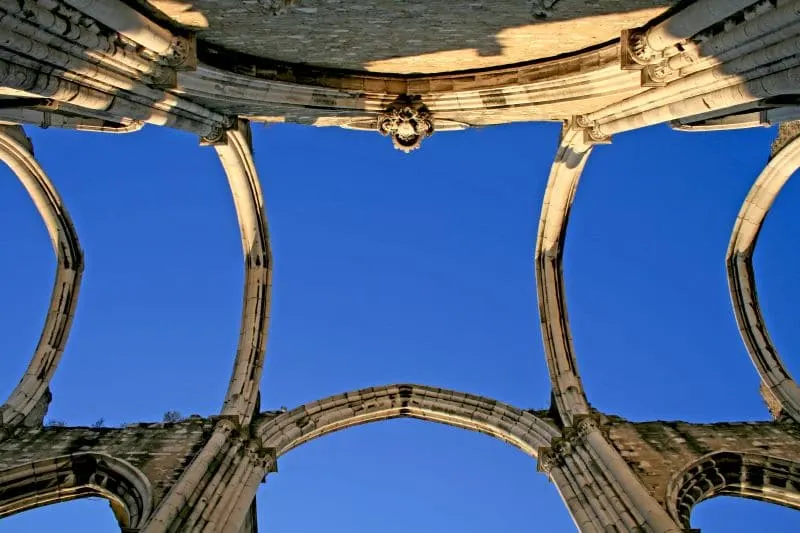
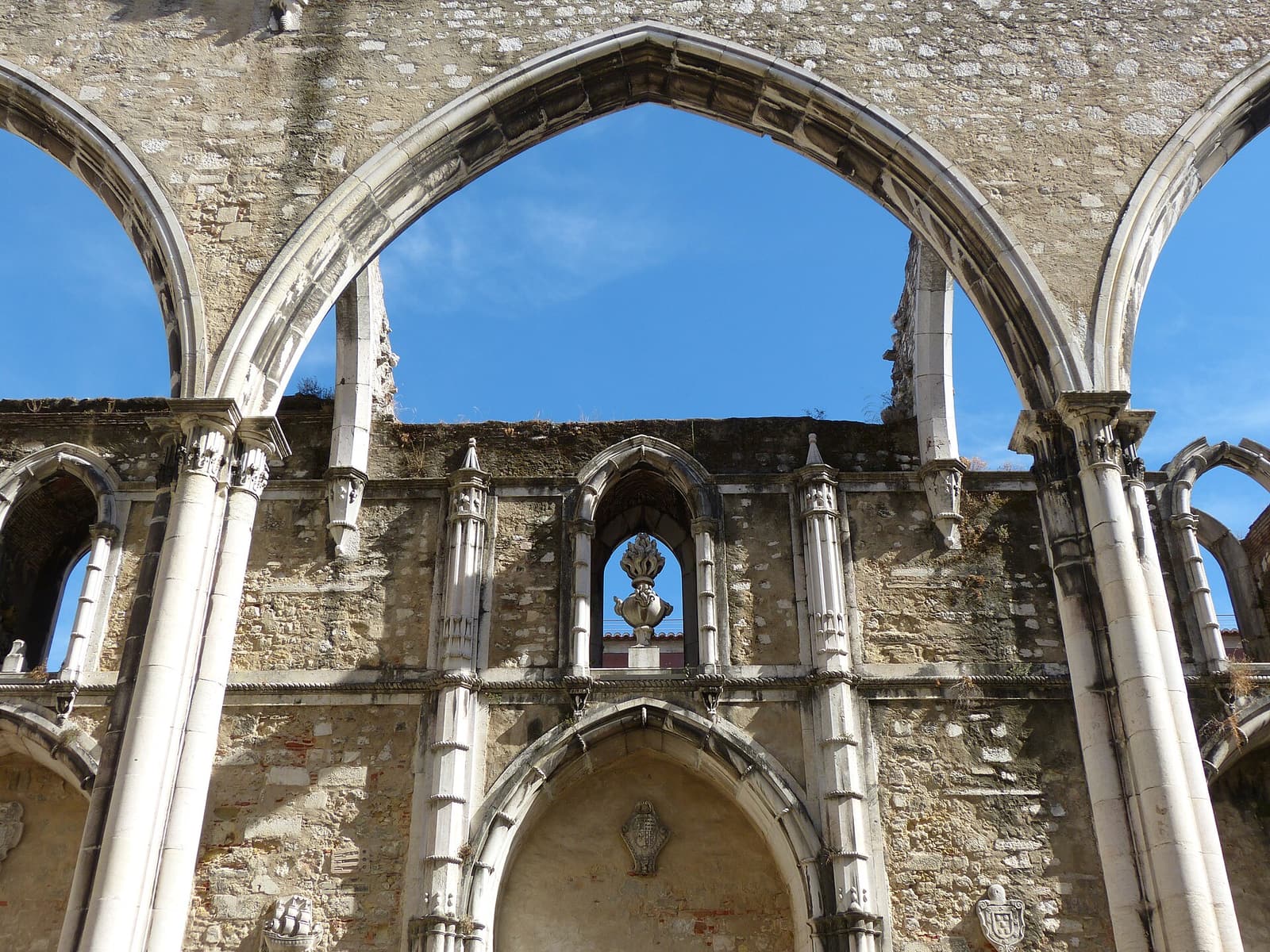
The Carmo Church in Lisbon: the great open-air Gothic nave left in ruins by the 1755 earthquake, today home to the Carmo Archaeological Museum.
- Location
- Lisboa, Lisboa
- Built
- 1389–1423
- Style
- Gótico
The Carmo Church, atop the Chiado district in Lisbon, is probably the city’s most famous ruin. Its great Gothic nave, with broken arches opening directly onto the sky, is at once one of the finest works of Portuguese medieval architecture and the most eloquent reminder of the 1755 earthquake. Belonging to the former Convento do Carmo, the church forms its monumental core and is today inseparable from the dramatic image that survived the catastrophe.
The largest Gothic church in Lisbon
Founded in 1389 by Dom Nuno Álvares Pereira, the Constable who had led the Portuguese forces at Aljubarrota, the Carmelite church was raised with the proceeds of his military victories. The works took place mostly between the end of the fourteenth century and the 1420s, and in 1423 the founder himself renounced his possessions and took vows in the order, withdrawing to the convent he had ordered built.
The church followed a Latin-cross plan, with three naves and a chancel flanked by apsidioles, in a scheme that combined the tradition of mendicant buildings with solutions akin to those of the Mosteiro da Batalha. At nearly seventy metres long, it was then the largest church in Lisbon and rivalled in grandeur the Lisbon Cathedral itself. Its ogival arcades, now exposed to the open air, hint at the monumentality of the original space.
The earthquake and the ruin that remained
On the morning of 1 November 1755, All Saints’ Day, with the church full of worshippers, the great earthquake struck Lisbon. The vault and roof of the nave collapsed, and the fire that followed consumed what remained of the interior. Unlike so many other buildings rebuilt in the Pombaline effort that raised up the city’s downtown anew, the Carmo Church was never rebuilt.
Deliberately left open to the sky, the nave of the Carmo became a monument to the disaster itself: few places in Europe preserve, on the scale of an entire church, the physical mark of a cataclysm that changed the way people thought about the city and about nature.
There were attempts at reconstruction in the neo-Gothic style during the reign of Dona Maria I, but the works were interrupted and abandoned in the first half of the nineteenth century, with the dissolution of the religious orders in 1834. The ruin thus became established as part of Lisbon’s identity.
Carmo Archaeological Museum
In 1864, the former church was handed over to the Association of Portuguese Archaeologists, which installed there the Carmo Archaeological Museum, one of the oldest museums in the country. Beneath the arcades and in the chapels of the chancel a remarkable collection is gathered: medieval tombs, gravestones and architectural elements, Roman and Arab remains, azulejo tilework, and curiosities such as Egyptian sarcophagi and pre-Columbian mummies.
Classified as a National Monument, the Carmo Church forms part of the capital’s religious heritage circuit, alongside works such as the Church of São Roque and the other parish churches and conventual churches that mark the history of Lisbon. Between the contemplation of the open nave and the visit to the museum, the Carmo remains one of the most expressive places to understand at once Portuguese Gothic and the impact of the greatest earthquake in the nation’s history.
Frequently asked questions
- Why does the Carmo Church have no roof?
- The earthquake of 1 November 1755 brought down the vault and roof of the nave. The church, one of the largest in Lisbon, was never rebuilt and remained an open-air ruin, a permanent testimony to the catastrophe.
- Who ordered the Carmo Church to be built?
- It was founded in 1389 by Dom Nuno Álvares Pereira, the Constable who won the Battle of Aljubarrota, who financed the Carmelite convent with the spoils of his campaigns and would later take vows there as a friar.
- What can be visited at the Carmo Church today?
- The ruins of the church house the Carmo Archaeological Museum, with medieval tombs, Roman and Arab pieces, azulejo tilework and even pre-Columbian mummies. Visitors can see the former roofless nave and the chapels of the chancel.
Sources
Keep exploring
Heritage nearby
More places to discover from here. Approximate straight-line distances, within 50 km.