Archaeology
Castro de Monte Mozinho
Castro de Monte Mozinho in Penafiel: one of the largest pre-Roman and Roman settlements in the northwestern Iberian Peninsula, classified as a Property of…
- Location
- Penafiel, Porto
- Built
- Séc. I a.C. – séc. V d.C.
- Style
- Arquitetura castreja e romana
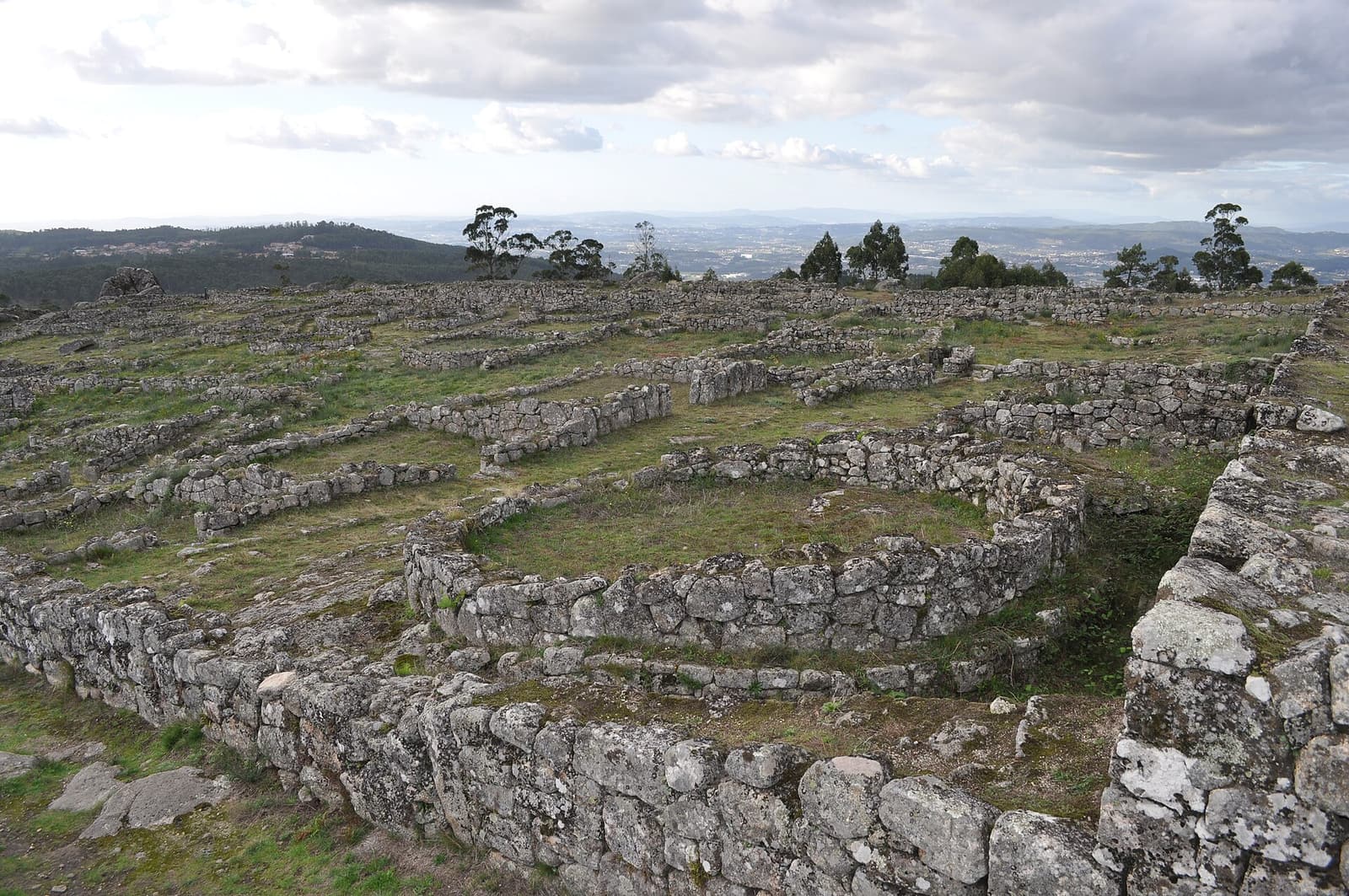
Castro de Monte Mozinho, popularly known as the Dead City of Penafiel, is one of the largest and most emblematic fortified settlements in the northwestern Iberian Peninsula. Perched on the summit of the eponymous hill at approximately 408 meters above sea level, it commands a dominant position over the Sousa Valley in the municipality of Penafiel (Porto district), straddling the parishes of Galegos and Oldrões. Its extensive inhabited area — estimated at over twenty hectares — and the monumentality of its structures make it an indispensable reference site for studying the transition between indigenous and Romanized societies.
A settlement between two cultures
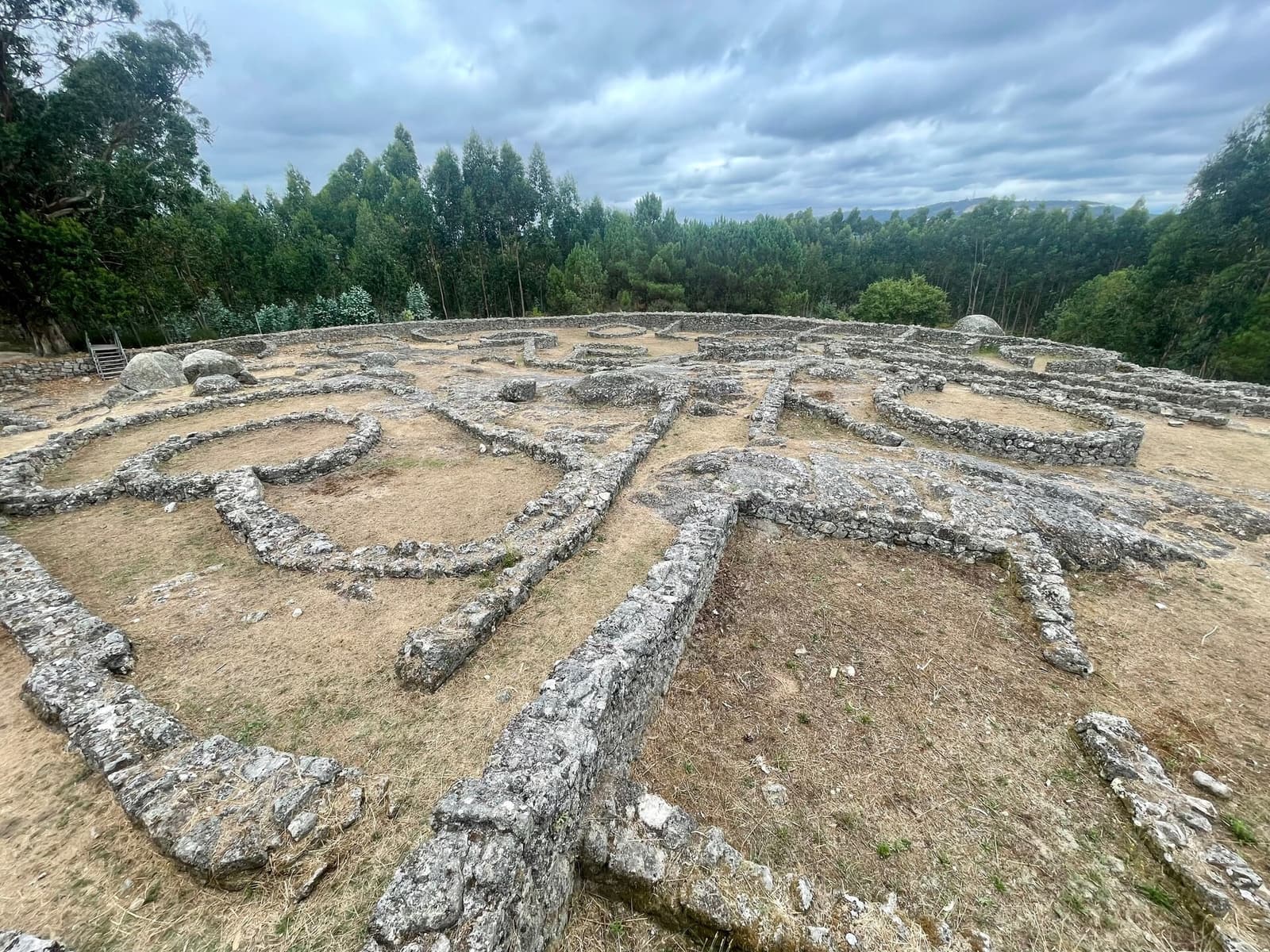
Monte Mozinho uniquely documents the encounter between Castro culture and Roman presence. The oldest nucleus likely originated in the late Iron Age, but the site’s major urban development corresponds primarily to the Roman period between the 1st and 5th centuries. This long diachrony is reflected in the coexistence, within the same space, of indigenous-style constructions — circular houses with vestibules, organized around courtyards — and dwellings of Roman tradition, featuring rectangular and quadrangular compartments.
The juxtaposition of circular Castro houses and orthogonal Roman dwellings makes Monte Mozinho a privileged laboratory for observing, on-site, the acculturation process that transformed the northwestern Iberian Peninsula.
The settlement is protected by successive defensive walls adapted to the hill’s topography. The highest area preserves the oldest enclosure, whose entrance was flanked by structures where statues of Gallaecian warriors were recovered — now safeguarded in the municipal museum. The spatial organization also includes a large elliptical plaza that likely functioned as a public square, and a Flavian-era ceremonial monument attesting to the community’s achieved prestige.
Research and classification
The site’s archaeological significance was recognized early: Monte Mozinho has been classified as a Property of Public Interest since 1948. The first major excavation campaigns occurred between 1943 and 1954, resumed with renewed vigor between 1974 and 1979, and continued in more recent interventions. Despite decades of work, only a portion of the settlement has been uncovered, underscoring its exceptional scale.
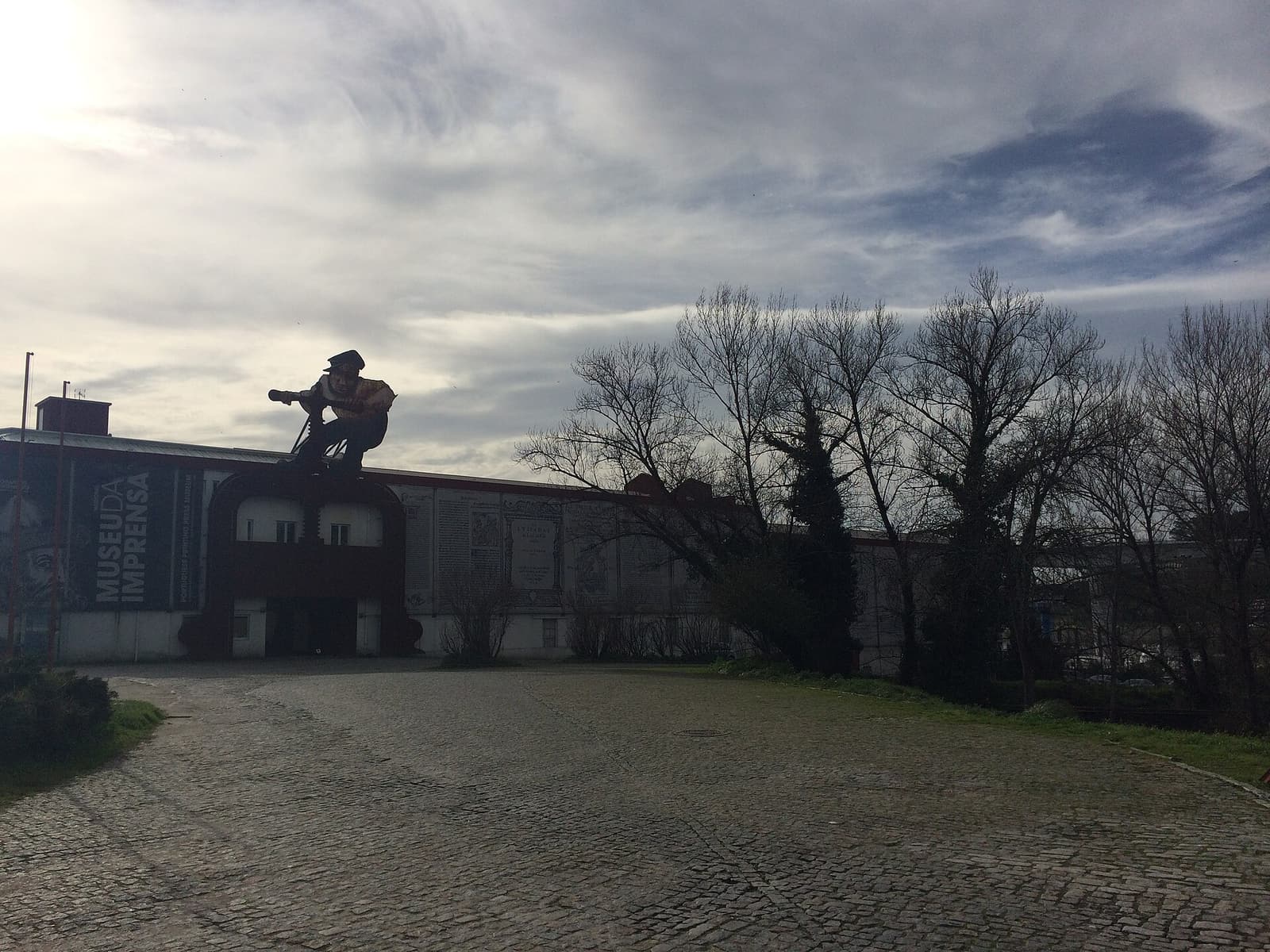
Finds — including ceramics, glassware, coins, adornments, and statuary — span the Iron Age and Roman periods, enabling reconstruction of daily life, economy, and beliefs of its inhabitants. To contextualize visits, Penafiel municipality established an interpretive center in 2004 that frames the ruins and showcases the collection.
Place in the northwestern archaeological network
Monte Mozinho belongs to a dense network of Castro settlements characteristic of the territory north of the Douro River. Through its monumentality and long occupation, it dialogues with other major settlements like Citânia de Sanfins in Paços de Ferreira, Citânia de Briteiros in Guimarães, and Cividade de Terroso along the coastal strip. Collectively, these sites form an essential framework for understanding Roman archaeology and the evolution of indigenous communities in the westernmost Iberian Peninsula.
Visiting Monte Mozinho thus means traversing an expansive stone urbanism suspended above the valley, where the legacy of hillforts and the enduring mark of Rome stand side by side.
Frequently asked questions
- Where is Castro de Monte Mozinho located?
- It is situated atop Monte Mozinho in the municipality of Penafiel (Porto district), between the parishes of Galegos and Oldrões, at an altitude of approximately 408 meters.
- Why is it called the 'Dead City'?
- The vastness of the inhabited area and the ruined state of its stone structures have popularly earned it the designation 'Dead City of Penafiel'.
- When was it classified?
- It was classified as a Property of Public Interest in 1948 and remains one of the most extensively studied archaeological sites in the northwestern Iberian Peninsula.
Sources
Keep exploring
Heritage nearby
More places to discover from here. Approximate straight-line distances, within 50 km.