Monuments
Santa Clara-a-Velha Monastery (Coimbra)
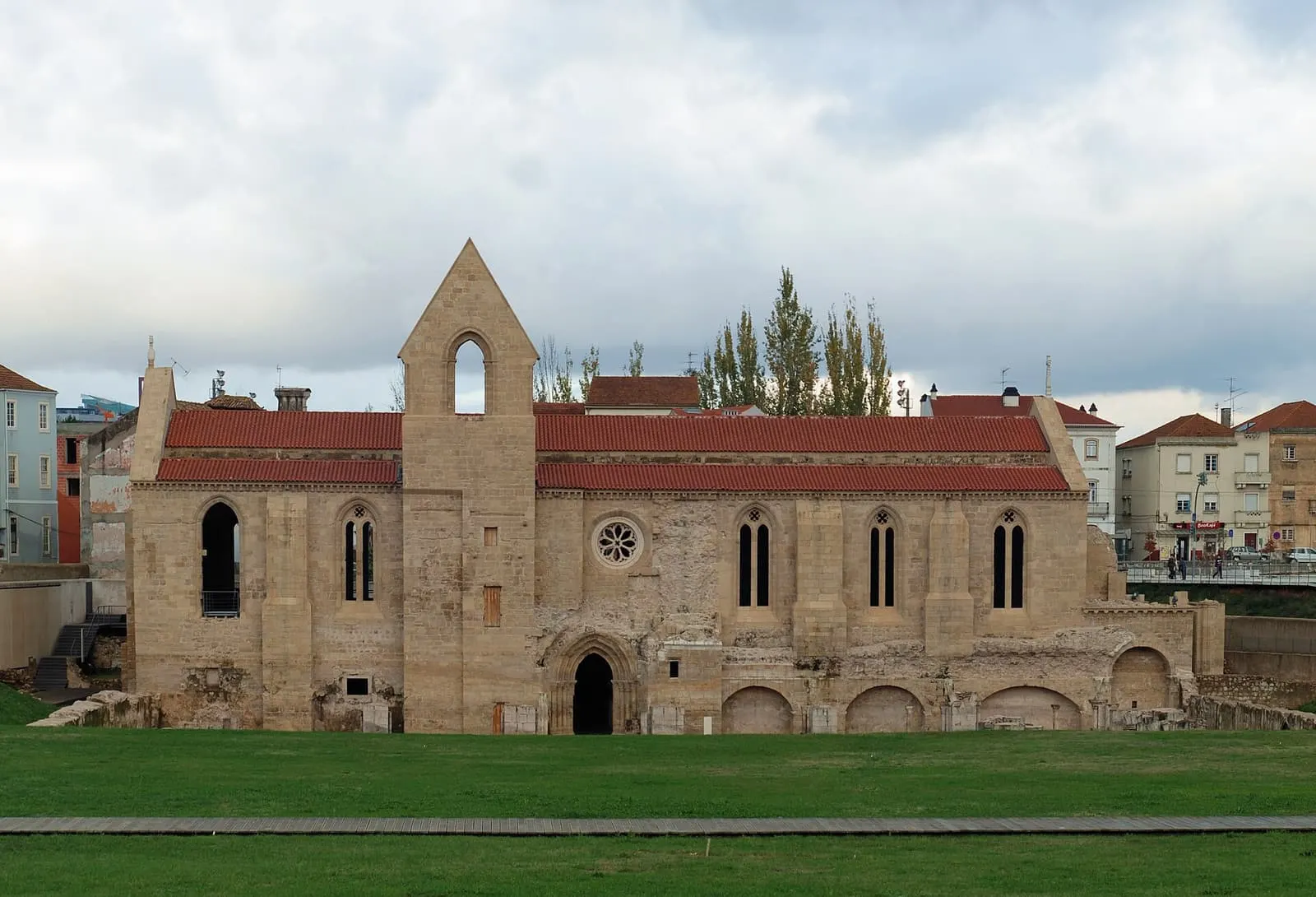
The Santa Clara-a-Velha Monastery in Coimbra is a 14th-century Gothic temple protected by Queen Saint Isabel and rescued from the floods of the Mondego River.
- Location
- Coimbra, Coimbra
- Built
- 1283–1330
- Style
- Gótico mendicante
On the left bank of the Mondego, facing the upper city of Coimbra, stand the restored ruins of the Santa Clara-a-Velha Monastery—one of the most remarkable examples of mendicant Gothic architecture in Portugal and the stage for one of the longest battles between a religious community and a river. For nearly four centuries, the Clarissan nuns resisted the advancing waters before finally abandoning their cloister to the Mondego’s mud.
Foundation and Royal Patronage
The first initiative to build a Clarissan monastery in Coimbra came from D. Mor Dias, who obtained permission for its construction in 1283. However, the project faced strong opposition from the neighbouring Santa Cruz Monastery, and only gained solidity when Queen Saint Isabel of Aragon took up its patronage. From 1314 onwards, the queen refounded and generously endowed the house, transforming it into a project of spiritual and dynastic affirmation. The church was consecrated in 1330, and Isabel herself chose to be buried there; she passed away in 1336, and her Gothic tomb remained in the monastery until the community’s relocation.
The devotion of Queen Saint Isabel made Santa Clara-a-Velha not just a convent but a royal pantheon and a focal point of worship that would shape Coimbra’s religious identity for centuries.
The Gothic Church
Attributed to master builder Domingos Domingues—who also worked on Santa Cruz’s cloister—the temple is distinguished by its three-nave plan of roughly equal height, covered by stone vaults. This hall-type solution was unusual in the context of Gothic architecture in Portugal and lends the space a rare unity and grandeur. The ornamental sobriety, characteristic of Franciscan spirituality, contrasts with the monumentality of the construction, which prioritises structural clarity over decoration.
The Battle Against the Mondego
The riverside location, chosen for practical and symbolic reasons, proved to be the monastery’s greatest weakness. As early as 1331, shortly after its consecration, a flood inundated the building. Floods recurred over the centuries, necessitating successive raising of the floor levels and the construction of walls to hold back the waters. The nuns even lived on elevated floors, but the situation became untenable. In 1677, the community permanently relocated to the new Santa Clara-a-Nova Convent, built on the nearby hill on safe ground. The old monastery was then abandoned and gradually buried by the Mondego’s sediments.
Rescue and Recovery
For over three centuries, much of the building remained submerged and covered in alluvial deposits. It was only in the late 20th century that extensive archaeological campaigns, beginning in the 1990s, allowed the land to be drained, the interior excavated, and thousands of objects from monastic daily life recovered—ceramics, glassware, coins, and architectural elements. The consolidation works culminated in the opening of an interpretive centre in 2009, which frames visits to the ruins and displays the rescued artefacts. The complex, classified as a National Monument, is now one of the city’s most unique heritage sites and forms part of the remarkable collection of monasteries that punctuate Portugal’s religious history.
Frequently asked questions
- Who founded the Santa Clara-a-Velha Monastery?
- The initial foundation was established by D. Mor Dias in 1283, but it was Queen Saint Isabel of Aragon who refounded and endowed the monastery from 1314 onwards, becoming its main patroness.
- Why was the monastery abandoned?
- The recurring floods of the Mondego River progressively inundated the building. After centuries of battling the waters, the community relocated in 1677 to the new Santa Clara-a-Nova Monastery on the nearby hill.
- Can the monastery be visited today?
- Yes. After decades of excavations and restoration work, the complex reopened in 2009 with an interpretive centre that presents the monastery's history and the archaeological finds recovered from the Mondego Riverbed.
Sources
Keep exploring
Heritage nearby
More places to discover from here. Approximate straight-line distances, within 50 km.