Monuments
Church of São Francisco (Porto)
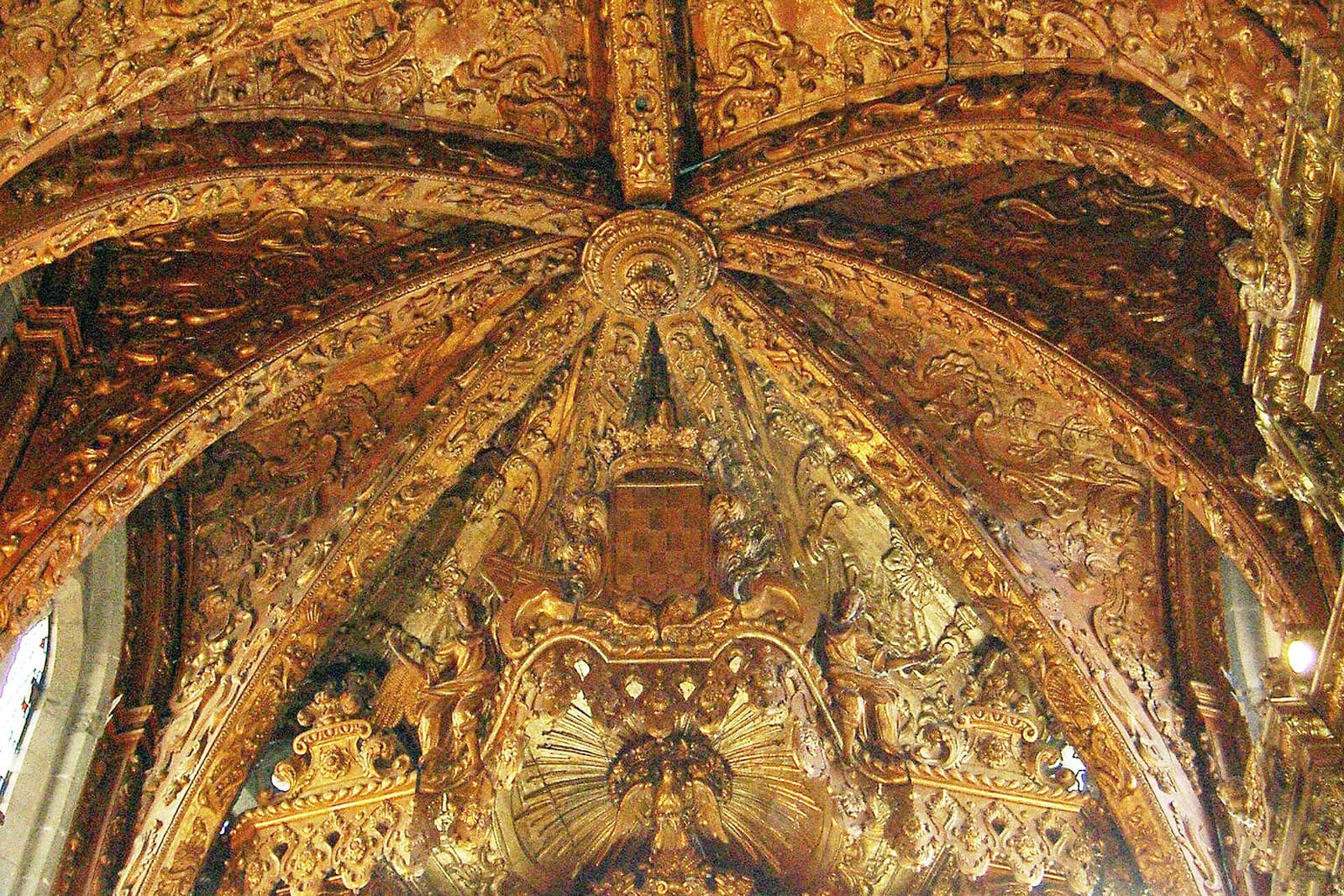
Church of São Francisco in Porto: the finest Gothic example in the city, with an interior wholly clad in Baroque gilded woodwork and catacombs.
- Location
- Porto, Porto
- Built
- 1383–1410
- Style
- Gótico (interior barroco)
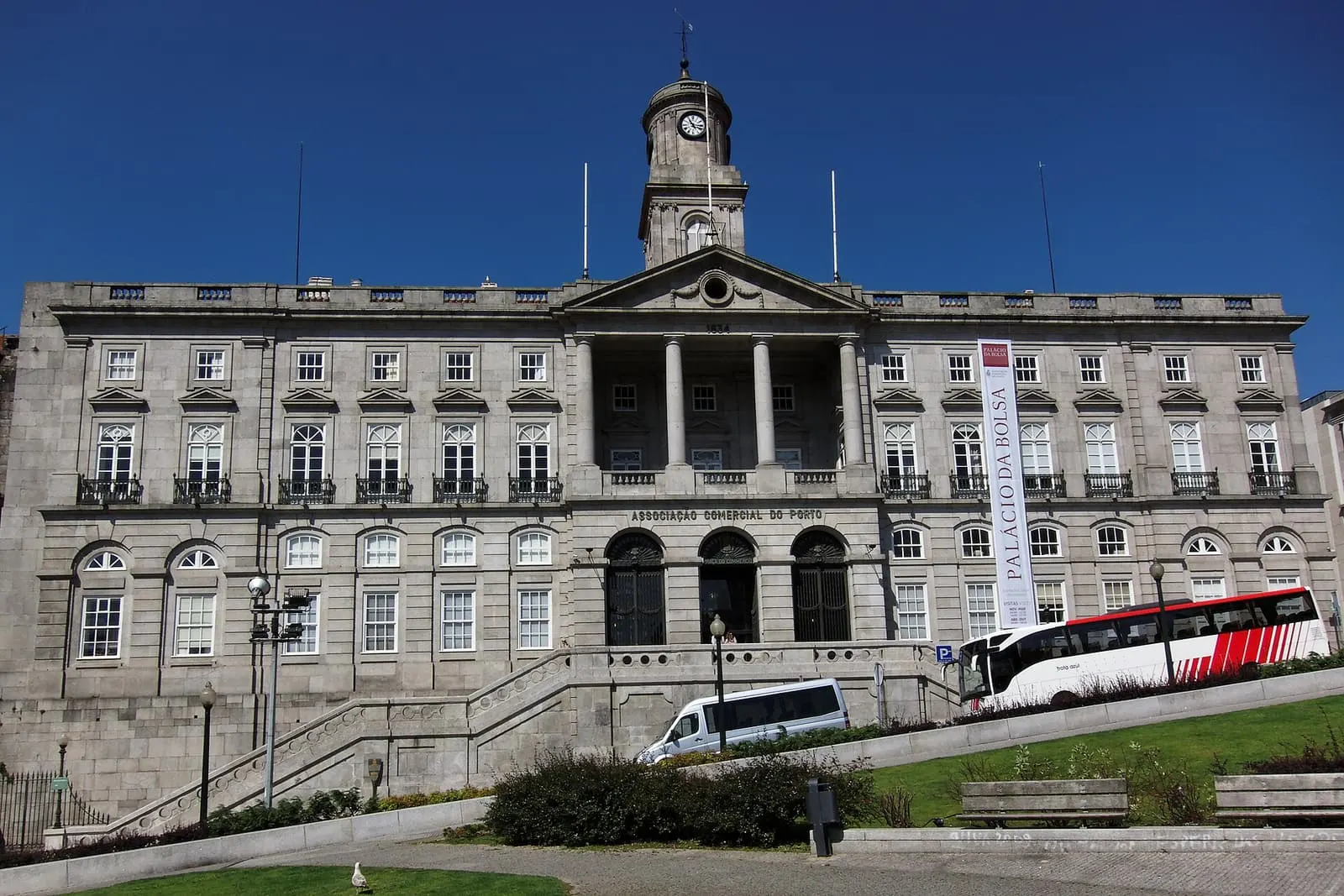
The Church of São Francisco rises in Porto’s riverside district, beside the Praça do Infante D. Henrique and just a few steps from the Palácio da Bolsa. It is the most complete testimony to Gothic architecture in the city and, at the same time, one of the most dazzling ensembles of gilded woodwork in Portugal — a contrast that makes it a singular monument in the national panorama.
From the Gothic convent to the temple of gold
The Franciscans settled in Porto in the early thirteenth century, receiving land to build their house in 1233. The church preserved today was constructed between the late fourteenth and early fifteenth centuries, during the reign of King Fernando I, following a Gothic plan of three naves, a projecting transept and a tripartite chancel. From the medieval phase survive the ground plan, the pointed arches and the remarkable rose window of the main façade, a rare vestige of the original Gothic decoration.
The great convent that surrounded the church vanished in 1833, consumed by a fire during the Liberal Wars. With the dissolution of the religious orders the following year, the space came to serve as a customs warehouse, definitively losing its monastic function.
The explosion of Baroque gilded woodwork
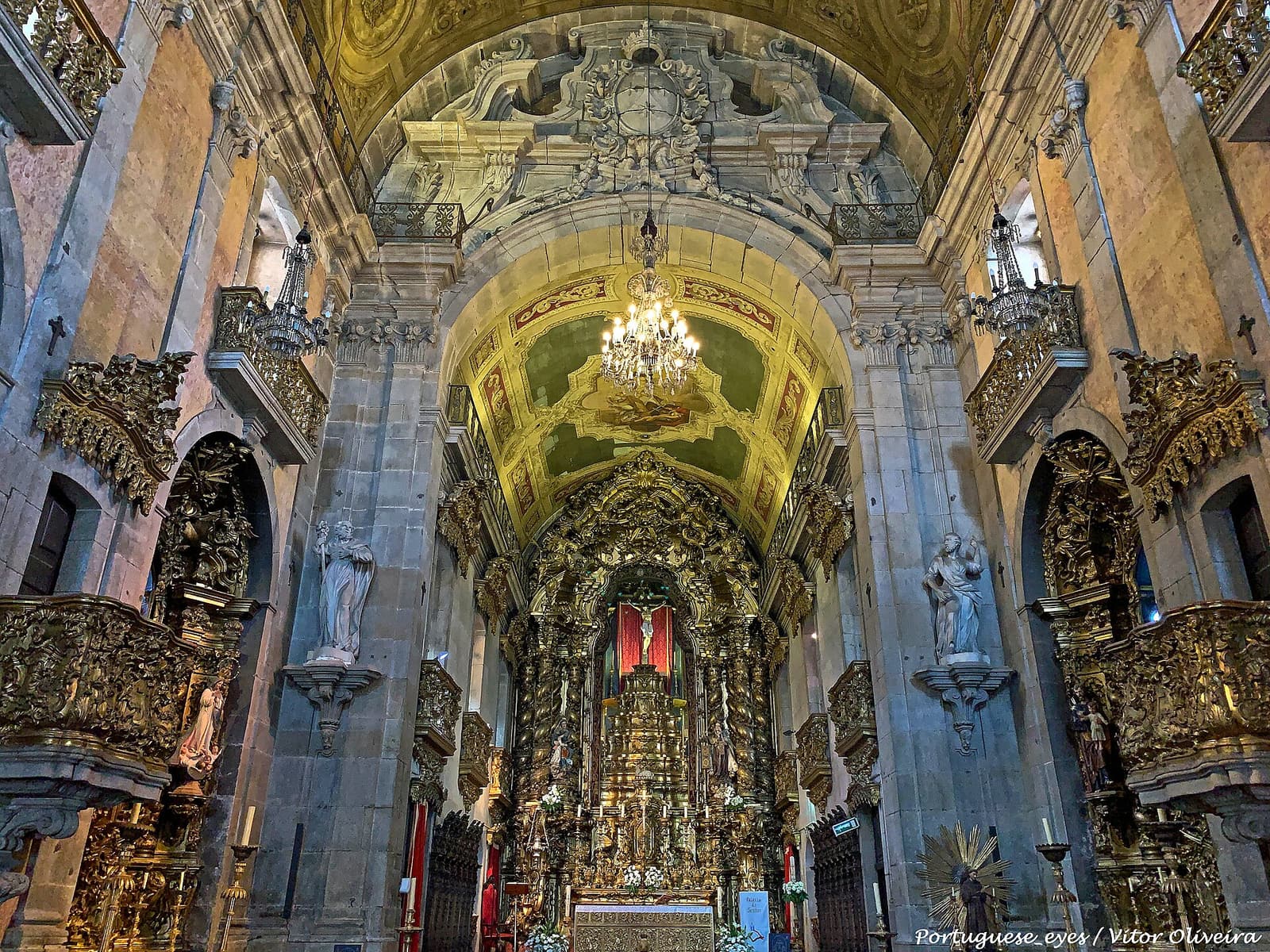
What makes the church universally famous is its interior. Throughout the eighteenth century, and especially from 1718 onward, the entire Gothic structure was clad in gilded woodwork of Baroque and Rococo taste, covering walls, pillars, arches and vaults in a profusion of foliage, birds and gilded figures that scarcely allow the stone to be seen.
The austere purity of fourteenth-century Gothic and the lavish splendour of eighteenth-century gold coexist in the same space — two opposing ideas of the sacred fused into a single nave.
The masterpiece of this ensemble is the altarpiece of the Tree of Jesse, carved between 1718 and 1721 by Filipe da Silva and António Gomes. It depicts the genealogy of Christ in a trunk branching from Jesse to the Virgin, with the figures of the kings of Judah distributed across the branches — considered the most exuberant treatment of this theme in Portugal. Its decorative intensity rivals that of other great gilded interiors, such as the Church of São Roque in Lisbon.
Catacombs and the memory of the city
Beneath the church’s floor extend catacombs and a vast ossuary, where Franciscan friars and members of Porto’s noble families were buried. Part of the remains is now visible through a glazed opening, offering a stark reading of funerary practices and of the city’s social hierarchy over the centuries. The ensemble is part of a museum route managed by the Venerable Third Order of São Francisco.
Classified as a National Monument since 1910, the church lies within the Historic Centre of Porto, inscribed on the UNESCO World Heritage list. Together with the neighbouring Porto Cathedral and the Clérigos Tower, it forms the core of religious monuments that defines the city’s silhouette over the Douro.
Frequently asked questions
- Why does the Church of São Francisco have so much gold?
- The Gothic interior was entirely clad in Baroque gilded woodwork over the course of the eighteenth century. It is estimated that several hundred kilos of gold dust were applied, turning the church into one of the richest ensembles of gilded carving in the country.
- Can the catacombs be visited?
- Yes. Beneath the church lie catacombs and an ossuary where Franciscan friars and members of Porto's noble families were buried. They form part of the visitor route, together with the museum of the Venerable Third Order.
- Is the church still used for worship?
- No. After the fire that destroyed the convent in 1833 and the dissolution of the religious orders, the Church of São Francisco lost its parish function and today operates as a monument and museum space.
Sources
Keep exploring
Heritage nearby
More places to discover from here. Approximate straight-line distances, within 50 km.