Monuments
Palácio da Brejoeira
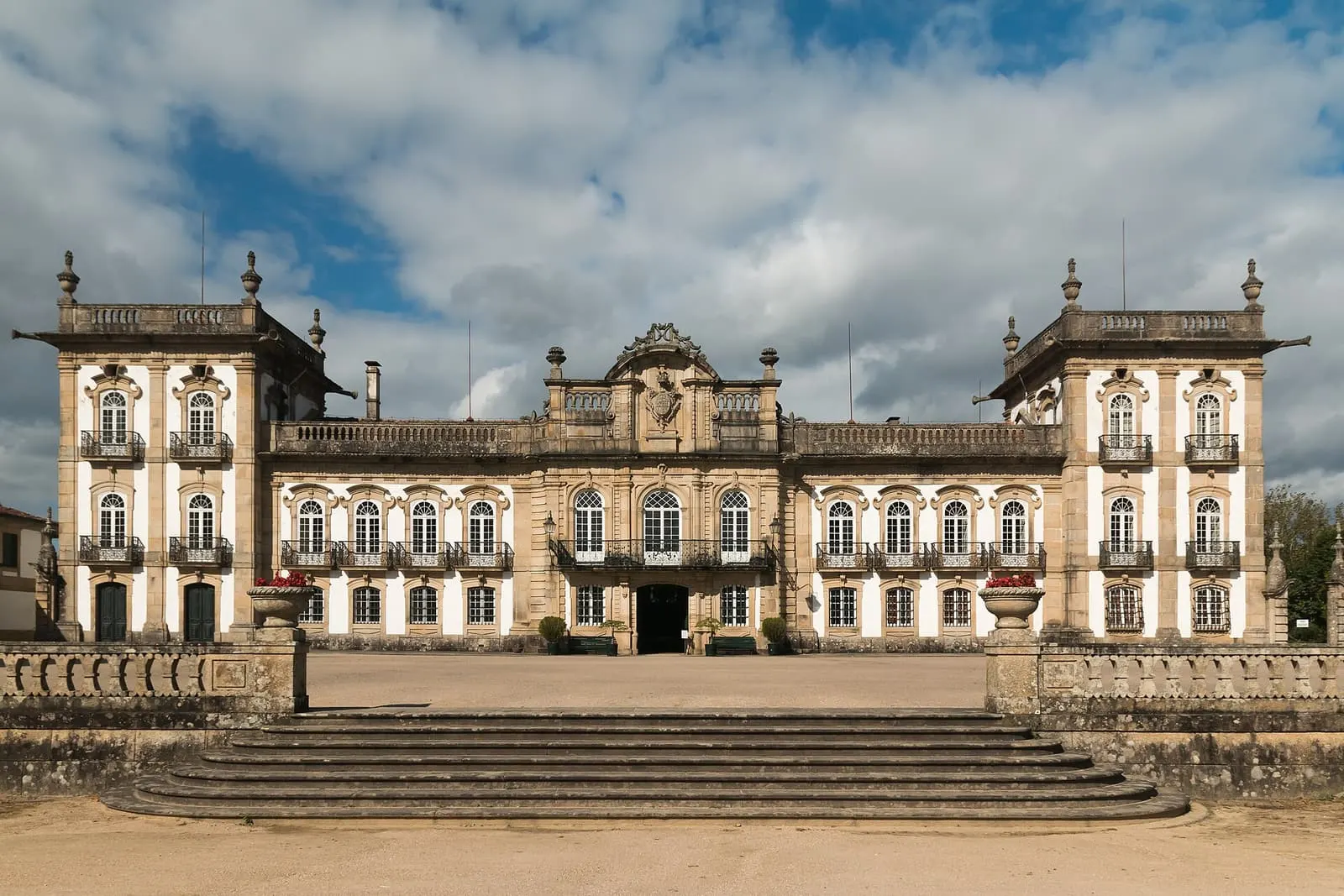
Palácio da Brejoeira in Monção: a neoclassical manor house in Alto Minho surrounded by Alvarinho vineyards, classified as a National Monument since 1910.
- Location
- Monção, Viana do Castelo
- Built
- 1806–1834
- Style
- Neoclássico
The Palácio da Brejoeira is one of the most notable manor houses in Alto Minho, built in the parish of Pinheiros, municipality of Monção, near the Minho River and the Galician border. Surrounded by extensive walls and a property where the famous Alvarinho wine is cultivated, the ensemble represents a rare example of neoclassical civil architecture in the far northwest of Portugal. It was classified as a National Monument in 1910, during the first major wave of heritage classifications in Portugal.
History and Construction
The building was commissioned in the early 19th century by Luís Pereira Velho de Moscoso (1767–1837), a nobleman of the Royal Household and knight of the Order of Christ, on an old rural property known as Quinta do Vale da Rosa. The name Brejoeira derives, according to tradition, from the marshy lands — brejos — that were part of the estate. Construction lasted until around 1834, a turbulent period marked by the French invasions and the Liberal Wars, which explains the prolonged duration of the project.
At the beginning of the 20th century, around 1901, the property underwent a major restoration campaign promoted by Pedro Maria da Fonseca Araújo, who enhanced the interiors and gardens. In 1937, the estate passed to the Oliveira Paes family, who established its viticultural vocation, now renowned. More recently, in 2025, the estate was acquired by the Mirpuri family.
Architecture and Interiors
The palace is laid out in an “L”-shaped plan and is traditionally attributed to Carlos Amarante, one of the most influential architects in northern Portugal during the transition from Baroque to Neoclassicism, though authorship remains debated. The main façade, sober and symmetrical, is organized around a central section topped by a pediment, flanked by towers that lend grandeur to the ensemble. Over the predominant neoclassical language, Rococo-style ornaments persist, revealing the enduring influence of 18th-century decorative traditions.
The interior features lavish salons with paintings, frescoes, and period furniture, alongside a chapel and a small classicist-inspired theater with fluted columns — an unusual feature in a rural Minho manor. The gardens, with centuries-old magnolias and tree-lined paths, complete a design that aligns Brejoeira with Portugal’s grand leisure estates, such as the Palácio de Mateus in Vila Real.
The Vineyard and Alvarinho
A modern winery was built in 1974, and in 1976, the “Palácio da Brejoeira” wine was launched, quickly becoming a benchmark for the Alvarinho grape in the Monção and Melgaço sub-region. The connection between the monument and exceptional viticulture places Brejoeira within the long tradition of northern wine landscapes, such as the Alto Douro Vinhateiro. Now open for guided tours, the palace is part of the itinerary of great manor houses in the Norte region, combining architectural, historical, and oenological interest.
Frequently asked questions
- Where is Palácio da Brejoeira located?
- It is situated in the parish of Pinheiros, in the municipality of Monção, district of Viana do Castelo, in Alto Minho, near the border with Galicia.
- Why is the wine from Palácio da Brejoeira famous?
- Since 1976, the estate has produced one of the most renowned wines from the Alvarinho grape variety, in the Monção and Melgaço sub-region of the Vinho Verde Denomination of Origin.
- Is it possible to visit Palácio da Brejoeira?
- Yes. The palace opened to the public in 2010 and offers guided tours of the building, chapel, gardens, and winery, including wine tastings.
Sources
Keep exploring
Heritage nearby
More places to discover from here. Approximate straight-line distances, within 50 km.